MedPro Disposal

Medical Waste Disposal for Ambulatory Surgery Centers

Your ASC runs on a tight schedule of same-day cases. Your waste program should run just as reliably.

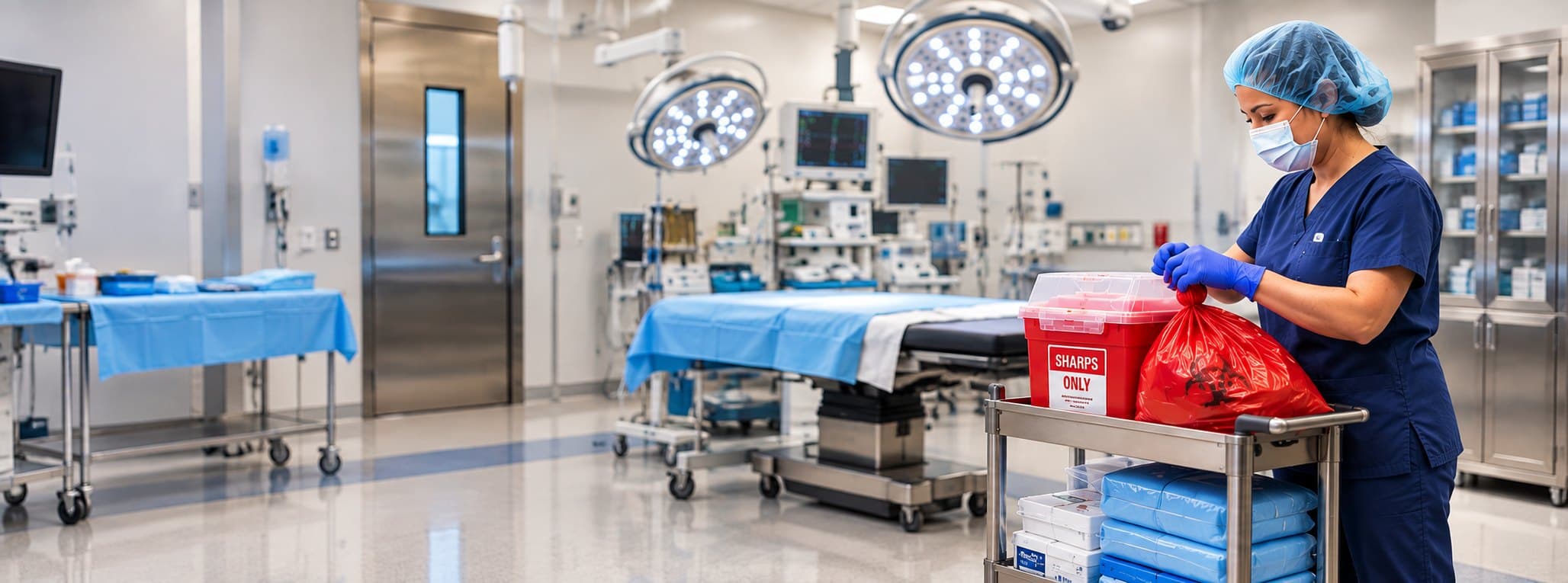
MedPro Disposal handles the biohazard, sharps, pharmaceutical, and pathological waste your outpatient surgery center generates — with pickups timed to your case calendar, containers sized for a small back-of-house footprint, and the documentation you need when surveyors ask.

Get a free quote built around your case volume and see how much your center could save.

Get Your Free Quote

Start with your name and number — it takes about a minute.

No spam, ever. We'll only use this to follow up on your quote.

This site is protected by reCAPTCHA and the Google Privacy Policy and Terms of Service apply.

Prefer to talk? Call (888) 641-6131
  • BBB A+ Rated
  • 40,000+ Facilities Served
  • Since 2009
  • 99% On-Time Service
  • Save an Average of 30%

Quick Answer

Medical waste disposal for ambulatory surgery centers means segregating, storing, and removing the regulated waste a same-day surgical facility generates — biohazard waste, sharps, pathological specimens, and pharmaceutical waste from anesthesia and perioperative medications — through licensed haulers and treatment facilities. Each stream follows its own rules: OSHA's Bloodborne Pathogens Standard, EPA and DEA pharmaceutical rules, DOT shipping rules, and your state's medical waste program. Medicare-certified ASCs must also meet CMS Conditions for Coverage, which require a sanitary environment and an active infection control program.

Interactive Guide

Where does it go in an ASC?

Segregating at the point of generation — the OR, pre-op, PACU, and sterile processing — is the first compliance requirement. Keeping clean waste out of the red bag also keeps your regulated volume down. Pick an item to see where it belongs.

Blood-soaked gauze & sponges goes in

Red bag or biohazard box

Regulated Medical Waste

Materials saturated or dripping with blood or other potentially infectious materials are regulated medical waste.

View the full medical waste segregation chart
Medical waste segregation chart
ItemWaste streamContainer
Blood-soaked gauze & spongesRegulated Medical WasteRed bag or biohazard box
Soiled drapes, gowns & glovesRegulated Medical WasteRed bag or biohazard box
Needles, syringes & scalpel bladesSharps WastePuncture-resistant sharps container
Surgical specimens & tissuePathological WasteLabeled pathological waste container for incineration
Leftover propofol or other non-controlled anesthesiaNon-Hazardous Pharmaceutical WasteBlue (or blue & white) pharmaceutical container
Unused fentanyl, midazolam & other controlled drugsDEA Controlled SubstancesSecure, locked controlled-substance system
EPA-listed or characteristic hazardous drugsHazardous Waste PharmaceuticalsBlack RCRA hazardous pharmaceutical container
Expired medications from the supply roomNon-Hazardous Pharmaceutical WasteBlue (or blue & white) pharmaceutical container
Surgery schedules & patient labelsProtected Health InformationSecure shredding bin
Instrument wrap & clean packagingRegular TrashStandard waste bin

General guidance only — requirements vary by state, and pharmaceutical handling depends on the specific drug. Your MedPro account team will confirm what applies to your center during setup.

Survey Readiness

What Surveyors Look For in an ASC Waste Program

State, CMS, and accreditation surveys often include a walk through your clinical areas. These are the details that tend to get noticed.

A compliant waste program shows up in the details: the right container at the point of use, labels that match what's inside, and records you can pull on request. MedPro keeps your manifests and disposal records in one client portal, so the paperwork is ready before the surveyor asks.

  • Sharps containers upright, within reach at each point of use, and replaced before they're overfilled.
  • Red bags and biohazard boxes labeled, closed when not in use, and never overflowing.
  • Regulated waste stored in a secure, designated area — not in hallways, PACU bays, or sterile storage.
  • Pharmaceutical, hazardous drug, and controlled-substance waste kept out of red bags and sharps containers.
  • Current OSHA bloodborne pathogens training records for every exposed employee — see compliance training.
  • Manifests and disposal records on file for the period your state requires.
Governing Rules

The Rules That Apply to Your ASC

ASCs answer to the same waste regulators as any generator — plus the certification and accreditation standards specific to surgery centers.

  1. Level 1 — Federal

    Federal Agencies

    • OSHA 29 CFR 1910.1030
    • EPA / RCRA
    • DEA 21 CFR 1317
    • DOT 49 CFR

    Sets the national floor for worker safety, pharmaceutical disposal, and waste transport.

  2. Level 2 — State

    State Programs

    • Medical Waste Program
    • Health Dept. Licensing
    • Pharmacy Board

    States define regulated waste, storage limits, and treatment rules — often stricter than federal minimums.

  3. Level 3 — Certification

    Your Center

    • CMS Conditions for Coverage
    • Accreditation Standards
    • Written Plan & Records

    Medicare certification and accreditation surveys look for a documented program your staff actually follows.

CMS Conditions for Coverage

Medicare-certified ASCs must meet CMS Conditions for Coverage (42 CFR Part 416), which require a safe, sanitary environment and an ongoing infection control program that follows nationally recognized guidelines. Waste segregation, storage, and removal are part of how surveyors see that program in practice. Accrediting organizations such as AAAHC and The Joint Commission look at the same areas during their surveys.

Worker Safety and Waste Rules

OSHA's Bloodborne Pathogens Standard (29 CFR 1910.1030) requires a written exposure control plan, sharps containers, biohazard labeling, and training for exposed staff. EPA's Subpart P (40 CFR Part 266) bans sewering hazardous waste pharmaceuticals at every healthcare facility, DEA rules (21 CFR Part 1317) govern controlled-substance disposal, and DOT rules (49 CFR) govern how waste is packaged and shipped. Your state's medical waste program sets definitions, storage limits, and treatment requirements — and these vary widely.

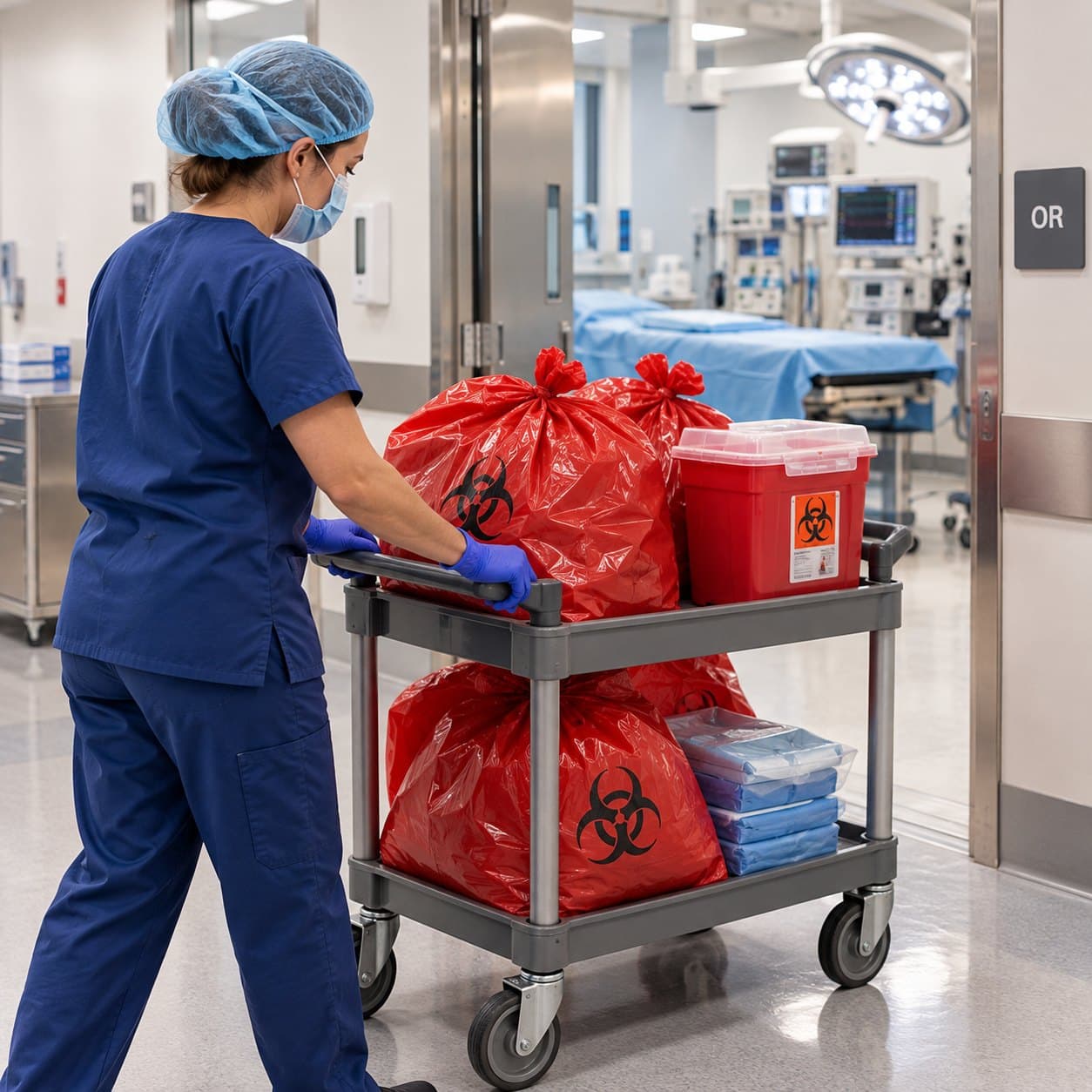
Surgical case waste sealed and staged for pickup at an ambulatory surgery center
Working With MedPro

How We Set Up Your ASC Program

  1. 1

    Request a Quote

    Tell us your case volume, specialties, and waste streams. We'll send a free, no-obligation quote.

  2. 2

    Plan Your Containers

    We supply the right containers for each stream and help you place them where waste is generated — ORs, pre-op, PACU, and sterile processing.

  3. 3

    Match Pickups to Your Schedule

    Pickup frequency is set around your case calendar and storage space, so waste never backs up in a small facility.

  4. 4

    Compliant Transport & Treatment

    Licensed technicians collect and transport your waste to a permitted facility for treatment by an approved method.

  5. 5

    Records Ready for Surveys

    We handle the paperwork. Manifests and disposal records are available anytime in your client portal.

Compliance Checklist

Is Your ASC's Waste Program Survey-Ready?

Six checks for any outpatient surgery center.

Your Self-Check

0/6in place

Tick what your facility already has in place. MedPro can help close the gaps.

Get Compliant Help
Why MedPro Disposal

Built Around the Way ASCs Operate

Custom pickup schedules for centers of any size, containers supplied at affordable rates, and the state paperwork handled for you.

Average savings vs. prior provider

30%

On-time pickup performance

99%

States serviced nationwide

48

Healthcare facilities served since 2009

40,000+

FAQ

Frequently Asked Questions

Still have a question? Call (888) 641-6131 and talk to a real person.

What types of medical waste does an ambulatory surgery center generate?

Most ASCs generate biohazard waste (blood-soaked dressings, soiled gowns, drapes, and linens), sharps (needles, syringes, scalpels, blades), pathological waste (surgical specimens and tissue), and pharmaceutical waste (expired drugs, leftover anesthesia, hazardous waste pharmaceuticals, and controlled substances). Many also need secure destruction for documents containing patient information.

Do Medicare-certified ASCs have specific waste requirements?

CMS Conditions for Coverage (42 CFR Part 416) don't set a separate medical waste rulebook, but they do require ASCs to maintain a sanitary environment and an infection control program that follows nationally recognized guidelines. How you segregate, store, and remove waste is part of how surveyors evaluate that program. The detailed waste rules themselves come from OSHA, EPA, DEA, DOT, and your state.

How often should an ASC schedule medical waste pickups?

It depends on your case volume, storage space, and your state's maximum on-site storage time for regulated waste. Because most ASCs have limited back-of-house storage, pickups are usually scheduled more often than the storage limit alone would require. MedPro sets your frequency around your actual case calendar.

How should we dispose of leftover anesthesia and controlled substances?

Keep them out of red bags and sharps containers. Non-controlled leftovers usually go in a non-hazardous pharmaceutical container, while drugs that qualify as hazardous waste go in a container labeled “Hazardous Waste Pharmaceuticals” and can never be sewered. Controlled-substance wastage must be handled and documented according to your DEA registration, state rules, and facility policy. See pharmaceutical waste disposal for how each stream works.

What happens to surgical specimens and tissue?

Pathological waste should be segregated from other regulated waste, packaged, and labeled before pickup. It's typically treated by incineration rather than autoclaving. Definitions and handling requirements vary by state, so your MedPro account team will confirm the rules for your location.

What training does ASC staff need for medical waste handling?

OSHA requires bloodborne pathogens training for employees with occupational exposure at the time of initial assignment and at least annually after that. MedPro's online HIPAA and OSHA compliance training covers those requirements and keeps certificates in one place.

Does MedPro provide containers for our center?

Yes. If you don't already have the right containers for each waste stream, MedPro provides them at affordable rates and helps you size and place them for your ORs, pre-op, recovery, and sterile processing areas.

How much can an ASC save by switching to MedPro?

MedPro customers save an average of 30% compared with their previous provider, with pricing matched to your volume and pickup schedule. Request a free quote to see what your center would pay.


Request Pricing

Ready to Simplify Your ASC's Waste Program?

Get a free, no-obligation quote or call 888-641-6131. We'll build a pickup schedule around your cases and handle the paperwork.

Call for Quick Quote(888) 641-6131

Get Your Free Quote

Tell us a bit about your facility and we'll follow up fast.

What services are you interested in?

No spam, ever. We'll only use this to follow up on your quote.

This site is protected by reCAPTCHA and the Google Privacy Policy and Terms of Service apply.