+
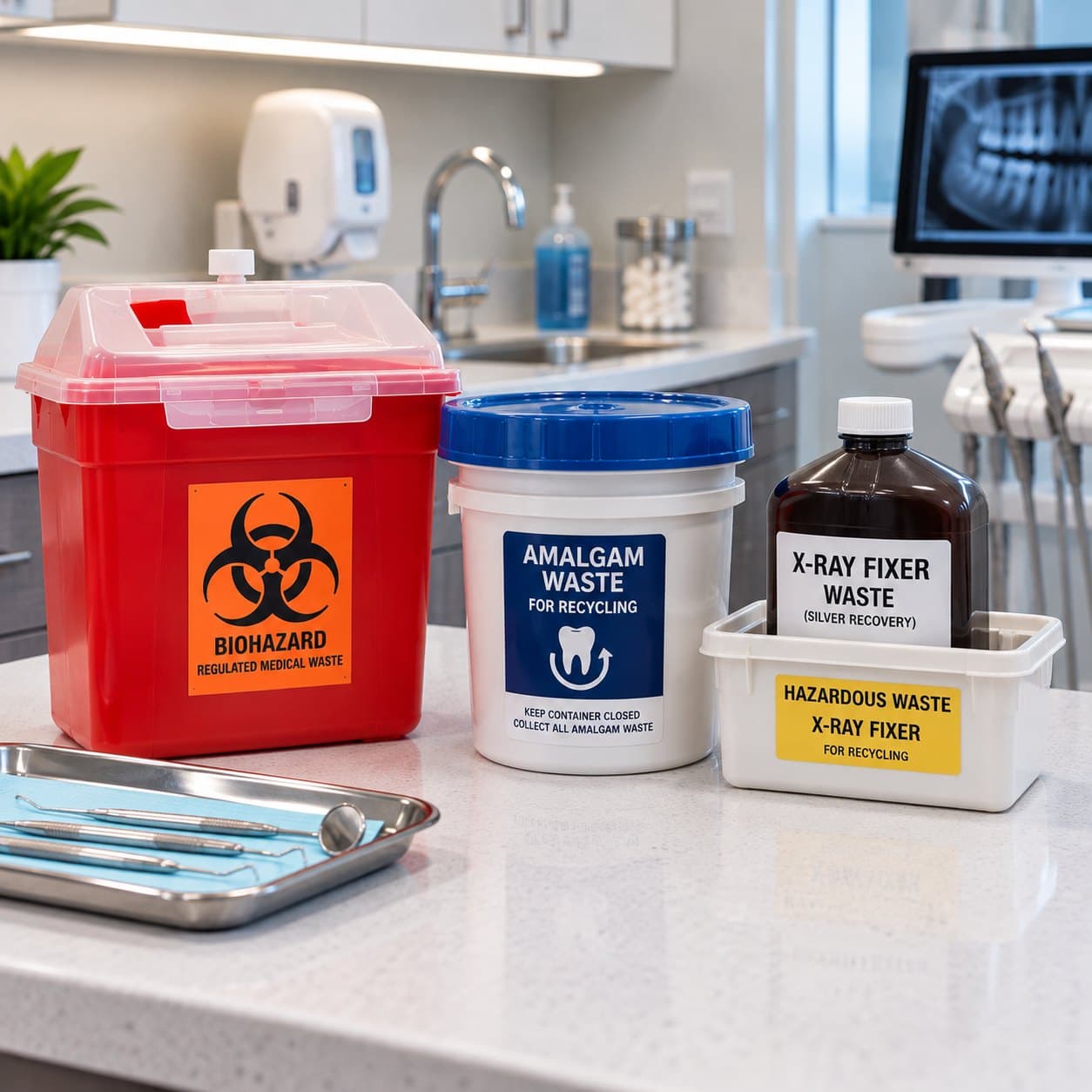
They separate waste at the chair: needles, carpules, files, and wires go in sharps containers; blood-soaked gauze and teeth without amalgam go in red bags; amalgam, capsules, trap contents, and teeth with amalgam go in amalgam recycling containers; and medications go in pharmaceutical containers. Licensed companies then collect and treat each stream, and the office keeps the records.
+
It generally applies to dental offices that discharge wastewater to a publicly owned treatment works and place or remove amalgam. Those offices must operate an amalgam separator, follow two best management practices, submit a one-time compliance report, and keep maintenance and disposal records. Some specialties and offices that don't place amalgam may be exempt — your local control authority can confirm.
+
No. Amalgam contains mercury, and medical waste is often incinerated or autoclaved, which can release mercury into the air. Collect scrap amalgam, capsules, trap and filter contents, and teeth with amalgam fillings in a sealed, labeled amalgam container for recycling.
+
Extracted teeth without amalgam are generally regulated medical waste and go in the red bag, unless they're returned to the patient. Teeth with amalgam fillings shouldn't go in medical waste that will be incinerated — collect them with your amalgam waste for recycling. State rules vary, so confirm what applies to you.
+
Used glass carpules can break and cut, so they are typically placed in the sharps container. Unused or partially used carpules with anesthetic remaining may need to go to pharmaceutical waste under some state rules. Your MedPro account team can confirm the right stream for your state.
+
Used fixer contains silver and is often a hazardous waste, so it should be recycled or collected rather than poured down the drain unless your local sewer authority allows it. Lead foil from film packets should be collected and recycled as scrap lead. MedPro offers hazardous waste disposal for these streams.
+
Employees exposed to blood or saliva need OSHA bloodborne pathogens training at assignment and annually. Staff who work with hazardous chemicals need hazard communication training, and anyone handling patient records needs HIPAA training. MedPro's compliance training covers all three online.
+
Pricing depends on your number of operatories, the waste streams you generate, container sizes, pickup frequency, and location. MedPro builds a custom plan for practices of every size, and customers save an average of 30% versus their previous provider — request a free quote.