MedPro Disposal

Physician Office Medical Waste Disposal

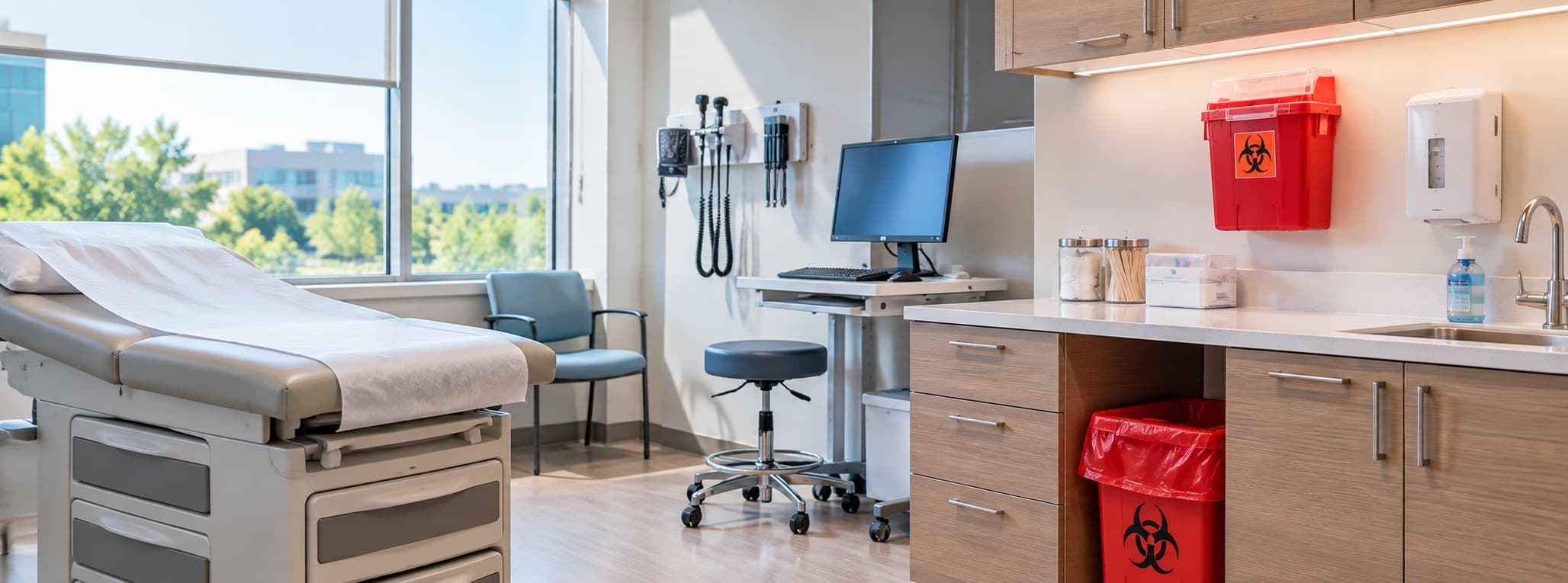
A primary care or specialty office generates real regulated waste — just not hospital volumes of it. MedPro Disposal builds a program sized to match.

From sharps and red bag waste to expired medication samples and old patient records, MedPro handles pickup, treatment, documentation, and staff training for solo physicians and multi-provider groups alike — with a schedule and container mix that fits how your office actually runs.

Tell us about your practice and we'll send a free, no-obligation quote.

Get Your Free Quote

Start with your name and number — it takes about a minute.

No spam, ever. We'll only use this to follow up on your quote.

This site is protected by reCAPTCHA and the Google Privacy Policy and Terms of Service apply.

Prefer to talk? Call (888) 641-6131
  • BBB A+ Rated
  • 40,000+ Facilities Served
  • Since 2009
  • 99% On-Time Service
  • Save an Average of 30%

Quick Answer

Physician office medical waste disposal means separating a practice's regulated waste at the point of use — sharps into puncture-resistant sharps containers, blood-soaked materials into red bags, and medications into pharmaceutical containers — and having a licensed medical waste company collect, transport, and treat it. OSHA's Bloodborne Pathogens Standard governs how staff handle sharps and biohazard waste, state programs regulate storage, transport, and treatment, and drugs and patient records follow EPA, DEA, and HIPAA rules. Most of an office's trash is ordinary solid waste, so good segregation keeps costs down.

Interactive Guide

Where does it go in a physician office?

Segregating at the point of use keeps staff safe and keeps ordinary trash out of the red bag, where it only adds cost. Pick an item to see where it belongs.

Needle & syringe from a vaccination goes in

Red puncture-resistant sharps container

Sharps Waste

Drop it in the sharps container immediately after use — don't recap, bend, or remove the needle.

View the full medical waste segregation chart
Medical waste segregation chart
ItemWaste streamContainer
Needle & syringe from a vaccinationSharps WasteRed puncture-resistant sharps container
Lancet from a fingerstick glucose testSharps WasteRed puncture-resistant sharps container
Blood-soaked gauze from a minor procedureRegulated Medical WasteRed bag in a rigid, labeled container
Filled blood collection tubesRegulated Medical WasteRed bag in a rigid, labeled container
Exam-table paper & unsoiled glovesRegular TrashStandard waste bin
Expired medication samplesNon-Hazardous Pharmaceutical WasteBlue (or blue & white) pharmaceutical container
Expired or partially used vaccine vialsNon-Hazardous Pharmaceutical WasteBlue (or blue & white) pharmaceutical container
EPA-listed hazardous drugsHazardous Waste PharmaceuticalsBlack RCRA hazardous pharmaceutical container
Expired controlled substances (DEA II–V)DEA Controlled SubstancesSecure, locked controlled-substance system
Broken mercury thermometer or BP gaugeHazardous WasteSealed, labeled hazardous waste container
Old charts & lab reportsProtected Health InformationLocked secure shredding console

General guidance based on OSHA 29 CFR 1910.1030 and EPA and DEA pharmaceutical rules. State definitions of regulated medical waste vary — your MedPro account team will confirm what applies to your practice.

Governing Law

Who Regulates Physician Office Waste?

A small office answers to the same layers of rules as a large facility — just at a smaller scale.

  1. Level 1 — Federal

    Federal Agencies

    • OSHA 29 CFR 1910.1030
    • EPA 40 CFR 266 Subpart P
    • DEA 21 CFR 1317
    • DOT 49 CFR
    • HIPAA 45 CFR 164

    OSHA governs staff handling of sharps and biohazard waste; the EPA and DEA govern drug disposal; the DOT regulates transport; HIPAA covers patient information.

  2. Level 2 — State

    State Agencies

    • Health Dept.
    • Environmental Agency
    • Board of Pharmacy

    States define what counts as regulated medical waste and set storage, transport, and treatment rules. Some also require generators to register.

  3. Level 3 — Practice

    Your Practice

    • Exposure Control Plan
    • Training Records
    • Disposal Records

    Your written plan, staff training, and disposal documentation have to satisfy both layers above.

OSHA Applies to Every Practice With Exposed Staff

OSHA's Bloodborne Pathogens Standard (29 CFR 1910.1030) doesn't scale down for small offices. If any employee can reasonably be expected to contact blood or other potentially infectious materials, the practice needs a written exposure control plan reviewed at least annually, engineering controls such as sharps containers, the hepatitis B vaccine offered to exposed staff, labeled or red containers for regulated waste, and training at assignment and every year after.

Medical Waste Is Regulated by Your State

There is no federal EPA permit for a physician office's biohazard waste — the EPA notes that medical waste is primarily regulated by state environmental and health departments. Your state decides what counts as regulated medical waste, how long it can be stored, and how it must be treated, which is why a licensed hauler familiar with your state matters.

The Drug Rules Offices Overlook

Under the EPA's pharmaceuticals rule (40 CFR 266 Subpart P), no healthcare facility — including a physician office — may flush or drain-dispose hazardous waste pharmaceuticals. Controlled substances follow separate DEA rules (21 CFR 1317): unused inventory is typically transferred to a DEA-registered reverse distributor, with records kept.

MedPro technician collecting a sealed biohazard box from a physician's office
Working With MedPro

A Waste Program Sized for Your Practice

Simple to set up, easy for clinical or front-desk staff to manage, and priced to your actual volume.

  1. 1

    Tell Us About Your Office

    Share your specialties, number of providers and exam rooms, and the waste you generate. We send a free, no-obligation quote.

  2. 2

    Right-Size Containers

    We match sharps, red bag, and pharmaceutical containers to each room so nothing overflows and nothing sits half-empty.

  3. 3

    Set a Pickup Schedule

    Weekly, monthly, or on a longer cycle your state allows — or mail-back for very low-volume offices.

  4. 4

    Train Your Team

    Online OSHA and HIPAA courses cover bloodborne pathogens, color coding, waste classifications, and emergency procedures.

  5. 5

    Treatment & Records

    Waste is treated at a licensed facility, and you receive documentation to keep on file for inspections.

Staff Training

OSHA & HIPAA Training for Physician Office Staff

Everyone who handles waste or patient information needs to know the rules — not just the office manager.

MedPro's compliance training gives physicians, nurses, medical assistants, and front-office staff a working understanding of the regulations that apply to their daily tasks, with records you can produce during an inspection. Courses cover:

  • OSHA bloodborne pathogens: exposure risks, safe handling, and what to do after an exposure.
  • Waste classifications and collection-system color coding, so waste goes in the right container the first time.
  • Safe handling of hazardous and regulated waste, including how clothing and equipment can become contaminated.
  • Proper use of gloves, masks, and other personal protective equipment.
  • Emergency procedures for spills and exposure incidents.
  • HIPAA privacy and security, including how to store and dispose of patient information.
Pricing

What Drives Medical Waste Disposal Cost for a Physician Office?

MedPro tailors pricing to the amount and type of waste your office generates — so you never pay for a service tier built for a hospital.

What Drives Medical Waste Disposal Cost for a Physician Office?
FactorHow It Affects Price
01Waste volumePriced by container size and count; good segregation keeps ordinary trash out of regulated containers.
02Pickup frequencyLow-volume offices can often use less frequent service, within the storage-time limits their state sets.
03Waste streamsPharmaceutical, controlled-substance, and hazardous waste need specialized handling and cost more than sharps and red bag waste.
04Service modelMail-back can be more economical than route pickup for offices that generate very little regulated waste.
05Number of locationsGroups with several offices can consolidate service, training, and billing under one account.
Compliance Checklist

Is Your Practice's Waste Program Compliant?

Requirements that apply to nearly every physician office that generates regulated waste.

Your Self-Check

0/7in place

Tick what your facility already has in place. MedPro can help close the gaps.

Get Compliant Help
Why MedPro Disposal

One Partner for Disposal, Training, and Compliance

Average savings vs. prior provider

30%

On-time pickup performance

99%

Healthcare facilities served

40,000+

States serviced nationwide

48

FAQ

Frequently Asked Questions

Still have a question? Call (888) 641-6131 and talk to a real person.

How do physician offices dispose of medical waste?

Staff segregate waste where it's generated — sharps into puncture-resistant sharps containers, blood-contaminated materials into labeled red bags, medications into pharmaceutical containers, and patient records into secure shredding consoles. A licensed medical waste company then collects, transports, and treats the regulated waste and provides documentation for your records.

Does a small or solo practice need a medical waste company?

In nearly every state, regulated medical waste can't go in the regular trash, so even a solo practice needs a licensed hauler or an approved mail-back program. MedPro sizes service to your volume — including mail-back kits for offices that generate very little.

Is all waste from a doctor's office medical waste?

No. Most of what a physician office throws away — paper, packaging, unsoiled gloves, and exam-table paper — is ordinary solid waste. Only sharps, items contaminated with blood or other potentially infectious materials, certain pharmaceuticals, and hazardous chemicals need special handling. State definitions vary, so confirm what your state treats as regulated medical waste.

What OSHA requirements apply to a physician practice?

If any employee may be exposed to blood or other potentially infectious materials, OSHA's Bloodborne Pathogens Standard (29 CFR 1910.1030) requires a written exposure control plan reviewed annually, sharps containers and other engineering controls, labeled or red regulated waste containers, the hepatitis B vaccine offered to exposed staff, and training at assignment and annually.

How should we dispose of expired medication samples and vaccines?

Don't flush them or put them in the trash. Most expired drugs go in a pharmaceutical waste container; drugs the EPA lists as hazardous go in a separate hazardous pharmaceutical container. For vaccines, check your state immunization program first, since some publicly supplied doses must be returned. MedPro offers pharmaceutical waste disposal for both.

How do we dispose of controlled substances?

Controlled substances follow DEA rules (21 CFR 1317). Keep them secured and documented, and send unused or expired inventory to a DEA-registered reverse distributor or destroy it to a non-retrievable state with the required records. Your state may add its own requirements.

How often will MedPro pick up from our office?

It depends on how much waste you generate and how long your state allows regulated waste to be stored on-site. Many physician offices use monthly or less frequent service; higher-volume practices may need weekly pickup. We set the schedule during setup and adjust it if your volume changes.

How much does medical waste disposal cost for a physician office?

Pricing is tailored to your container sizes and count, pickup frequency, waste streams, and location. MedPro customers save an average of 30% versus their previous provider — request a free quote for pricing specific to your practice.


Request Pricing

Ready for a Waste Program Built for Your Practice?

Call or email us and we'll get back to you within one business day with a no-obligation quote.

Call for Quick Quote(888) 641-6131

Get Your Free Quote

Tell us a bit about your facility and we'll follow up fast.

What services are you interested in?

No spam, ever. We'll only use this to follow up on your quote.

This site is protected by reCAPTCHA and the Google Privacy Policy and Terms of Service apply.