

MedPro Disposal

Urgent Care Medical Waste Disposal

Walk-in volume swings by the hour. Your medical waste service should flex with it — not leave containers overflowing after a busy weekend.

Urgent care and emergency clinics generate blood-soaked materials, sharps, pharmaceuticals, and confidential paperwork every shift. MedPro Disposal guides you through every stage, from the moment waste is generated to pickup, with pickup schedules built around your real patient volume and training your rotating staff can absorb quickly.

Tell us about your clinic and we'll send a free, no-obligation quote.

Get Your Free Quote

Start with your name and number — it takes about a minute.

No spam, ever. We'll only use this to follow up on your quote.

This site is protected by reCAPTCHA and the Google Privacy Policy and Terms of Service apply.

Prefer to talk? Call (888) 641-6131
  • BBB A+ Rated
  • 40,000+ Facilities Served
  • Since 2009
  • 99% On-Time Service
  • Save an Average of 30%

Quick Answer

Urgent care medical waste disposal means segregating a clinic's waste at the point of care — needles and blades into sharps containers, blood-saturated dressings and tubing into red bags, medications into pharmaceutical containers, and patient paperwork into locked shredding consoles — and having a licensed medical waste company collect and treat it on a schedule matched to patient volume. OSHA's Bloodborne Pathogens Standard governs staff handling, state programs regulate storage and treatment, and controlled-substance and pharmaceutical waste follow DEA and EPA rules.
Interactive Guide

Where does it go in an urgent care clinic?

Fast-paced shifts are when segregation mistakes happen. Pick an item to see where it belongs.

Suture needle & scalpel blade from a laceration repair goes in

Red puncture-resistant sharps container

Sharps Waste

Anything that can puncture or cut skin goes straight into the sharps container — never a red bag.

View the full medical waste segregation chart
Medical waste segregation chart
ItemWaste streamContainer
Suture needle & scalpel blade from a laceration repairSharps WasteRed puncture-resistant sharps container
Needle & syringe from an immunizationSharps WasteRed puncture-resistant sharps container
Allergy test lancets or applicators with pointsSharps WasteRed puncture-resistant sharps container
Blood-saturated gauze & bandagesRegulated Medical WasteRed bag in a rigid, labeled container
IV tubing & PPE contaminated with bloodRegulated Medical WasteRed bag in a rigid, labeled container
Used rapid-test swabs & cassettesRegulated Medical WasteRed bag in a rigid, labeled container
Partially used ointment or expired medicationNon-Hazardous Pharmaceutical WasteBlue (or blue & white) pharmaceutical container
EPA-listed hazardous drugsHazardous Waste PharmaceuticalsBlack RCRA hazardous pharmaceutical container
Expired controlled substances (DEA II–V)DEA Controlled SubstancesSecure, locked controlled-substance system
Patient intake forms & wristbandsProtected Health InformationLocked secure shredding console
Clean packaging & wrappersRegular TrashStandard waste bin

General guidance based on OSHA 29 CFR 1910.1030 and EPA and DEA pharmaceutical rules. State definitions of regulated medical waste vary — your MedPro account team will confirm what applies to your clinic.

Built for Walk-In Volume

A Waste Program That Flexes With Patient Volume

A slow Tuesday can be followed by a flu-season weekend that multiplies your waste generation.

Rigid, one-size-fits-all pickup schedules are a poor fit for urgent care: containers either sit half-empty or overflow before the next stop. MedPro sets your program around how your clinic actually runs:

  • Pickup frequency set around realistic daily and seasonal volume patterns.
  • The flexibility to request additional service when patient volume spikes.
  • Compact, clearly labeled containers that fit triage areas, exam rooms, and procedure bays.
  • Container sizing for retail-style locations with limited back-of-house storage.
  • Simple segregation that stays correct no matter who's on shift.
Governing Law

Who Regulates Urgent Care Waste?

Urgent care clinics answer to OSHA and EPA policies for medical waste removal — and to their state.

  1. Level 1 — Federal

    Federal Agencies

    • OSHA 29 CFR 1910.1030
    • EPA 40 CFR 266 Subpart P
    • DEA 21 CFR 1317
    • DOT 49 CFR
    • HIPAA 45 CFR 164

    OSHA governs staff handling of sharps and biohazard waste; the EPA and DEA govern drug disposal; the DOT regulates transport; HIPAA covers patient information.

  2. Level 2 — State

    State Agencies

    • Health Dept.
    • Environmental Agency
    • Board of Pharmacy

    States define regulated medical waste, set on-site storage limits and treatment rules, and add their own pharmaceutical requirements.

  3. Level 3 — Clinic

    Your Clinic

    • Exposure Control Plan
    • Controlled-Substance Logs
    • Training Records

    Your written plan, drug wastage records, and staff training have to satisfy both layers above — for every clinician on every shift.

OSHA and a Rotating Workforce

OSHA's Bloodborne Pathogens Standard (29 CFR 1910.1030) requires training for exposed employees at the time of initial assignment and at least annually, plus a written exposure control plan reviewed every year. For clinics that rely on part-time, per-diem, and rotating clinicians, that means building training into onboarding so no one works a shift without it.

Pharmaceutical and Controlled-Substance Rules

Under the EPA's pharmaceuticals rule (40 CFR 266 Subpart P), no healthcare facility may flush or drain-dispose hazardous waste pharmaceuticals. Controlled substances follow DEA rules (21 CFR 1317); staff need to understand how Schedule II–V wastage is handled and documented under your registration and state requirements.

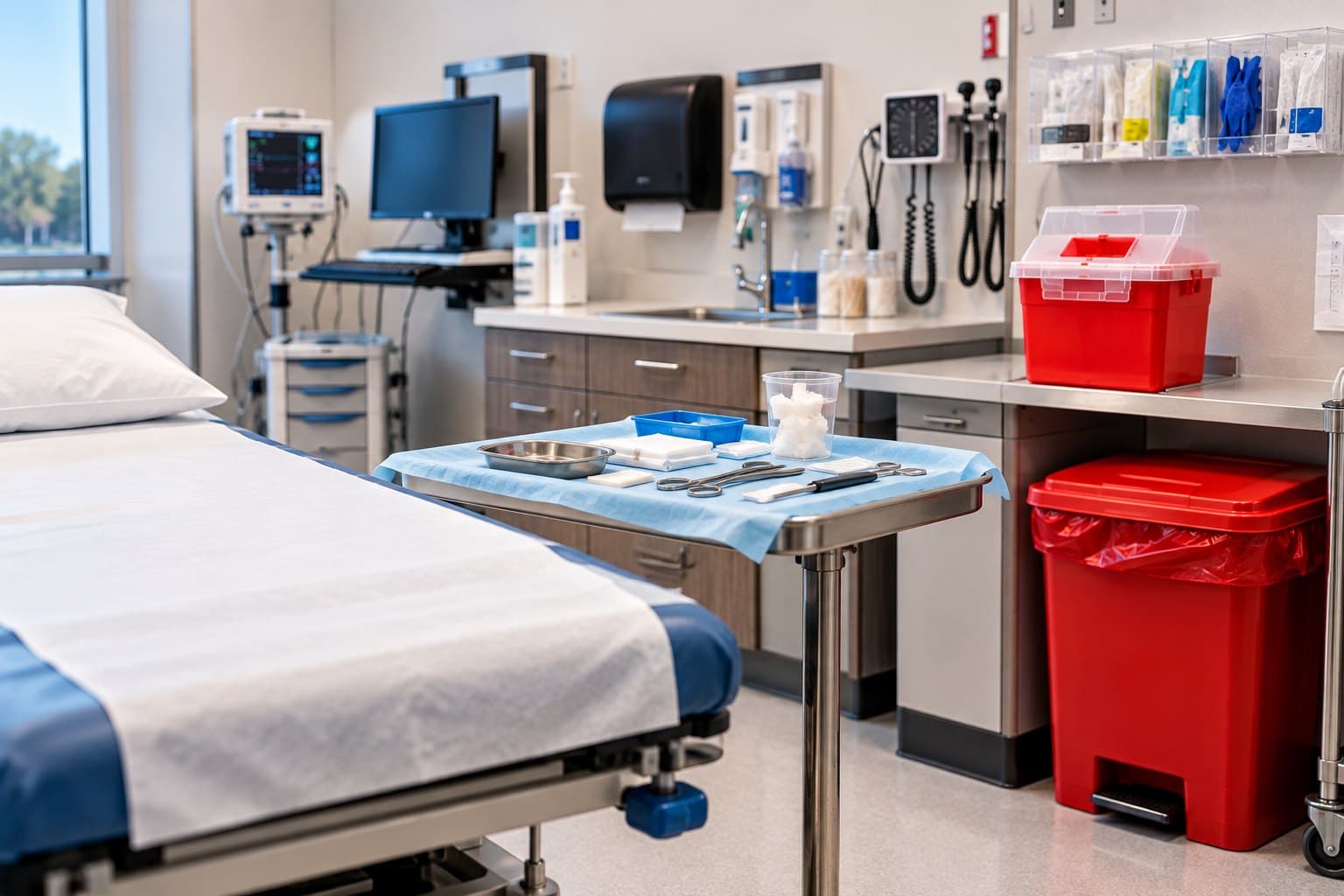
Urgent care treatment room with sharps and biohazard containers at point of use
Working With MedPro

From the Moment Waste Is Generated to Pickup

We guide you through every stage and keep the program simple for a fast-moving team.

  1. 1

    Tell Us About Your Clinic

    Share your locations, hours, typical patient volume, and services. We send a free, no-obligation quote.

  2. 2

    Place the Right Containers

    Sharps, red bag, pharmaceutical, and secure document containers sized for each room and your storage space.

  3. 3

    Set a Flexible Schedule

    Pickup frequency built around your volume, with extra service available when you get busy.

  4. 4

    Train Every Shift

    Online OSHA and HIPAA courses so full-time and per-diem staff segregate waste correctly.

  5. 5

    Treatment & Records

    Waste is treated at a licensed facility and you receive documentation for inspections and audits.

Compliance Checklist

Is Your Urgent Care Clinic Compliant?

Requirements to check at every location.

Your Self-Check

0/7in place

Tick what your facility already has in place. MedPro can help close the gaps.

Get Compliant Help
Why MedPro Disposal

Compliant Waste Removal at a Fraction of the Cost

Average savings vs. prior provider

30%

On-time pickup performance

99%

Healthcare facilities served

40,000+

States serviced nationwide

48

FAQ

Frequently Asked Questions

Still have a question? Call (888) 641-6131 and talk to a real person.

How do urgent care clinics dispose of medical waste?

Staff segregate waste at the point of care — sharps into puncture-resistant containers, blood-saturated materials into labeled red bags, medications into pharmaceutical containers, and patient paperwork into locked shredding consoles. A licensed medical waste company collects and treats the regulated waste on a schedule matched to the clinic's volume and provides documentation.

What types of medical waste does an urgent care center generate?

Four core streams: biohazard waste such as blood-saturated gauze, bandages, tubing, and PPE; sharps from immunizations, blood tests, allergy testing, and laceration repair; pharmaceutical waste including expired medications and controlled-substance wastage; and confidential documents containing patient information.

How often should an urgent care clinic have waste picked up?

Often enough that containers never overfill and waste never exceeds your state's on-site storage limit. Because walk-in volume swings seasonally, MedPro sets a baseline schedule around your real patterns and lets you request additional service when volume spikes.

Do per-diem and part-time clinicians need bloodborne pathogens training?

Yes. OSHA requires training for any employee with occupational exposure at the time of initial assignment and at least annually. MedPro's online compliance training makes it easy to train staff as they're onboarded.

How should we handle controlled-substance waste?

Controlled substances follow DEA rules (21 CFR 1317) and your state's requirements. Keep them secured, document wastage according to your policies, and send expired or unused inventory to a DEA-registered reverse distributor or destroy it to a non-retrievable state with records kept.

Are used rapid-test swabs regulated medical waste?

In many states, used specimen swabs and test devices are treated as regulated medical waste and go in the red bag. Definitions vary, so confirm your state's rules — your MedPro account team can help.

Does MedPro shred patient documents for urgent care clinics?

Yes. MedPro provides secure document destruction for records containing protected health information and can guide your team on keeping paperwork locked in secure consoles until it's shredded.

How much does medical waste disposal cost for an urgent care clinic?

Pricing depends on container sizes and count, pickup frequency, waste streams, number of locations, and location. MedPro customers save an average of 30% versus their previous provider — request a free quote for your clinic.

Request Pricing

Ready for Waste Service That Keeps Up With Your Clinic?

Get a no-obligation quote and see how much your urgent care locations could save.

Call for Quick Quote(888) 641-6131

Get Your Free Quote

Tell us a bit about your facility and we'll follow up fast.

What services are you interested in?

No spam, ever. We'll only use this to follow up on your quote.

This site is protected by reCAPTCHA and the Google Privacy Policy and Terms of Service apply.