+
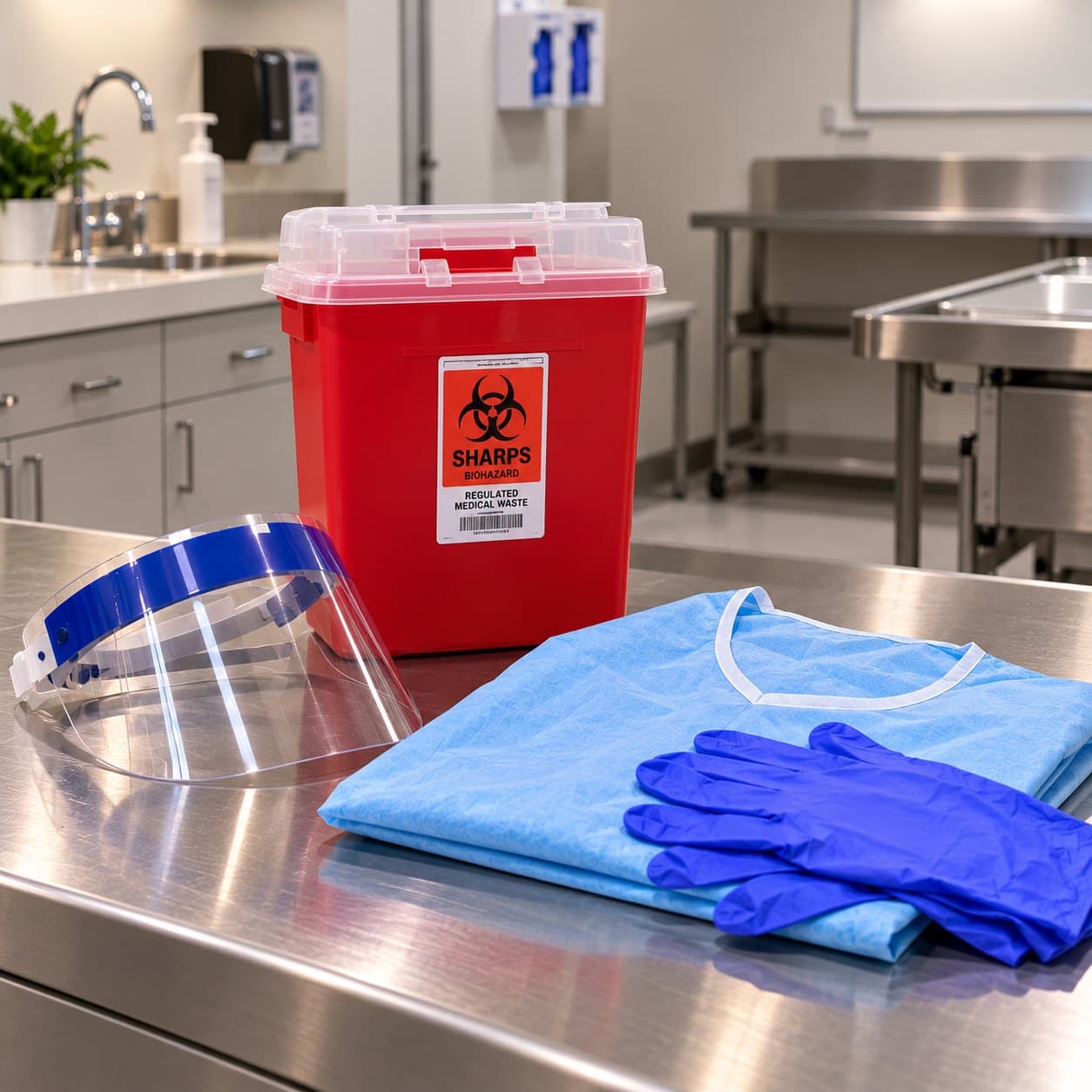
Yes, though usually in small volumes. Preparation rooms generate sharps such as trocars, scalpel blades, and needles, plus gauze, cotton, and PPE saturated with blood or body fluids. Those items are regulated medical waste in most states and need to go to a licensed medical waste company rather than the trash. State definitions vary.
+
Yes. OSHA's Bloodborne Pathogens Standard (29 CFR 1910.1030) covers any employee who may be exposed to blood or other potentially infectious materials on the job, including embalmers. Employers need an exposure control plan, sharps containers and PPE, hepatitis B vaccination offered to exposed employees, and annual training.
+
Unused or expired formaldehyde-based embalming products are chemical waste and, depending on their formulation, may be hazardous waste under RCRA. Keep them in sealed, labeled containers separate from biohazard waste, and don't pour unused product down the drain without confirming your local rules. MedPro's hazardous waste disposal service can handle them.
+
In many jurisdictions, blood and body fluids drained during embalming can be discharged to the sanitary sewer, but that depends on your local wastewater authority's rules. Confirm with your local authority, and never discharge chemicals or solid waste unless it's permitted.
+
OSHA's Formaldehyde Standard (29 CFR 1910.1048) applies wherever employees may be exposed to formaldehyde, including preparation rooms. It sets exposure limits and requires employers to monitor and control exposure, provide protective equipment where needed, train employees on the hazards, and place waste and debris from leaks or spills in sealed, labeled containers.
+
Remove IV catheters, needles, and other sharps carefully and place them straight into a puncture-resistant sharps container. Sharps should never be left in the body bag, casket, or cremation container.
+
It's rare, but a decedent who recently had radioactive seed implants or certain radiopharmaceutical treatments may carry residual radioactivity. Contact the treating facility's radiation safety officer or your state radiation control program for guidance before preparation or cremation, and don't dispose of any related materials without specific direction.
+
Yes. MedPro's OSHA and HIPAA compliance training covers bloodborne pathogens and proper handling of regulated waste, with records you can keep on file. MedPro serves single funeral homes and multi-location operators in 48 states.