
MedPro Disposal

Healthcare Compliance Certification & Training Solutions

MedPro Disposal can train key personnel on how to stay compliant with HIPAA and OSHA.

Our convenient online platform lets you access training modules, track certification status for your whole team, get certified, and safeguard protected patient information — all in one place.

Call (888) 641-6131 or get a quote to see how much you could save.

Already a customer?Log in to your training portal

Get Your Free Quote

Start with your name and number — it takes about a minute.

No spam, ever. We'll only use this to follow up on your quote.

This site is protected by reCAPTCHA and the Google Privacy Policy and Terms of Service apply.

Prefer to talk? Call (888) 641-6131
  • BBB A+ Rated
  • 40,000+ Facilities Served
  • Since 2009
  • Online, 24/7 Access
  • Save an Average of 30%

Quick Answer

Healthcare compliance is the ongoing process of meeting or exceeding the legal, ethical, and professional standards that apply to a healthcare organization or provider. It spans patient care, billing and reimbursement, OSHA workplace safety, HIPAA privacy and security, and accreditation standards. For most practices, the core training obligations are OSHA's bloodborne pathogens training, required at hire and at least annually, and HIPAA workforce training, required for new staff within a reasonable period and after material policy changes.
Components of an effective compliance program, per the HHS OIG
7
Minimum OSHA bloodborne pathogens training frequency
Annual
How long HIPAA training records must be kept
6 years
Online access to MedPro training and certificates
24/7
Healthcare facilities served by MedPro Disposal
40,000+
Healthcare Compliance, Defined

What Is Healthcare Compliance?

The rules are many, the regulators are several, and everyone in the organization is responsible.

Healthcare compliance “can be defined as the ongoing process of meeting or exceeding the legal, ethical, and professional standards applicable to a particular healthcare organization or provider,” according to Compliance.com. Its scope can extend to patient care, billing, reimbursement, managed care contracting, research standards, OSHA, The Joint Commission standards, and HIPAA privacy and security. A good compliance program considers all of these when it plans staff training and certification.

Who Regulates Healthcare Compliance?

Healthcare compliance rules exist to protect patient safety and promote higher-quality care. Governing bodies include the HHS Office of Inspector General (OIG), the Department of Health and Human Services (HHS) and its Office for Civil Rights, the Occupational Safety and Health Administration (OSHA), the Food and Drug Administration (FDA), the Drug Enforcement Administration (DEA), and The Joint Commission.

What Happens When You're Noncompliant?

Staying compliant with all applicable laws and regulations is of the utmost importance for a medical facility. Noncompliance puts you at risk of hefty fines and charges, legal action including malpractice lawsuits, and often irreparable damage to your reputation.

HHS OIG Guidance

The Seven Components of a Compliance Program

The OIG's compliance guidance for physician practices lists seven components.

According to the HHS Office of Inspector General, these components provide a solid basis for a physician practice's compliance program. OIG also notes that, under the Affordable Care Act of 2010, physicians who treat Medicare and Medicaid beneficiaries will be required to establish a compliance program.

  • Conduct internal monitoring and auditing.
  • Implement compliance and practice standards.
  • Designate a compliance officer or contact.
  • Conduct appropriate training and education.
  • Respond appropriately to detected offenses and develop corrective action.
  • Develop open lines of communication with employees.
  • Enforce disciplinary standards through well-publicized guidelines.
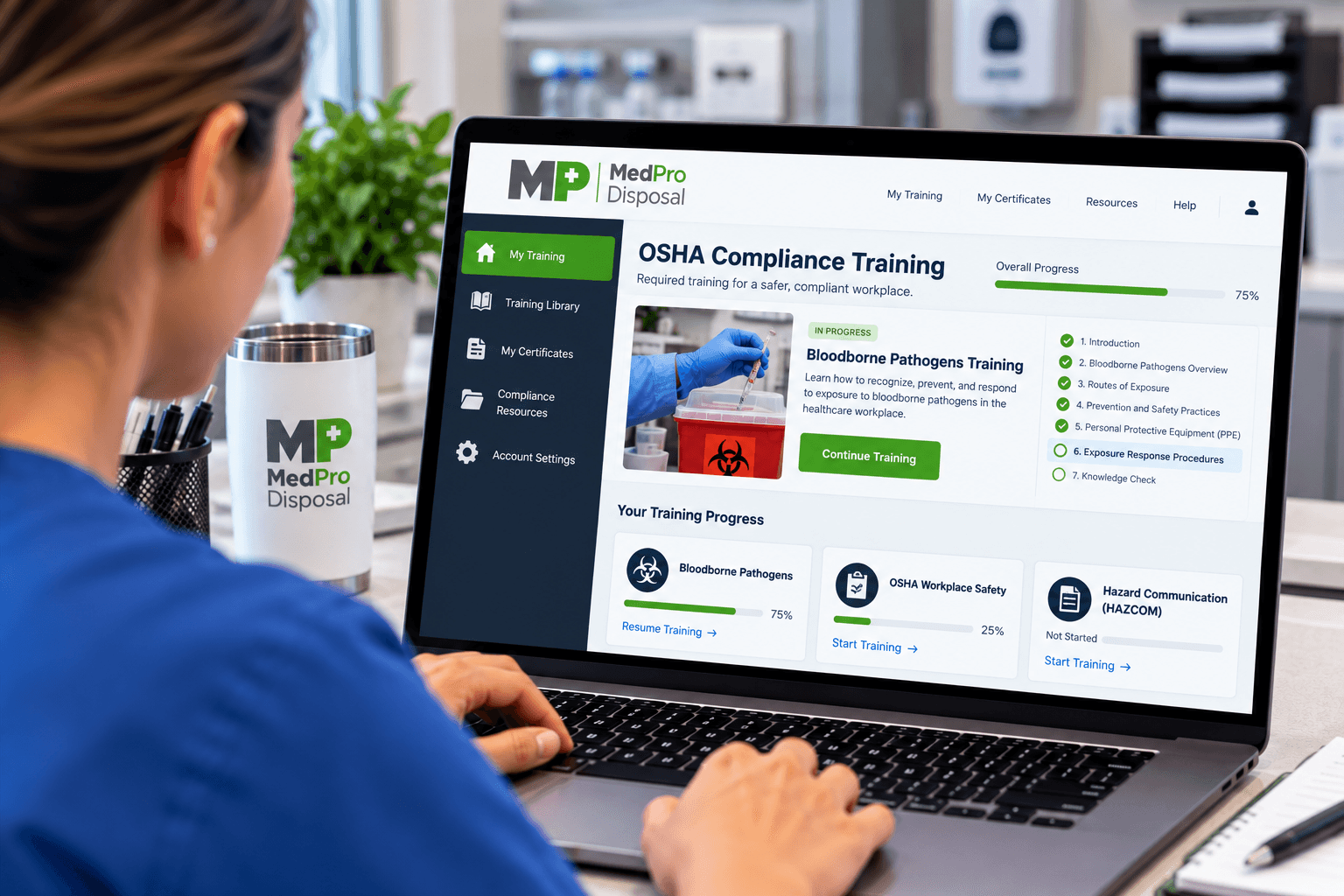
Healthcare worker using the MedPro Disposal online OSHA compliance training portal, with bloodborne pathogens training in progress
MedPro Compliance Services

Healthcare Compliance Services for OSHA & HIPAA

Easy Compliance Tracking

See who's compliant, who needs to re-certify, and whether your procedures are up to date.

Tools to Safeguard PHI

MedPro's HIPAA compliance platform helps with identity theft, email encryption, and encrypted backup of your records.

A Simple Guide to Certification

Certificates of completion for every course, stored and ready for audits.

Training Requirements

Which Compliance Training Does Your Practice Need?

The most common healthcare training requirements, side by side.

Which Compliance Training Does Your Practice Need?
TrainingRequired ByWho Needs ItHow Often
Bloodborne pathogensOSHA — 29 CFR 1910.1030Employees exposed to blood or OPIMAt hire and at least annually
Hazard communicationOSHA — 29 CFR 1910.1200Employees exposed to hazardous chemicalsAt hire and when new chemical hazards are introduced
HIPAA privacyHHS — 45 CFR 164.530(b)All workforce members who handle PHIWithin a reasonable period after hire and after material changes
HIPAA security awarenessHHS — 45 CFR 164.308(a)(5)All workforce members, including managementOngoing program with periodic reminders
Compliance program trainingHHS OIG guidanceAll staff, especially billing and codingRegularly, as part of the practice's compliance program
Getting Started

How MedPro Compliance Training Works

  1. 1

    Request a Quote

    Tell us your practice size and which staff need OSHA and HIPAA training.

  2. 2

    Set Up Your Portal

    We enroll your team and assign an administrator to manage training.

  3. 3

    Train Online

    Staff complete role-based OSHA and HIPAA modules anytime, anywhere.

  4. 4

    Track & Certify

    Certificates, re-certification reminders, and records all live in one portal.

Compliance Checklist

Healthcare Compliance Program Check-Up

A quick self-check based on the OIG's seven components.

Your Self-Check

0/6in place

Tick what your facility already has in place. MedPro can help close the gaps.

Get Compliant Help
Why MedPro

Compliance Made Easy

Core programs: OSHA and HIPAA, in one platform

2

Online access for your staff

24/7

Healthcare facilities served

40,000+

Average savings on waste and compliance services

30%

Who We Serve

Industries We Serve

Every healthcare employer with staff exposed to blood or patient information needs OSHA and HIPAA training on record.

Reference

Healthcare Compliance Glossary

Healthcare Compliance
The ongoing process of meeting or exceeding the legal, ethical, and professional standards that apply to a healthcare organization.
Compliance Program
An organization's policies, training, monitoring, and response processes for preventing and correcting violations.
Compliance Officer
The person designated to oversee a practice's compliance program.
HHS OIG
The Office of Inspector General of the U.S. Department of Health and Human Services, which fights fraud, waste, and abuse in HHS programs.
OSHA
The Occupational Safety and Health Administration, which sets and enforces workplace safety standards.
HIPAA
The Health Insurance Portability and Accountability Act, whose Privacy and Security Rules protect patient health information.
PHI
Protected health information — individually identifiable health information held by a covered entity or business associate.
FAQ

Frequently Asked Questions

Still have a question? Call (888) 641-6131 and talk to a real person.

What is healthcare compliance training?

Training that teaches healthcare staff the legal, ethical, and safety standards that apply to their jobs. For most practices that centers on OSHA workplace safety — especially bloodborne pathogens — and HIPAA privacy and security, plus the practice's own compliance program.

Is healthcare compliance training required?

Much of it is. OSHA requires bloodborne pathogens training at initial assignment and at least annually for exposed employees, and HIPAA requires training every workforce member who handles PHI. OIG also lists training and education as one of the seven components of an effective compliance program.

What are the seven elements of a compliance program?

OIG's guidance for physician practices lists: conduct internal monitoring and auditing; implement compliance and practice standards; designate a compliance officer or contact; conduct appropriate training and education; respond appropriately to detected offenses and develop corrective action; develop open lines of communication with employees; and enforce disciplinary standards through well-publicized guidelines.

Who regulates healthcare compliance?

Several bodies, including the HHS Office of Inspector General, HHS and its Office for Civil Rights (HIPAA), OSHA, the FDA, the DEA, and accrediting organizations such as The Joint Commission, along with state agencies.

Is there an official healthcare compliance certification?

Not from the government for HIPAA — HHS doesn't certify people or products as HIPAA compliant. Training certificates document that staff completed required training, which both OSHA and HIPAA expect you to record. Learn more on our HIPAA training page.

How do I track which staff need re-certification?

MedPro's online platform tracks certification status for your whole team and sends reminders before re-certifications are due, so you can see at a glance who's compliant.

What does MedPro's compliance training include?

Online OSHA and HIPAA training modules, compliance tracking, tools for safeguarding PHI, certificates of completion, and guidance on certification — alongside medical waste disposal and document destruction if you need them.

Request Pricing

Learn How MedPro Keeps You Compliant

The landscape of healthcare compliance is ever-changing — MedPro makes staying on top of it easy. Call (888) 641-6131 for more information or get a quote now.

Call for Quick Quote(888) 641-6131

Get Your Free Quote

Tell us a bit about your facility and we'll follow up fast.

What services are you interested in?

No spam, ever. We'll only use this to follow up on your quote.

This site is protected by reCAPTCHA and the Google Privacy Policy and Terms of Service apply.