

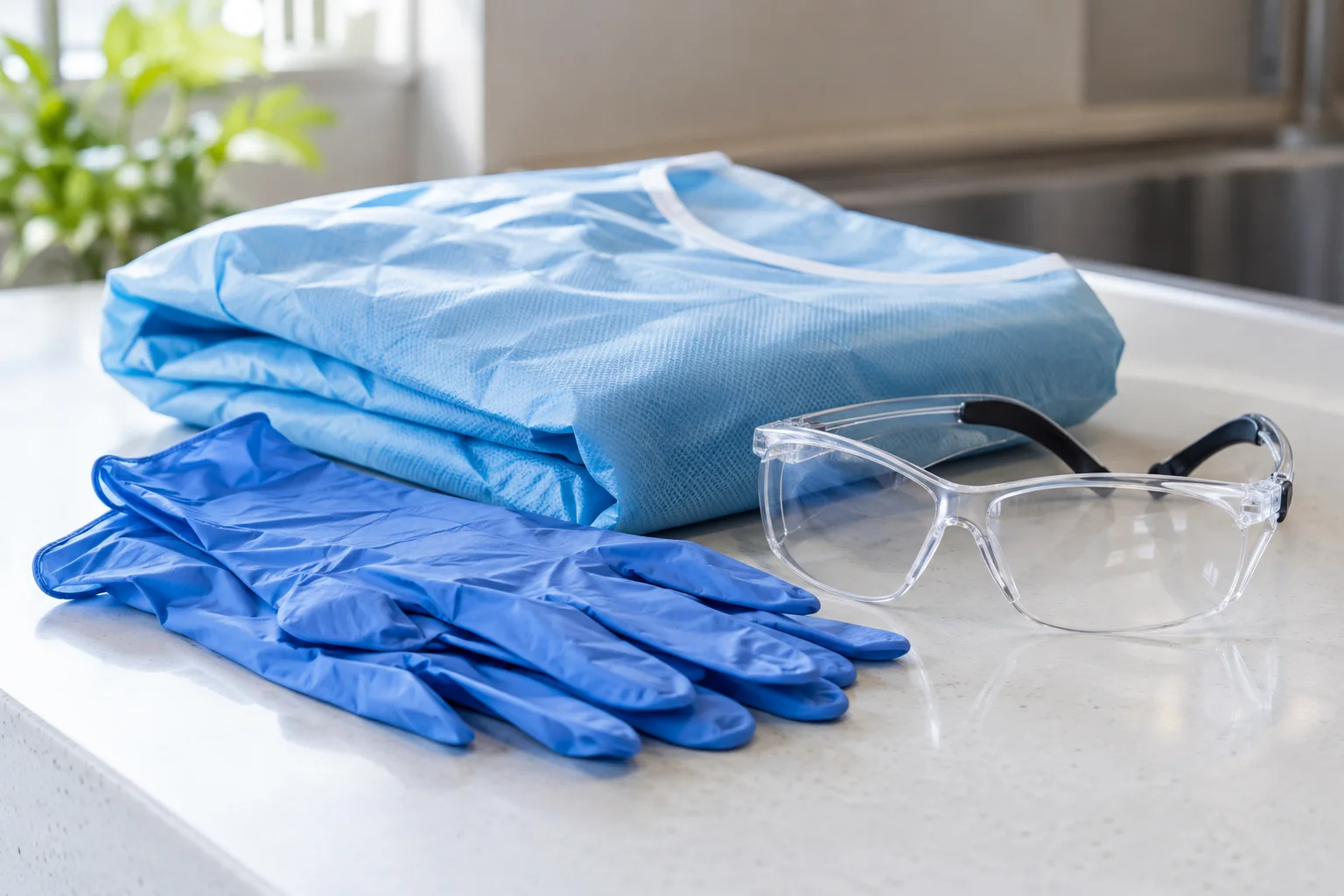
In 1991, the Occupational Safety and Health Administration (OSHA) publicized the Bloodborne Pathogens standard, which was designed to protect workers from the risk of exposure to bloodborne pathogens, such as the Human Immunodeficiency Virus (HIV) and the Hepatitis B Virus (HBV).
In 2000, the standard was revised by the Needlestick Safety and Prevention Act, which was set forth in greater detail (and made more specific) OSHA's requirement for employers to identify, evaluate and implement safer medical devices.
The following are some of the most commonly asked questions related to the Bloodborne Pathogens standard.
Q1. Who is covered by the standard?
A1. All employees who have occupational exposure to blood or other potentially infectious material (OPIM) are covered by the standard.
- In this instance, occupational exposure is defined as “reasonably anticipated skin, eye, mucous membrane, or parenteral contact with blood or other potentially infectious materials that may result from the performance of an employee's duties.”
- OPIM are defined as “saliva in dental procedures; semen; vaginal secretions; cerebrospinal, synovial, pleural, pericardial, peritoneal, and amniotic fluids; body fluids visibly contaminated with blood; along with all body fluids in situations where it is difficult or impossible to differentiate between body fluids; unfixed human tissues or organs (other than intact skin); HIV-containing cell or tissue cultures, organ cultures, and HIV- or HBV-containing culture media or other solutions; and blood, organs, or other tissues from experimental animals infected with HIV or HBV.”
Q2. Are volunteers and students covered by the standard?
A2. Volunteers are not covered by the standard, and students are only covered if and when they are compensated for work hours.
Q3. Under the Bloodborne Pathogens standard, what are the responsibilities of companies that supply contract employees to healthcare facilities?
A3. If you send your own employees to work at other facilities, OSHA considers you employers whose employees may be exposed to hazards. Because you provide employees but another entity (your client) creates and controls the hazards, you share responsibility for assuring the safety of your employees. The client employer has the primary responsibility for such protection, but the "lessor employer" likewise has a responsibility under the Occupational Safety and Health Act.
Q4. Are employees who are designated to perform first aid covered by the standard?
A4. Yes. If employees are trained and designated as responsible for rendering first aid as part of their job duties, they are covered by the protections of the standard. However, OSHA will consider it a de minimis violation - a technical violation carrying no penalties - if employees, who administer first aid as a collateral duty to their routine work assignments, are not offered the pre-exposure hepatitis B vaccination, provided that a number of conditions are met. In these circumstances, no citations will be issued.
Q5. What is an exposure control plan?
A5. This is an employer’s written program that outlines protective measures to be taken to reduce or eliminate employee’s exposure to blood and OPIM.
At minimum, the exposure control plan must include:
- Job classifications along with listed tasks and occupational exposure.
- The procedures for evaluating the circumstances surrounding exposure incidents;
- A schedule of how other provisions of the standard are implemented, including methods of compliance, HIV and HBV research laboratories and production facilities requirements, hepatitis B vaccination and post-exposure evaluation and follow-up, communication of hazards to employees, and recordkeeping
This is not, by any means, an exhaustive list of commonly asked questions. For answers to other questions you may have, please refer to
OSHA’s website
.
Find Out How Much You Can Save Instantly. Try our on-line savings calculator.
Savings calculator
Common Questions
- What is considered biohazard waste?
- Biohazard waste is any waste contaminated with blood, body fluids, or other potentially infectious materials that could transmit disease. OSHA's definition covers liquid or semi-liquid blood; items that would release blood if compressed or are caked with dried blood that could flake off; contaminated sharps; and pathological and microbiological wastes. Common examples include saturated gauze, contaminated PPE, suction canisters, cultures, needles, and surgical tissue.
- Who is allowed to transport biohazard waste?
- Biohazard waste must be transported in DOT-compliant packaging — rigid, UN-standard containers that meet Packing Group II performance — and most states require haulers to hold a medical waste transporter permit. MedPro Disposal handles transport through licensed routes and regional hauling partners in 48 states.
- Does OSHA require training for staff who handle biohazard waste?
- Yes. OSHA's Bloodborne Pathogens Standard requires training at the time of initial assignment and at least annually thereafter, within one year of the previous training — plus additional training when tasks change. MedPro's OSHA compliance training covers this requirement online.
- How much does biohazard waste disposal cost?
- Cost depends on waste volume, pickup frequency, container size, waste type, and location; pathological and pharmaceutical waste generally cost more to treat than standard biohazard waste. MedPro customers save an average of 30% versus their previous provider — request a free quote for pricing specific to your facility.
Want more like this in your Google results?
Add MedPro as a preferred source on Google