

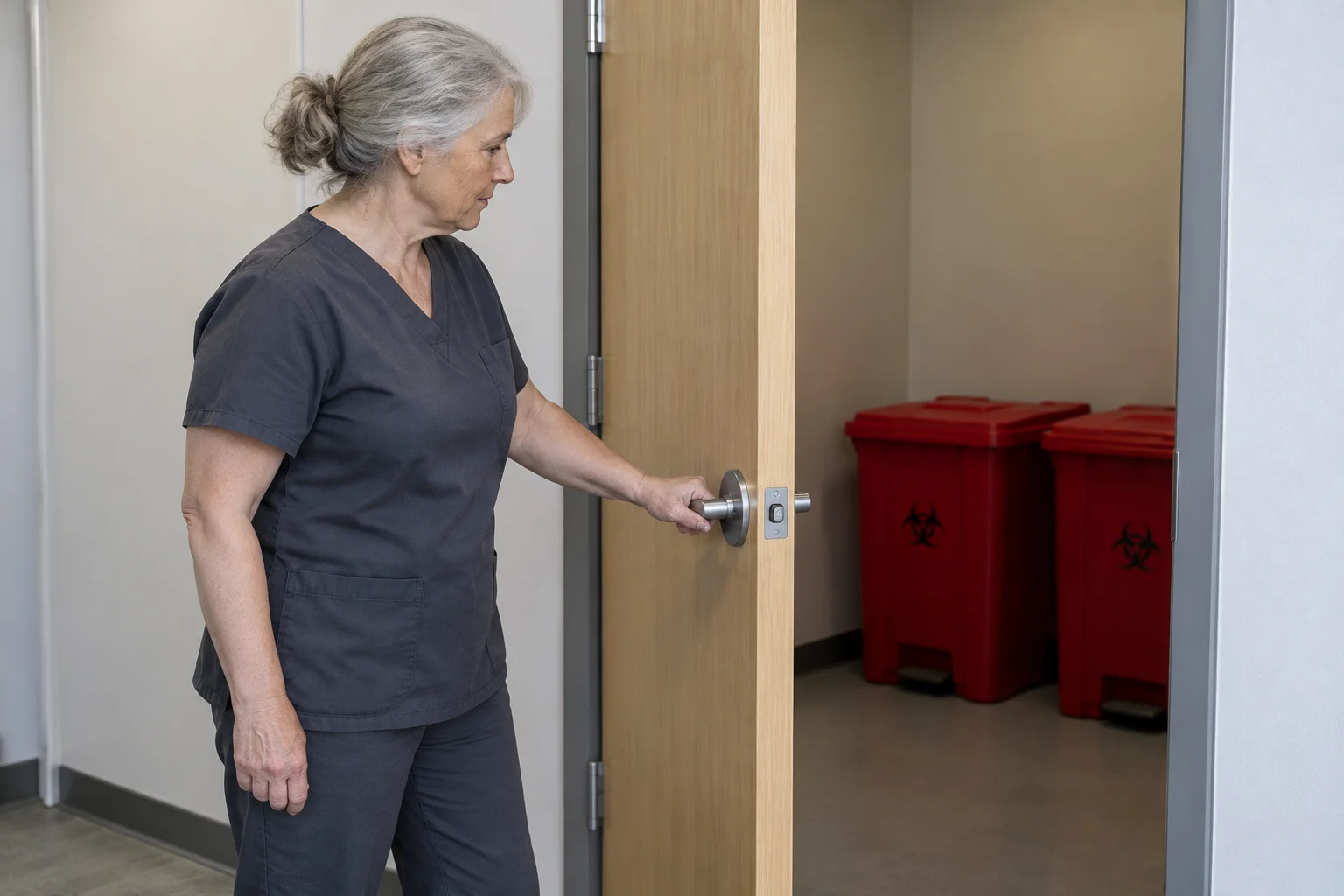
The COVID vaccine schedule is well on track in the US at the moment and is expected to increase exponentially within the very near future. More than 80 million vaccines had been administered between December 2020 and March 2021 and the US government plans to administer a further three million vaccines per day by the end of April.
In This Article
While the ramp-up in administering vaccine doses is a good thing, it does bring with it a downside in the form of additional vaccine-related medical waste – especially needles. Many individuals will also require two vaccine doses to ensure immunity, which will further increase the amount of hazardous waste being generated.
CDC Requirements
According to the Centers for Disease Control (CDC), all medical waste that has been generated as a result of COVID must be handled as Category B waste – an infectious substance not in a form that can cause fatal or life-threatening disease or permanent disability.
As such, facilities that generate this type of waste must adhere to treatment and disposal protocols that are used for most types of potentially infectious medical waste products. In most cases, this involves autoclaving that uses high temperatures and high-pressure steam to any possible pathogens before being disposed of. Sometimes, incineration is used with certain substances as well, including vaccine vials.
The waste disposal process starts at the sites where vaccinations are being administered and healthcare employees are disposing of used needles in dedicated sharps containers. These are then collected and delivered to the appropriate medical waste facility to be autoclaved before being landfilled or sent on to a mass burn or waste-to-energy (WTE) facility. In cases where the waste moves to a WTE facility, any residual ash that is left over will be landfilled.
How MedPro Disposal can Assist
MedPro Disposal provides an extensive range of medical waste disposal services and options to clients in the healthcare industry, including:
- Sharps waste disposal
- Solid waste disposal
- Liquid waste disposal
Examples of sharps that require safe disposal include needles, syringes, lancets, Epi-pens, insulin pens, scalpels, scissors, infusion sets, and connection needles. All of these need to be placed into dedicated sharps disposal containers that the company provides so that they can be collected and handled accordingly.
MedPro will not only handle the collection and disposal of all types of medical waste; clients will also be provided with the best possible rates for having these services performed. This helps keep the cost of medical waste disposal as affordable as possible.
If your healthcare practice or other medical facility is struggling to keep up with the amount of medical waste that has been generated from the administering of COVID vaccines, now is the time to contact us. Our team will be more than happy to answer any questions you may have regarding the services we offer and the volumes of waste that we will be able to deal with on your behalf. Call us on (888) 641-6131 or complete our convenient website contact form.
Common Questions
- What's the difference between biohazard waste and medical waste?
- Biohazard waste is a subset of medical waste. Medical waste is the broad category that can include pharmaceuticals and chemicals; biohazard waste specifically refers to material that contains or may contain infectious agents. For the broader category, see our medical waste disposal guide.
- Who is allowed to transport biohazard waste?
- Biohazard waste must be transported in DOT-compliant packaging — rigid, UN-standard containers that meet Packing Group II performance — and most states require haulers to hold a medical waste transporter permit. MedPro Disposal handles transport through licensed routes and regional hauling partners in 48 states.
- How much does biohazard waste disposal cost?
- Cost depends on waste volume, pickup frequency, container size, waste type, and location; pathological and pharmaceutical waste generally cost more to treat than standard biohazard waste. MedPro customers save an average of 30% versus their previous provider — request a free quote for pricing specific to your facility.
- Who needs biohazard waste disposal services?
- Any organization that generates infectious waste — hospitals, clinics, physician and dental offices, nursing homes, home health providers, laboratories, schools and universities, mortuaries and funeral homes, blood banks, veterinary practices and animal shelters, and even jails, prisons, and casinos.
Want more like this in your Google results?
Add MedPro as a preferred source on Google