+
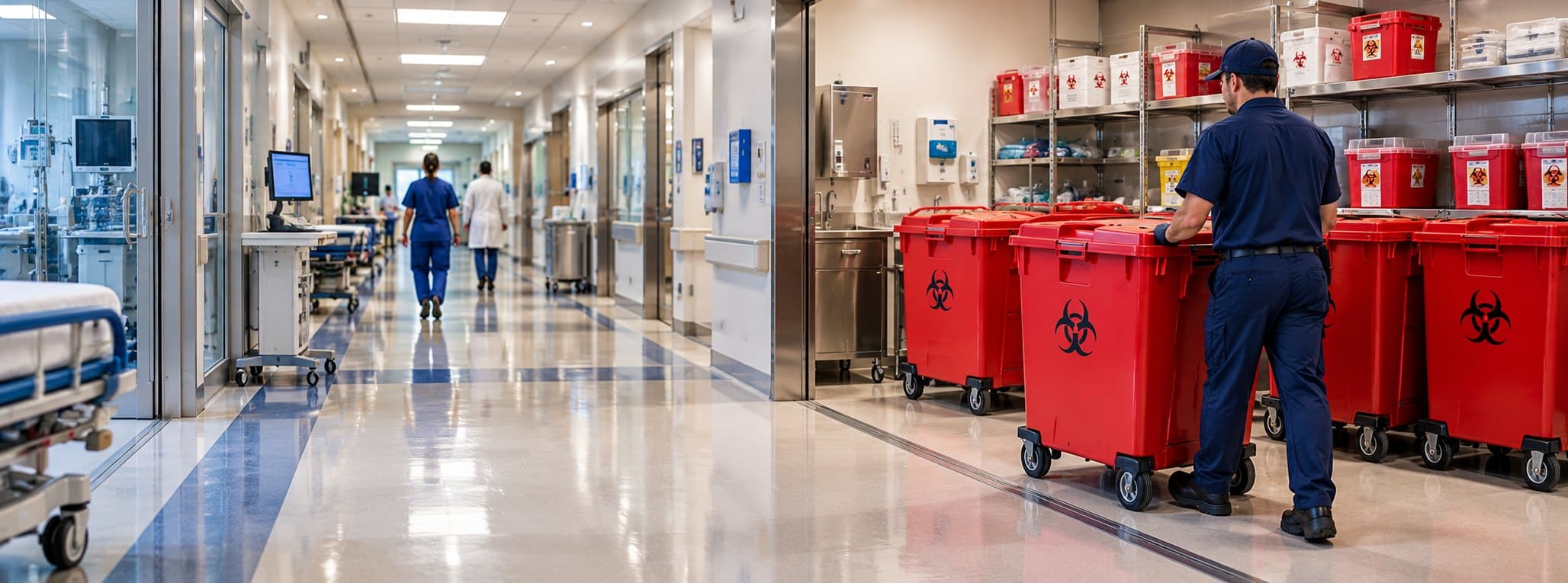
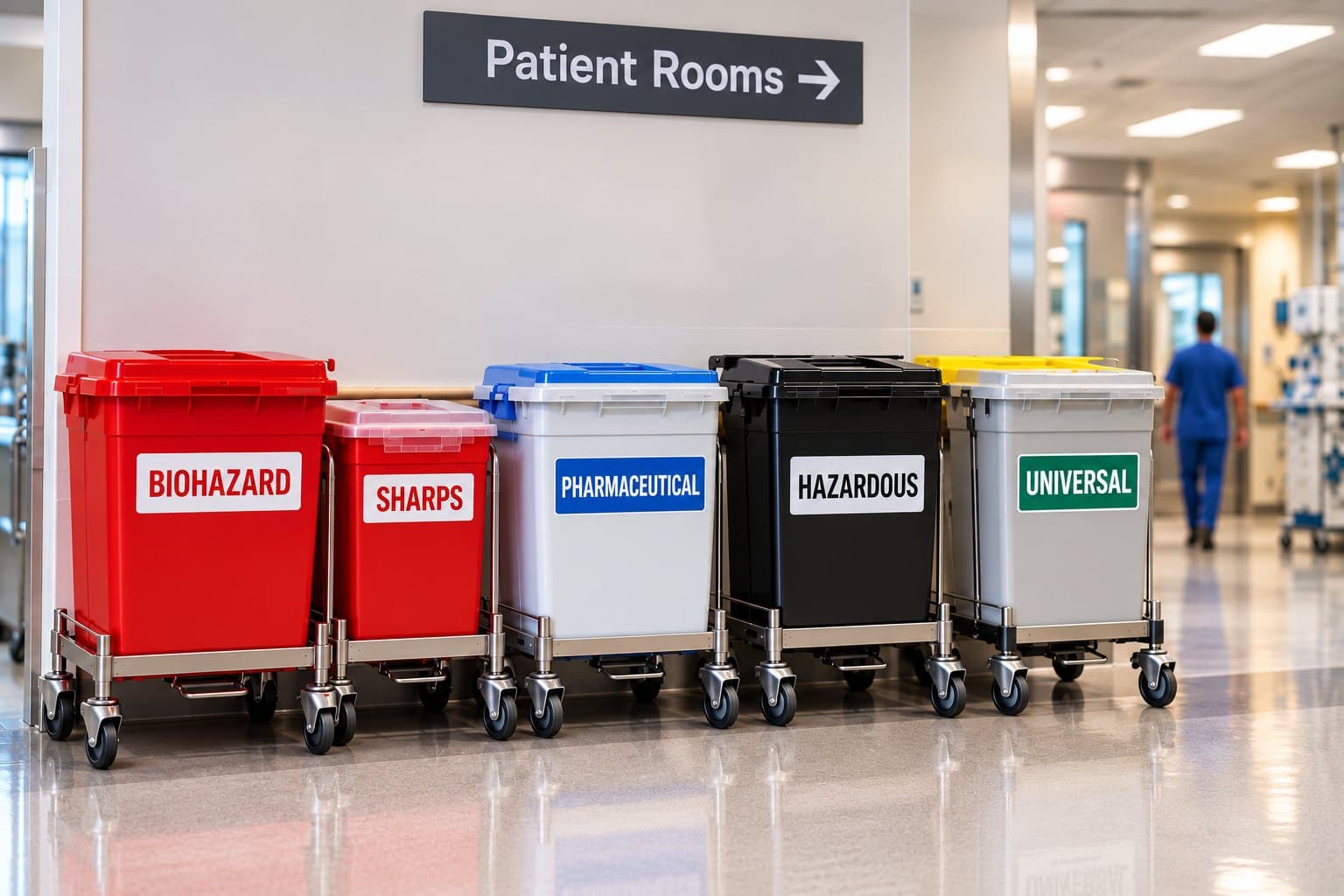
Hospitals segregate waste at the point of generation into separate containers for red bag biohazard waste, sharps, pathological waste, chemotherapy waste, and pharmaceuticals. Filled containers are moved to a secured storage area and collected by a licensed medical waste hauler, which transports them to a permitted facility for treatment — usually autoclaving, or incineration for pathological and chemo waste — and provides documentation of disposal.
+
The main categories are infectious (biohazard) waste, sharps, pathological waste, pharmaceutical waste, chemical waste, genotoxic or cytotoxic waste from chemotherapy, radioactive waste from nuclear medicine and radiation therapy, and general non-regulated waste like food, paper, and packaging. Each requires its own handling and disposal method.
+
Several agencies share oversight. OSHA regulates worker exposure under 29 CFR 1910.1030, the EPA regulates hazardous waste and hazardous waste pharmaceuticals, the DEA regulates controlled-substance disposal, and the DOT regulates transport. States regulate medical waste itself, and accreditation organizations such as The Joint Commission review how hospitals manage hazardous materials and waste.
+
Not hazardous waste pharmaceuticals. EPA's Subpart P rule prohibits healthcare facilities, including hospitals, from sewering hazardous waste pharmaceuticals. Best practice is to keep all medications out of drains and toilets and use a pharmaceutical waste disposal program instead.
+
Items with only trace amounts of chemotherapy drugs — empty IV bags, tubing, gloves, and gowns — are commonly collected in yellow containers and incinerated. Bulk or unused chemotherapy drugs are generally managed as hazardous waste pharmaceuticals in black containers. Your state's rules and facility policy determine the exact segregation.
+
Radioactive waste from nuclear medicine and radiation therapy is regulated separately, by the Nuclear Regulatory Commission or a state radiation control program, and is managed under the hospital's radioactive materials license and radiation safety program. Talk with your MedPro account team about how radioactive and mixed waste fit into your overall program before assuming it can go in a regular medical waste stream.
+
OSHA requires bloodborne pathogens training at initial assignment and at least annually for employees with occupational exposure. Staff who handle patient information also need HIPAA training. MedPro offers online OSHA and HIPAA compliance training to help hospital staff keep up with the latest requirements.
+
It depends on volume by waste stream, pickup frequency, specialty streams like pathological and chemo waste, and your location. MedPro customers save an average of 30% versus their previous provider — request a free quote for pricing built around your hospital.