+
Generally, no. Under OSHA's Bloodborne Pathogens Standard, urine and feces aren't considered potentially infectious materials unless they contain visible blood, so most incontinence briefs and underpads can go in the regular trash. State medical waste definitions vary, and your infection control policy may set additional handling rules — confirm what applies in your state.
+
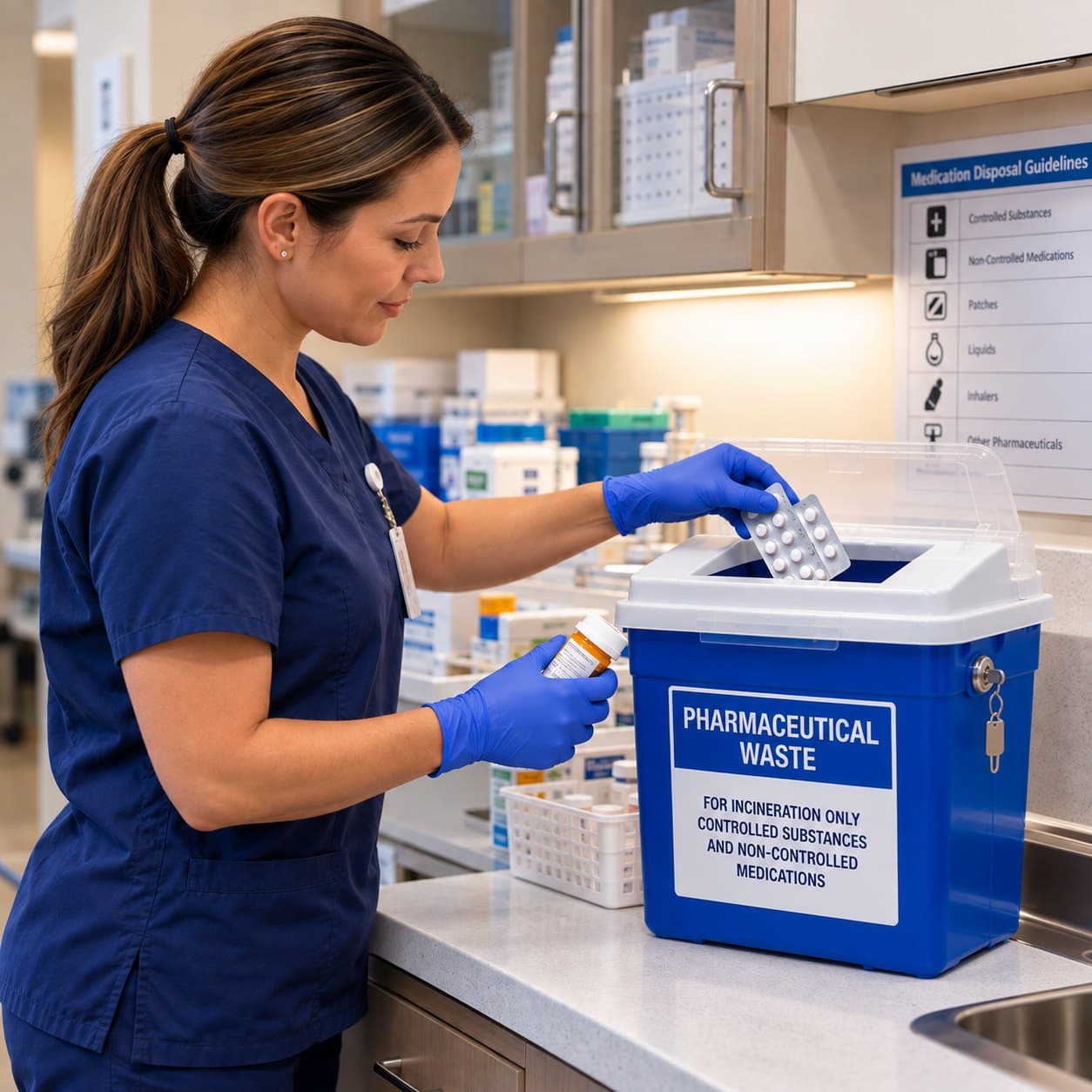
Residents' controlled substances can't simply go to a reverse distributor the way a DEA registrant's inventory can. DEA's disposal rules (21 CFR 1317) set out specific options for long-term care facilities, including collection receptacles installed and managed by an authorized collector. State rules often add witness and documentation requirements. MedPro's pharmaceutical waste disposal team can help you set up an approach that fits your facility.
+
Not hazardous waste pharmaceuticals. EPA's rule for healthcare facilities (40 CFR 266 Subpart P), which covers long-term care facilities, bans sewering hazardous waste pharmaceuticals. As a best practice, keep all medications out of drains and toilets and send them to a pharmaceutical waste disposal program instead.
+
Mostly sharps from insulin and injections, blood-contaminated dressings from wound care, and pharmaceutical waste from expired, discontinued, and leftover resident medications, including controlled substances. Facilities also generate hazardous and universal waste such as batteries and fluorescent bulbs, and paper records containing protected health information.
+
It depends on your volume and your state's on-site storage limits. Many long-term care facilities use weekly or biweekly service, adjusting when census or volume changes. MedPro sizes your schedule and container capacity so waste doesn't back up in resident areas.
+
Surveys of certified nursing facilities assess infection prevention and control and pharmacy services, which include how waste and drugs are handled and disposed of. Expect questions about sharps handling, segregation, storage areas, medication disposal, and staff training. Keeping manifests, pickup records, and training documentation organized helps you show compliance at any time.
+
Yes. MedPro's OSHA and HIPAA compliance training covers bloodborne pathogens and proper handling of regulated waste, with records you can keep on file. OSHA requires bloodborne pathogens training at hire and at least annually for exposed employees.
+
MedPro prices based on your account size and how much waste you generate, plus pickup frequency, waste mix, and location. Better segregation often lowers cost the most. MedPro customers save an average of 30% versus their previous provider — request a free quote for pricing specific to your facility.