
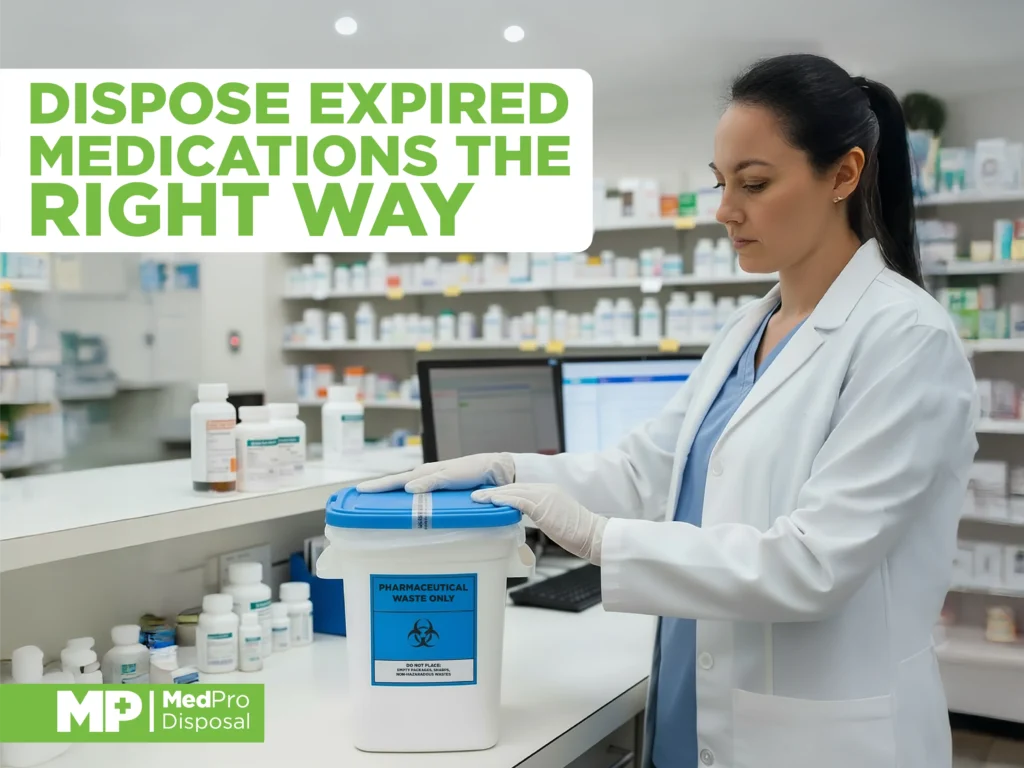
If you’ve ever wondered, “Where can I dispose of expired drugs?” you’re not alone. Knowing where and how to dispose of unused medication is more than good practice. It is a regulatory requirement.
Healthcare professionals are responsible for their controlled substance disposal. They need to know where to dispose expired medication safely, in full compliance with regulations.
Why Knowing Where to Dispose Expired Medication Matters
Knowing where to dispose of expired medication protects your staff, patients, and facility. Keeping expired or unused drugs on-site increases compliance risks. Theft , misuse, or accidental ingestion are serious risks. They can harm people and damage your facility’s reputation.
Agencies like the EPA and OSHA provide detailed controlled substance disposal regulations. Equally essential are the DEA drug disposal guidelines. State health and environmental departments also impose environmental safety and controlled substance disposal regulations.
Rather than seeing them as compliance complications, think of them as your safety nets. By following these rules, your facility stays compliant and avoids penalties. They help you maintain public trust in your healthcare operations and help reduce your facility’s environmental impact.
DEA and OSHA Guidelines: Setting the Standards for Safe Controlled Substance Disposal
DEA Drug Disposal Guidelines and the Non-Retrievable Requirement
The DEA enforces the Controlled Substances Act (CSA). This regulation governs expired medication and controlled substance disposal. The CSA covers the following methods:
- Incineration at hazardous waste treatment facilities. Agencies license these facilities for this purpose.
- Chemical neutralization, using DEA-compliant drug deactivation kits. Generally, a DEA-authorized treatment facility carries out the chemical neutralization process.
- Reverse distribution is the process of returning expired medications to authorized distributors. They then perform the destruction and provide certificates documenting this process.
- Facilities that dispose of controlled substances must complete DEA Form 41. Documentation must be audit-ready.
- Following CSA, healthcare facilities must also know where to dispose of expired medication properly.
Used Medication and Controlled Substance Disposal Under the OSHA Hazard Communication Standard (HCS)
Pharmacies, hospitals, and long-term care centers must follow OSHA’s Hazard Communication Standard (HCS). This regulation helps protect staff from exposure to hazardous waste, including expired medication.
Facilities are required to:
- Maintain an inventory of all hazardous substances, including expired medication.
- Provide Safety Data Sheets (SDS) for each substance (including medications).
- Label chemicals with GHS-aligned warnings and pictograms.
- Train staff on safe handling procedures and emergency response.
- Train staff on how to dispose of unused medication and where to dispose expired medication.
Together, these DEA and OSHA guidelines create a dual framework. This framework is the foundation for safe management and controlled substance disposal.
How to Dispose of Unused Medication Safely and Responsibly
Controlled Substance Disposal in Healthcare Settings
Controlled substance disposal requires the same strict standards used for other RMWs. Disposal of medicines, both expired and unused, require a strict step-by-step process:
- Segregate controlled pharmaceutical waste at the point of generation. Separate them from other waste types.
- Label and secure pharmaceutical waste containers to prevent unauthorized access and theft.
- Use approved destruction methods. Incineration or drug deactivation systems render expired medication and controlled substances inert and non-retrievable.
- Maintain disposal records, including DEA Form 41. Prepare documentation, chain-of-custody manifests, and certificates of destruction.
- Work with a certified controlled substance disposal services provider. One that carries the necessary permits and insurance.
These steps will help you maintain compliance with federal and state regulations. They will help minimize your liability. They ensure that everyone follows controlled substance disposal regulations and processes.
Prescription Drug Take-Back Programs and Drop-Off Locations
Prescription drug take-back programs and drop-off locations give smaller facilities a safe and simpler disposal option. For example, the DEA’s National Prescription Drug Take Back Day is held twice a year.
The program “takes back” expired medications at designated drug take-back locations. This makes it easy for individuals and smaller facilities to drop off expired or unused medications.
Another program is the drop-off location. Pharmacies, hospitals, and law enforcement offices provide year-round drop-off boxes.
The DEA authorizes them as authorized safe drug disposal locations. These facilities take care of the process. From collection and packing to destruction.
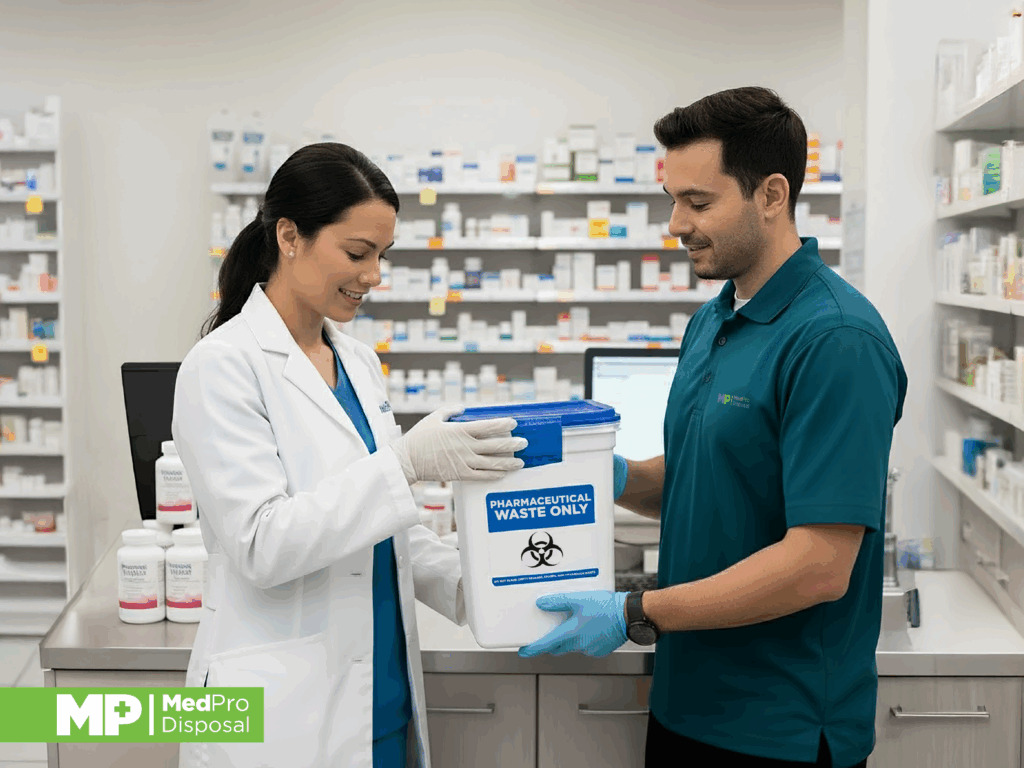
Mail-Back Medication Disposal Kits: A Compliant Alternative
Controlled Substance Disposal Through Secure Mail-Back Options
Mail-back disposal kits are one of the safest options for controlled substance disposal. Not only is it ideal for pharmacies and smaller clinics, it’s a great option for home-care professionals and patients.
Mail-back kits let users send expired or unused medications directly to a licensed disposal facility. The benefits include:
- Compliance with the DEA’s and EPA’s controlled substance disposal regulations.
- Tracking documentation and certificates of destruction for record-keeping and audits.
- Environmental protection and community safety.
MedPro Disposal offers mail-back programs for clinics, pharmacies, and long-term care centers. They provide a simple, compliant, and cost-effective disposal solution without waiting for scheduled pickups.
Federal and State Oversight of Expired Drug Disposal
Federal and state enforcement agencies oversee proper medication disposal. Each agency plays a unique role in overseeing controlled substance disposal.
They provide regulations for:
- Training staff in proper biohazard waste handling and management.
- Implementing segregation and using approved containers and labels for storage.
- Following the biohazard waste disposal process, from generation to disposal.
- Maintaining documentation of waste volumes, chain-of-custody, disposal methods, and transport.
Controlled substance disposal regulations may vary from state to state. Working with a certified provider helps you navigate compliance with confidence.
Public Health and Environmental Risks of Improper Controlled Substance Disposal
Controlled Substance Disposal and Environmental Impact
Improper medication disposal can have a serious environmental impact. If you don’t properly dispose of your expired or unused medications, they can cause accidental poisoning. When flushed into sewer systems, they can end up in our rivers and drinking water supply.
Some drugs do not break down easily. They can harm ecosystems and damage aquatic life. They can cause long-term soil and groundwater contamination. They can degrade drinking water quality and cause a range of potential health problems for humans.
Healthcare facilities that do not follow the Environmental Protection Agency’s regulations can face heavy fines. They may also incur possible license suspension and reputational damage.
Using DEA-approved drug destruction methods prevents these water contamination problems. Following the EPA’s “no-flush” rule ensures environmental compliance as well.
How MedPro Disposal Simplifies Pharmaceutical Waste Management
Controlled Substance Disposal Solutions Tailored to Every Facility
Controlled substance disposal does not need to be complex or costly. That’s where MedPro Disposal comes in. We provide compliant solutions for pharmaceutical and controlled substance disposal. You can also customize or bundle these solutions to fit your facility’s needs.
You can rest assured that MedPro will provide affordable and compliant waste disposal services. MedPro’s services include:
- Scheduled or on-demand pickups for pharmaceutical and regulated medical waste.
- DEA-compliant mail-back programs for small clinics and practices.
- Documentation support, including manifests and certificates of destruction.
- Dedicated account management. Each client is assigned a support team to ensure personalized service.
- $33M in liability coverage and full ownership of your waste from the moment it leaves your facility.
Compliant Controlled Substance Disposal with MedPro
Working with MedPro Disposal helps keep your facility fully compliant. Our pharmaceutical waste disposal practices meet DEA, EPA, OSHA, and DOT regulations.
Equally importantly, we operate with a customer-first mentality. We provide personalized attention to deliver flexible solutions to every client. We offer predictable pricing, responsive support, and unmatched liability protection. MedPro ensures your controlled substance disposal process stays compliant and stress-free.
Ready to simplify your pharmaceutical and controlled substance waste management?
Call MedPro Disposal today for your Quick Quote 👉 888-641-6131.