
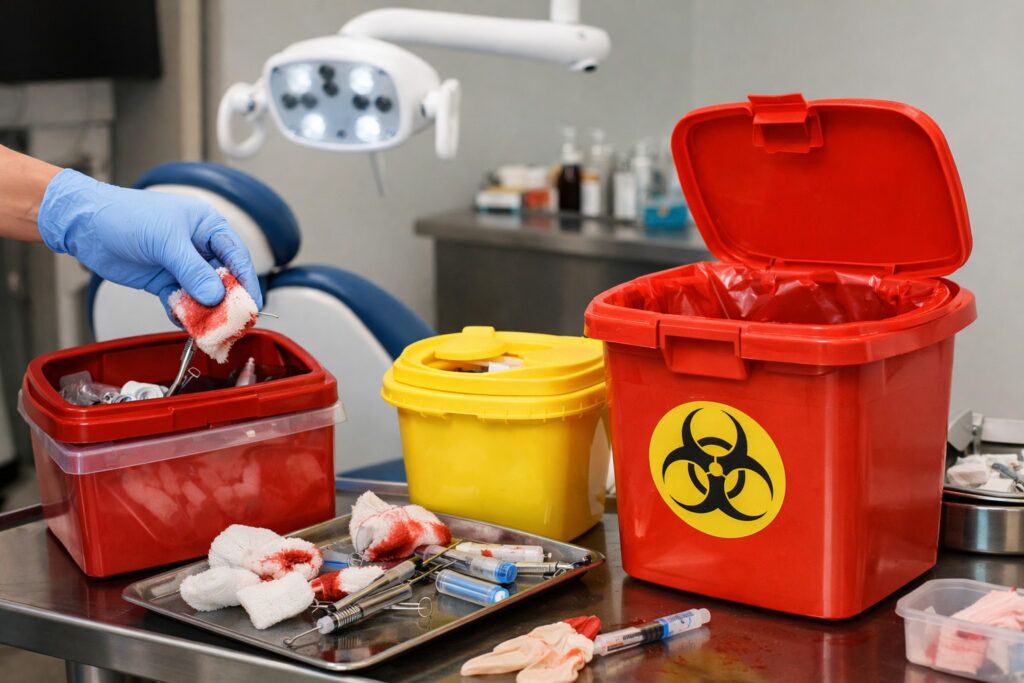
Dental clinics generate various types of biomedical waste daily, from contaminated sharps to extracted teeth and amalgam waste. Proper biomedical waste disposal for dental clinics is not just a regulatory requirement—it’s essential for patient safety, staff protection, and environmental health. According to OSHA and EPA guidelines, dental practices must segregate waste at the point of generation, use color-coded containers, maintain disposal logs, and partner with licensed medical waste disposal services. Failure to comply can result in fines up to $70,000 per violation and potential license suspension. Understanding these requirements ensures your practice operates safely and legally.
Types of Biomedical Waste Generated in Dental Practices
Dental clinics produce several categories of regulated medical waste that require specific handling protocols.
Sharps and Contaminated Instruments
Needles, scalpel blades, broken glass, and orthodontic wires fall under sharps waste. These must be placed immediately into FDA-cleared sharps containers that are puncture-resistant, leak-proof, and properly labeled. Never overfill sharps containers beyond the fill line—seal and dispose when three-quarters full.
Pathological and Anatomical Waste
Extracted teeth, gum tissue, and other human anatomical waste require separate disposal. Teeth containing amalgam fillings must be managed as hazardous waste due to mercury content and cannot be placed in regular biomedical waste streams.
Contaminated Personal Protective Equipment
Used gloves, masks, gowns, and gauze contaminated with blood or saliva are classified as infectious waste. These items should be placed in red biohazard bags immediately after use to prevent cross-contamination.
Regulatory Compliance Standards for Dental Clinic Biomedical Waste Disposal
Understanding federal and state regulations is critical for maintaining compliant dental clinic biomedical waste disposal requirements.
OSHA Bloodborne Pathogens Standard
OSHA’s Bloodborne Pathogens Standard (29 CFR 1910.1030) requires dental practices to develop an exposure control plan, provide staff training, offer hepatitis B vaccinations, and implement engineering controls. Annual training documentation must be maintained for all employees who handle biomedical waste.
EPA and State-Specific Regulations
The EPA regulates dental amalgam waste through the Dental Effluent Rule, requiring practices to use amalgam separators and properly dispose of amalgam waste through licensed hazardous waste handlers. State regulations vary—some states classify all dental waste as infectious, while others have tiered systems. Check your state dental board and environmental agency for specific requirements.
DOT Transportation Requirements
When biomedical waste leaves your facility, it must comply with Department of Transportation regulations. Waste containers must be properly labeled, packaged in approved outer containers, and transported only by licensed medical waste haulers with proper permits.
Best Practices for Biomedical Waste Management in Dental Clinics
Implementing systematic waste management protocols protects your team and ensures regulatory compliance.
Color-Coded Segregation System
Use red bags for infectious waste, yellow containers for pathological waste, white containers for sharps, and designated containers for amalgam waste. Train all staff to segregate waste at the point of generation—never sort waste after collection.
Proper Storage and Labeling
Store biomedical waste in a secure, designated area away from patient care zones. All containers must display the biohazard symbol, waste type, and accumulation start date. Most states require disposal within 7-30 days of initial storage, depending on volume.
Staff Training and Documentation
Conduct initial and annual refresher training on waste handling procedures. Document all training sessions with dates, attendees, and topics covered. Create clear written protocols accessible to all staff members.
Partnership with Licensed Disposal Services
Work with certified medical waste disposal companies that provide proper containers, scheduled pickups, treatment documentation, and certificates of destruction. Verify their licenses, insurance, and treatment methods meet state requirements.
Creating an Effective Waste Disposal Plan for Your Practice
A comprehensive waste management plan ensures consistent compliance and operational efficiency.
Conduct a Waste Audit
Identify all waste streams in your practice, estimate monthly volumes, and determine current disposal costs. This baseline helps you optimize waste segregation and potentially reduce disposal expenses.
Develop Written Protocols
Create step-by-step procedures for each waste type, including segregation, storage, labeling, and disposal. Include emergency spill response procedures and exposure incident protocols.
Assign Responsibility and Oversight
Designate a compliance officer responsible for waste management oversight, vendor coordination, training scheduling, and record-keeping. Regular audits ensure protocols are followed consistently.
Maintain Compliance Records
Keep disposal manifests, training records, vendor licenses, and treatment certificates for at least three years. These documents prove compliance during inspections and protect against liability claims.
Frequently Asked Questions
What types of waste are considered biomedical waste in dental clinics?
Biomedical waste in dental practices includes sharps (needles, blades), pathological waste (extracted teeth, tissue), infectious waste (blood-contaminated materials), and pharmaceutical waste (expired medications). Amalgam waste is classified separately as hazardous waste due to mercury content.
How often should dental clinics dispose of biomedical waste?
Most states require biomedical waste disposal within 7-30 days of initial accumulation, depending on storage volume. High-volume practices may need weekly pickups, while smaller clinics might schedule bi-weekly or monthly collections through licensed medical waste services.
Can dental clinics dispose of biomedical waste in regular trash?
No. Federal and state regulations prohibit disposing of biomedical waste in regular municipal waste streams. Dental clinic biomedical waste disposal requirements mandate using licensed medical waste haulers and approved treatment methods like autoclaving or incineration.
What are the penalties for improper biomedical waste disposal?
OSHA violations can result in fines ranging from $7,000 to $70,000 per violation. State environmental agencies may impose additional penalties, and serious violations can lead to practice license suspension or criminal charges in cases of environmental contamination.
Do dental clinics need special permits for biomedical waste?
Requirements vary by state. Some states require dental practices to register as medical waste generators and obtain permits. Contact your state environmental agency and dental board to determine specific permit requirements for your location.
How should amalgam waste be handled differently from other dental waste?
Amalgam waste must be stored in designated containers with airtight seals, never disposed of in sharps containers or biohazard bags, and managed through hazardous waste disposal services. The EPA Dental Effluent Rule requires amalgam separators and proper waste characterization.


