
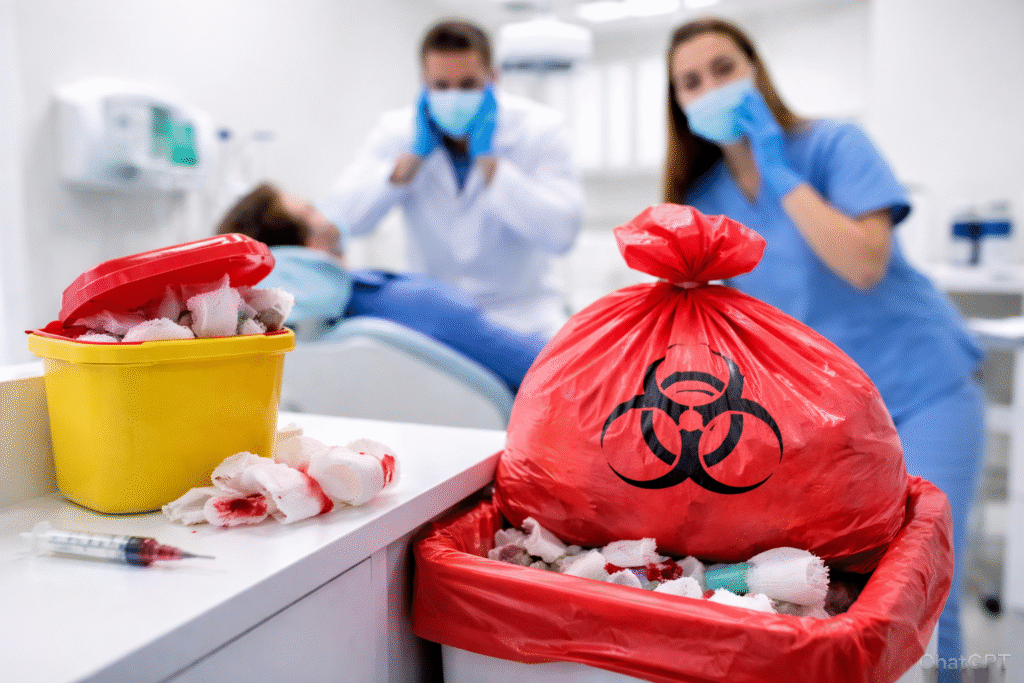
Many dental clinics unknowingly violate OSHA dental waste disposal requirements through gaps in staff training, improper waste segregation, and missing documentation. Under OSHA’s Bloodborne Pathogens Standard (29 CFR 1910.1030) and Hazard Communication Standard (29 CFR 1910.1200), dental practices are legally required to identify, label, store, and dispose of regulated waste using specific procedures. Violations can result in penalties from $7,000 to $70,000 per citation. The mistakes outlined below reflect the most frequently cited deficiencies found during OSHA inspections of dental clinics – and each one is correctable with the right procedures in place.
Incorrect Waste Segregation at the Point of Generation
Improper sorting of dental waste at the point of generation is one of the most cited OSHA violations in clinical settings. When different waste categories are mixed together, it creates compliance exposure and potential safety hazards for staff.
What Dental Clinics Get Wrong
Dental procedures generate several distinct waste types simultaneously – sharps, blood-soaked materials, chemical disinfectants, and mercury amalgam. A common mistake is placing these into a single container for convenience, particularly during busy patient care hours.
The Correct Segregation Standard
OSHA dental waste rules explained for clinics require that each waste category be separated at the source:
- Sharps go into puncture-resistant, leak-proof sharps containers only
- Blood-saturated materials go into red biohazard bags
- Amalgam waste goes into a dedicated, sealed amalgam container – never into infectious waste bags
- Chemical waste such as x-ray fixer or disinfectants must be stored in chemically compatible, labeled containers
Practical Fix
Post a laminated waste sorting reference guide at each operatory and sterilization station. Review waste containers during daily room checks to catch misplaced items before they become a compliance issue.
Mismanaging Dental Amalgam Under OSHA and EPA Rules
Dental amalgam is one of the most regulated waste materials in a dental setting, yet it remains one of the most commonly mishandled. Errors here expose clinics to violations from both OSHA and the EPA simultaneously.
The Dual Regulatory Overlap
OSHA’s Hazard Communication Standard governs how mercury-containing materials are stored and handled in the workplace. The EPA’s Dental Effluent Rule separately mandates the use of ISO 11143-compliant amalgam separators to prevent mercury from entering wastewater. Both apply to dental clinics operating in the United States.
Common Amalgam Mistakes
- Disposing of amalgam in red biohazard bags or standard trash – this is a direct violation
- Placing extracted teeth containing amalgam restorations in pathological waste containers
- Failing to inspect or clean chairside traps on a documented schedule
- Not using a licensed amalgam recycler for final disposal
Corrective Steps
Assign a designated amalgam waste container provided by a licensed hazardous waste handler. Establish a written inspection log for chairside traps and amalgam separators. Only work with certified amalgam recyclers – retain all manifests and certificates of recycling as proof of compliance.
Labeling, Storage, and Recordkeeping Failures
Even when waste is physically handled correctly, documentation failures are a leading cause of OSHA citations during dental clinic inspections. These are the dental clinic OSHA compliance tips that often get overlooked until an audit occurs.
Container Labeling Requirements
Under RCRA and OSHA standards, every chemical and regulated waste container must display:
- The full chemical or waste name – no abbreviations
- The applicable hazard symbol (biohazard or hazardous waste)
- The accumulation start date
- The generator’s facility name and address
Storage Rules to Know
- Regulated waste must be stored in a secure, designated area away from patient care zones
- Containers must remain closed at all times except when actively adding waste
- Most small quantity generators must arrange disposal within 90 days – some states impose shorter timelines
Recordkeeping Obligations
Maintain the following on file for a minimum of three years:
- Waste disposal manifests from licensed haulers
- Staff training records including dates, attendees, and topics covered
- Amalgam separator maintenance and inspection logs
- Spill incident reports and corrective action documentation
Missing or incomplete records are frequently the difference between a warning and a formal citation during an OSHA inspection.
Gaps in Staff Training and Annual Certification
Compliance protocols only work when the people responsible for executing them understand what to do and why. Insufficient or undocumented training is one of the most preventable OSHA violations dental clinics face.
What OSHA Requires for Dental Staff
OSHA mandates initial training before any employee handles chemical or biological waste, followed by documented annual refresher training. This applies to all roles – dental assistants, hygienists, office managers, and any support staff who may encounter regulated waste.
What Training Must Cover
Required training topics under 29 CFR 1910.1030 and 1910.1200 include:
- Waste type identification and segregation procedures
- Proper PPE selection and use when handling chemical or biological waste
- Emergency spill response procedures
- How to read and apply Safety Data Sheets
- Container labeling, storage, and disposal chain of custody
Documentation Is a Legal Requirement
Verbal-only training with no written record does not satisfy OSHA dental waste disposal requirements. Each training session must be documented with the date, names of attendees, topics covered, and trainer credentials. These records must be available for review during any OSHA inspection.
Clinics that use an accredited online compliance training platform can simplify both delivery and documentation, generating certificates and attendance logs automatically upon course completion.
Frequently Asked Questions
What are the main OSHA dental waste disposal requirements for dental clinics?
OSHA requires dental clinics to segregate regulated waste at the point of generation, use properly labeled and sealed containers, provide documented annual staff training, and work with licensed waste haulers for disposal. Key standards include 29 CFR 1910.1030 (Bloodborne Pathogens) and 29 CFR 1910.1200 (Hazard Communication).
Can dental amalgam be placed in a red biohazard bag?
No. Dental amalgam must be stored in a dedicated, sealed amalgam waste container and disposed of through a licensed amalgam recycler. Placing amalgam in biohazard bags or standard waste containers violates both OSHA and EPA regulations.
How often must dental clinic staff receive OSHA waste disposal training?
OSHA requires initial training before an employee begins any role involving waste exposure, followed by annual refresher training. All sessions must be documented with attendee names, dates, and topics covered to satisfy compliance requirements.
What records must a dental clinic keep for OSHA waste compliance?
Clinics must retain waste disposal manifests, staff training logs, amalgam separator maintenance records, and any spill incident reports for a minimum of three years. These records must be available for review during an OSHA inspection.
What happens if a dental clinic fails an OSHA inspection for waste violations?
OSHA can issue fines ranging from $7,000 for serious violations to $70,000 for willful or repeated violations per incident. State environmental agencies may add additional penalties. Repeated violations can result in increased scrutiny, mandatory corrective action plans, or referral to state licensing boards.
Are dental clinics subject to EPA rules in addition to OSHA dental waste rules?
Yes. The EPA’s Dental Effluent Rule requires dental offices that place or remove amalgam to install and maintain ISO 11143-compliant amalgam separators. This is a separate requirement from OSHA standards and carries its own penalty structure for non-compliance.