
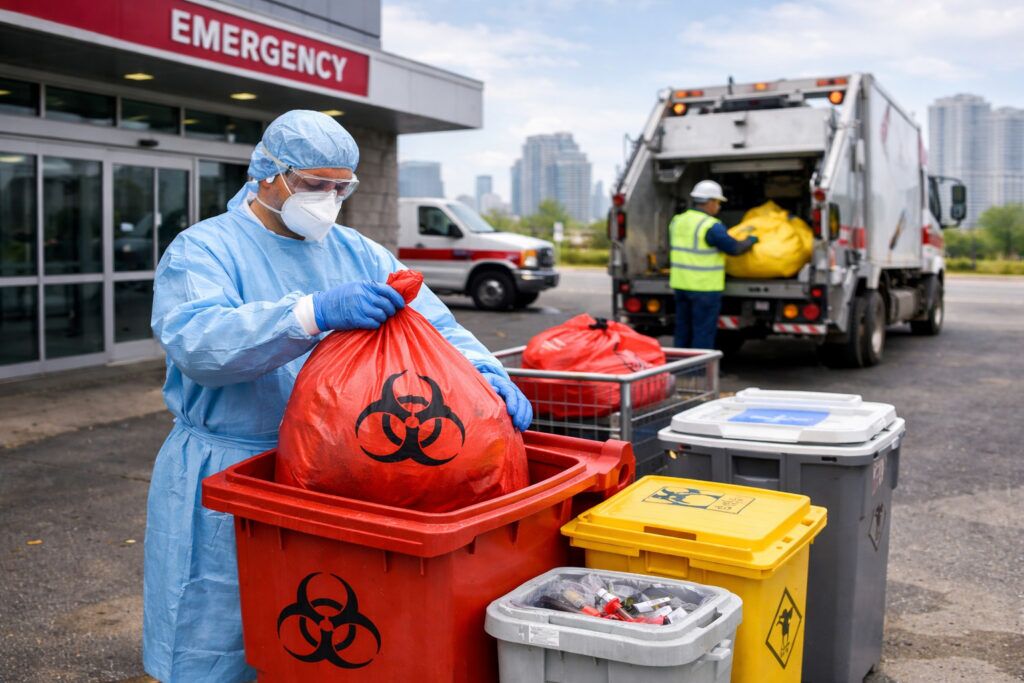
Hospital waste disposal in 2026 revolves around one central idea: hospitals must treat every step—from segregation to final treatment—as a regulated process with clear documentation and controls. Effective hospital waste disposal compliance now requires strict adherence to federal rules (such as RCRA and OSHA), state-specific medical waste regulations, and local public health or environmental standards. Facilities that build structured hospital waste management programs with defined roles, color‑coded segregation, and reliable medical waste disposal for hospitals significantly reduce risk, safeguard staff, and prevent costly violations.
Core Regulations Driving Hospital Waste Disposal Compliance in 2026
Hospital medical waste management in 2026 is shaped by overlapping federal, state, and local requirements that define how waste is classified, stored, transported, and treated. Regulations distinguish between infectious regulated medical waste, hazardous chemical waste, pharmaceutical waste, and general solid waste, each with its own compliance obligations.
Key Federal and State Requirements
- Federal RCRA rules govern hazardous chemical wastes, including certain pharmaceuticals, while OSHA standards protect staff handling hospital waste.
- States build on these baselines with additional rules for hospital waste disposal, including maximum storage times, reporting, authorization, and treatment method requirements such as incineration or autoclaving.
- Some jurisdictions, like those following Bio-Medical Waste Management–style rules, require color-coded containers, secure storage areas, and proof that no untreated biomedical waste is stored beyond specific time limits.
Waste Categories Hospitals Must Manage
- Infectious and biohazard waste (blood‑soaked materials, cultures, pathological waste) typically falls under regulated medical waste and must go through approved treatment such as autoclaving or incineration.
- Sharps waste (needles, scalpels, broken vials) requires puncture-resistant containers, labeling with the biohazard symbol, and strict handling protocols to prevent injuries.
- Pharmaceutical and chemical waste may be regulated as hazardous waste under RCRA and cannot be mixed with standard medical waste streams.
- General solid waste, recyclables, and food waste must be kept separate from hospital medical waste management streams to prevent cross‑contamination and unnecessary disposal costs.
Building a Compliant Hospital Waste Management Program
A compliant hospital waste disposal program starts with a written plan that defines responsibilities, procedures, and documentation for every waste stream. Hospitals that formalize their hospital waste management approach can demonstrate due diligence during inspections and maintain safer day‑to‑day operations.
Segregation, Packaging, and Labeling
- Implement color‑coded containers for infectious, sharps, pharmaceutical, chemical, and general waste at the point of generation, with clear signage in each clinical area.
- Follow packaging guidance such as using approved biohazard bags for regulated medical waste and rigid, puncture‑resistant containers for sharps, all marked with the universal biohazard symbol and appropriate UN numbers where required.
- Prohibit mixing of hazardous pharmaceutical waste with standard regulated medical waste to keep treatment streams compliant and safe for downstream handlers.
Storage, Documentation, and Chain of Custody
- Designate a secure, ventilated storage area for segregated hospital waste, with limited access and appropriate signage to prevent unauthorized entry.
- Adhere to time limits for on‑site storage, which often cap regulated medical waste at a specific number of days before it must be removed for treatment.
- Maintain manifests, shipping papers, and treatment certificates from your medical waste disposal for hospitals provider to document chain of custody and proof of compliant treatment.
Training and Continuous Improvement
- Provide initial and refresher training so staff understand how hospital waste disposal rules apply to their daily tasks, including PPE, container use, and spill response.
- Use checklists and visual tools—such as waste classification posters and simple pre‑pickup audits—to reinforce correct segregation and reduce recurring errors.
- Review incident reports, needlestick injuries, and inspection findings to update policies and close gaps in hospital waste disposal compliance.
Working with Medical Waste Disposal Providers in 2026
Even with strong internal procedures, hospitals rely heavily on external medical waste disposal for hospitals vendors to handle transport, treatment, and final disposal. Choosing the right partner and structuring the relationship properly is essential to fully compliant hospital medical waste management.
Selecting a Compliant Waste Partner
- Verify that your waste provider is properly licensed, insured, and experienced in hospital waste disposal, including sharps, infectious, pathological, and pharmaceutical streams.
- Confirm that treatment technologies (such as autoclave, incineration, or alternative technologies) meet current regulatory standards and are appropriate for each waste category your hospital generates.
- Ask for documentation templates, manifest examples, and evidence of adherence to DOT packaging and transport requirements for regulated medical waste.
Defining Roles, Service Levels, and Audits
- Clarify in writing which tasks belong to the hospital (segregation, on‑site storage, labeling) and which belong to the provider (transport, treatment, final disposal), so that hospital waste disposal compliance responsibilities are understood.
- Align pickup schedules and container volumes with actual generation rates to avoid overfilled containers, excessive storage times, or unnecessary service frequency.
- Periodically review service reports, manifests, and incident logs with your provider to verify that hospital waste management practices remain aligned with current regulations and internal policies.
Practical Compliance Checklist for Hospital Medical Waste Management
A concise operational checklist helps translate regulatory language into daily practice for clinical and support staff. The following steps summarize key actions facilities can take to keep hospital waste disposal processes compliant and consistent.
Daily and Weekly Operational Checks
- Confirm that color‑coded containers are available, correctly labeled, and not overfilled in procedure rooms, labs, pharmacies, and public areas.
- Ensure all staff handling hospital waste use appropriate PPE and follow hand‑hygiene and sharps‑handling protocols.
- Inspect storage rooms for secure access, proper labeling, and adherence to temperature, ventilation, and cleanliness expectations.
Periodic Compliance and Documentation Tasks
- Review manifests and treatment records to make sure every pickup has matching documentation and that any discrepancies are resolved quickly.
- Update written hospital waste management procedures when regulations change or when you add new services, such as oncology infusions or advanced imaging that generate new waste types.
- Conduct at least annual training and drills on spill response, sharps injuries, and exposure incidents to keep hospital waste disposal compliance embedded in your safety culture.
Frequently Asked Questions
1. What counts as hospital medical waste in 2026?
Hospital medical waste includes infectious materials (blood‑soaked items, cultures, pathological waste), sharps, certain pharmaceuticals, and contaminated PPE, all of which require specialized handling and treatment.
2. How long can a hospital store regulated medical waste on site?
Storage time limits vary by jurisdiction, but many rules cap storage at a defined number of days and require secure, labeled areas to prevent exposure and environmental impacts.
3. Can hospitals mix pharmaceutical waste with other medical waste?
Generally no; hazardous pharmaceutical waste must follow RCRA hazardous waste rules and should not be mixed with standard regulated medical waste streams destined for autoclaving or incineration.
4. What documentation is needed for hospital waste disposal compliance?
Hospitals typically need written policies, manifests, shipping papers, treatment certificates, and training records to demonstrate proper medical waste disposal for hospitals during inspections or audits.
5. How important is staff training for hospital waste management?
Staff training is essential, as most violations stem from segregation, labeling, or handling errors; regular training helps maintain safe, compliant hospital waste management practices.
6. Do small hospitals follow the same rules as large facilities?
Smaller hospitals may generate less waste, but they are still subject to core regulatory requirements and must implement appropriate segregation, storage, and documentation practices.


