
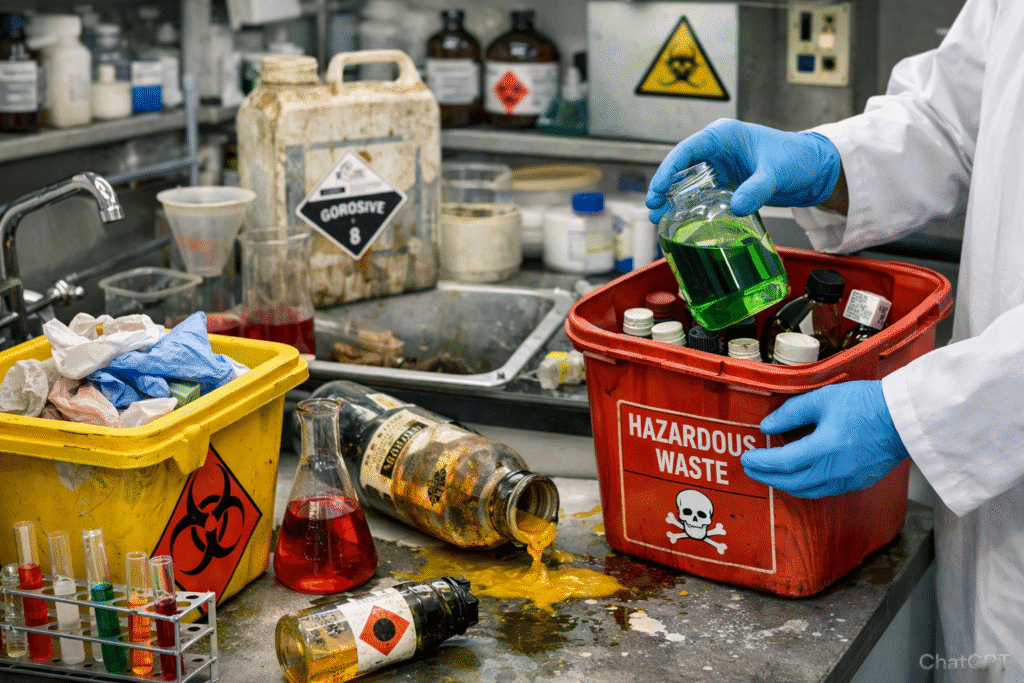
Improper laboratory chemical waste disposal poses serious risks to lab personnel, the environment, and regulatory compliance. The most common mistakes include mixing incompatible chemicals, using incorrect containers, inadequate labeling, and pouring hazardous substances down the drain. These errors can lead to dangerous chemical reactions, environmental contamination, hefty fines, and workplace injuries. Understanding how to dispose of chemical waste in lab settings safely requires following established protocols, proper waste segregation, and staff training. This guide identifies critical mistakes in lab chemical waste disposal and provides practical solutions to ensure your facility maintains safety standards and regulatory compliance.
Understanding Laboratory Chemical Waste Categories
Hazardous vs. Non-Hazardous Waste
Not all laboratory waste requires the same disposal method. Hazardous chemical waste includes materials that are ignitable, corrosive, reactive, or toxic according to EPA regulations. Common examples include acids, bases, solvents, heavy metals, and oxidizers. Non-hazardous waste, while still requiring proper handling, doesn’t meet these criteria and may have simpler disposal pathways.
Chemical Compatibility Groups
Proper waste segregation begins with understanding compatibility. Acids must be separated from bases, oxidizers from flammables, and water-reactive chemicals from aqueous solutions. Mixing incompatible chemicals is one of the most dangerous laboratory chemical waste disposal mistakes, potentially causing fires, explosions, or toxic gas release.
Regulated Waste Streams
Different chemical categories fall under various regulatory frameworks. Some wastes are regulated under RCRA (Resource Conservation and Recovery Act), while others may be controlled substances or require specific EPA disposal methods. Your laboratory must identify which regulations apply to each waste stream generated.
Critical Mistakes in Chemical Waste Handling
Mixing Incompatible Chemicals
The most dangerous error laboratories make is combining incompatible chemicals in the same waste container. When acids meet bases, or oxidizers contact organic materials, violent reactions can occur. Always maintain separate containers for each waste stream and clearly label compatibility groups.
Using Improper Containers
Glass bottles with damaged caps, plastic containers for solvent waste, or unlabeled jugs create significant hazards. Chemical waste containers must be compatible with their contents—use appropriate materials that won’t degrade or react. Containers should be in good condition with secure, leak-proof closures.
Inadequate Labeling Practices
Containers marked only as “waste” or “organic solvent” lack critical information. Proper labels must include the full chemical name (not formulas or abbreviations), accumulation start date, hazard warnings, and the generator’s information. Incomplete labeling is a leading cause of compliance violations during inspections.
Drain Disposal Violations
Pouring chemicals down the sink remains a persistent problem despite being illegal for most laboratory chemicals. Even diluted acids, solvents, or heavy metal solutions can damage plumbing, contaminate water supplies, and violate Clean Water Act regulations. This practice can result in substantial fines and environmental damage.
Establishing Safe Disposal Protocols
Waste Segregation Systems
Implement a color-coded or clearly labeled waste collection system in each laboratory area. Designate specific collection points for halogenated solvents, non-halogenated solvents, acids, bases, and solid chemical waste. Position satellite accumulation areas strategically near generation points while maintaining safe storage conditions.
Container Management Procedures
Establish clear protocols for container selection, filling limits (never exceed 80% capacity), and closure requirements. Containers must remain closed except when actively adding waste. Implement regular inspection schedules to identify damaged containers, leaks, or labeling issues before they become hazards.
Training and Documentation
How to dispose of chemical waste in lab settings safely requires comprehensive staff training. All laboratory personnel must understand waste categories, proper handling procedures, emergency response, and documentation requirements. Maintain training records and provide refresher courses annually or when procedures change.
Accumulation Time Limits
Laboratories operating under satellite accumulation rules must remove waste containers within three days of reaching capacity. Central accumulation areas have 90-day or 180-day limits depending on generator status. Exceeding these timeframes changes your regulatory classification and compliance requirements.
Building a Compliant Waste Management Program
Standard Operating Procedures
Develop written SOPs specific to your laboratory’s chemical inventory and waste streams. These documents should cover waste identification, segregation, labeling, storage, and pickup scheduling. Make SOPs easily accessible and require personnel to acknowledge understanding.
Regular Audits and Inspections
Conduct weekly inspections of waste accumulation areas checking for proper labeling, container integrity, compatibility issues, and accumulation dates. Monthly audits should review documentation, training records, and disposal manifests. Address deficiencies immediately to prevent violations.
Emergency Response Planning
Despite best practices, spills and incidents occur. Maintain spill kits appropriate for your chemical inventory, post emergency contact information prominently, and ensure staff know response procedures. Document all incidents and use them as training opportunities to prevent recurrence.
Partnering with Licensed Haulers
Work with EPA-licensed hazardous waste disposal companies that understand laboratory waste streams. Verify their credentials, insurance, and disposal facility permits. A knowledgeable disposal partner can help identify common mistakes in lab chemical waste disposal and recommend solutions specific to your facility.
Frequently Asked Questions
What are the most common laboratory chemical waste disposal mistakes?
The most frequent errors include mixing incompatible chemicals, inadequate container labeling, using improper containers, exceeding accumulation time limits, and pouring chemicals down drains. These mistakes can lead to safety hazards, environmental violations, and regulatory penalties.
How should chemical waste be labeled in a laboratory?
Each container must include the words “Hazardous Waste,” the full chemical name of all contents (no abbreviations or formulas), approximate percentages of mixtures, the accumulation start date, and the generator’s contact information. Labels must be legible and securely attached.
Can any chemicals be disposed of down the laboratory sink?
Very few chemicals are drain-disposable. Only non-hazardous, water-soluble substances explicitly approved by your facility’s environmental health and safety office may go down drains, and typically only with significant water dilution. Most laboratory chemicals require proper hazardous waste disposal.
How long can chemical waste be stored in a laboratory?
Under satellite accumulation rules, containers must be removed within three days of becoming full. Central accumulation areas allow 90 days for large quantity generators or 180 days for small quantity generators. Exceeding these limits violates EPA regulations.
What should I do if incompatible chemicals are accidentally mixed?
Immediately isolate the container in a safe area away from personnel. Do not attempt to open or move it. Contact your environmental health and safety office and hazardous waste disposal company. They will assess the situation and arrange for emergency disposal by trained professionals.
How can laboratories reduce chemical waste generation?
Implement microscale experiments when possible, purchase chemicals in appropriate quantities to minimize excess, share reagents between research groups, substitute less hazardous alternatives, and establish chemical inventory management systems to prevent over-purchasing and expiration.


