
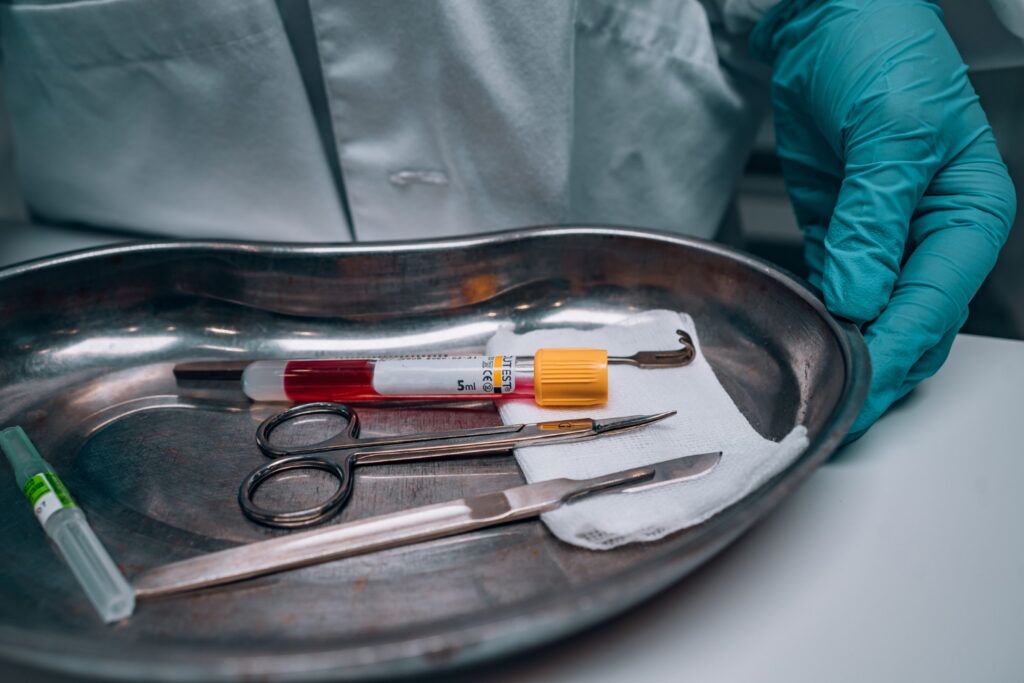
If your ambulatory surgery center is generating surgical waste after every case and you’re not 100% sure your disposal process meets CMS standards, you’re not alone – and the stakes are higher than most ASC administrators realize.
Proper medical waste disposal for ambulatory surgery centers is one of the most heavily scrutinized areas during CMS surveys. A single compliance gap in how your facility handles surgical tissue, blood-soaked materials, or unused pharmaceuticals can trigger citations, jeopardize your Medicare certification, and expose staff to serious health risks.
This guide breaks down exactly what ASCs need to know – from waste stream categories and regulatory requirements to best practices that keep your facility survey-ready year-round.
Why Medical Waste Compliance Is a Top Priority for ASCs
Ambulatory surgery centers are among the fastest-growing healthcare settings in the United States, performing millions of outpatient procedures each year. With that volume of procedures comes a significant and complex waste stream.
According to the Association of Surgical Technologists (AST), surgery departments alone account for approximately 30% to 70% of a healthcare organization’s total waste. The U.S. healthcare industry as a whole disposes of over four billion pounds of waste annually – making it the second largest contributor to waste behind the food industry.
For ASCs specifically, the challenge isn’t just volume. It’s variety. A single surgical case can generate regulated medical waste (RMW), pharmaceutical waste, sharps, pathological tissue, and general solid waste – all in the span of a few hours. Each category has its own regulatory requirements, container specifications, and disposal pathway.
Failing to manage these streams correctly doesn’t just create compliance risk. It creates real danger for your staff, patients, and the surrounding community.
Types of Medical Waste Generated at Ambulatory Surgery Centers
Before you can manage waste properly, you need to understand what you’re generating. Federal guidelines identify five primary categories of medical waste that require distinct disposal procedures:
- General waste – Non-regulated materials such as paper, unsoiled packaging, and administrative trash
- Infectious and pathological waste – Tissues, body fluids, blood-soaked materials, and surgical specimens
- Pharmaceutical waste – Expired, unused, or contaminated medications and anesthesia agents
- Sharps waste – Needles, scalpels, blades, lancets, and other puncture-risk items
- Radioactive waste – Relevant for ASCs using radioactive tracers or diagnostic materials (less common but regulated)
Regulated Medical Waste (RMW) in the OR
The CDC defines regulated medical waste as material that represents a sufficient potential risk of infection during handling and disposal. In an ASC setting, this includes:
- Blood-soaked gauze, drapes, and surgical sponges
- Suction canister contents (studies estimate suction canisters make up 25% of RMW at healthcare facilities)
- Disposable surgical draping and gowns contaminated with body fluids
- Any material that has come into contact with blood or other potentially infectious materials (OPIM)
Liquid Waste Considerations
Liquid surgical waste is often overlooked but heavily regulated. Blood and body fluids collected in suction canisters must be handled carefully. Research indicates that between 30% and 60% of healthcare facilities have historically had staff manually open and drain suction canisters – a practice that creates unnecessary bloodborne pathogen exposure and should be eliminated through proper fluid management systems.
CMS Standards and Federal Regulations ASCs Must Follow
Ambulatory surgery centers that participate in Medicare and Medicaid must comply with CMS Conditions for Coverage (CfCs) under 42 CFR Part 416. These conditions include specific requirements around infection control and environmental safety – both of which directly govern medical waste management.
Key Regulatory Frameworks
- CMS Conditions for Coverage (42 CFR Part 416) – Governs ASC operations including infection control and waste management protocols
- OSHA Bloodborne Pathogens Standard (29 CFR 1910.1030) – Requires engineering controls, PPE, and proper labeling for infectious waste
- EPA RCRA Subpart P – Governs hazardous pharmaceutical waste disposal for healthcare facilities
- State-level regulations – Many states (including Florida, Minnesota, Washington, and Washington D.C.) have enacted stricter pharmaceutical disposal rules that exceed federal minimums
- The Joint Commission (TJC) Standards – For accredited ASCs, revised standards effective August 1, 2024, now include updated Life Safety Code and Health Care Facilities Code compliance expectations
What CMS Surveyors Look For
During a CMS survey, inspectors evaluating infection control will assess whether your ASC has:
- A written regulated medical waste management plan
- Proper waste segregation at the point of generation
- Correctly labeled, leak-proof, puncture-resistant containers
- Documented staff training on waste handling procedures
- A compliant storage area that is ventilated, pest-free, and secure
- A licensed medical waste hauler with proper manifests and chain-of-custody documentation
Managing Surgical Waste: What Happens in the OR
The operating room is the highest-volume waste generation point in any ASC. Proper management starts before the first incision and continues through final case cleanup.
Segregation at the Point of Generation
The most important principle in surgical waste management is segregation at the source. Mixing regulated medical waste with general trash is one of the most common – and costly – compliance errors an ASC can make. It drives up disposal costs and creates liability.
Every OR should have clearly labeled containers for:
- Red bag / biohazard waste (RMW)
- Sharps containers (puncture-resistant, properly mounted)
- General solid waste (non-contaminated)
- Pharmaceutical waste (separate from RMW)
Anesthesia Waste
Anesthesia agents contribute significantly to the OR waste stream. Research from the AST estimates that anesthesia waste accounts for approximately 25% of total OR waste. Volatile anesthetic agents, unused IV medications, and controlled substance waste all require specific disposal pathways – particularly under DEA regulations for controlled substances.
Pathological Tissue Disposal: Rules and Requirements
Pathological waste is one of the most tightly regulated categories in the ASC waste stream. It includes:
- Excised tissue and organ specimens
- Body fluids and blood products
- Biopsy samples not retained for pathology analysis
How Pathological Waste Must Be Handled
According to the CDC’s Guidelines for Environmental Infection Control in Health-Care Facilities, pathology and anatomy waste must be:
- Stored in labeled, leak-proof containers
- Kept under conditions that minimize odor and microbial growth
- Treated through an approved method prior to final disposal (incineration or steam sterilization are the two most common)
Incineration vs. Steam Sterilization
Incineration is the preferred disposal method for pathological waste because it achieves complete destruction of biological material. However, the incinerator must meet EPA emissions standards under the Clean Air Act.
Steam sterilization (autoclaving) is an acceptable alternative for most infectious waste. After autoclaving, residue can generally be disposed of as regular solid waste in accordance with state regulations. However, pathological tissue is typically not appropriate for steam sterilization alone in most states – check your state’s specific rules.
Pharmaceutical Waste Disposal at ASCs
Pharmaceutical waste disposal is one of the most complex and rapidly evolving areas of ASC compliance. ASCs generate pharmaceutical waste from:
- Unused or partially used medications
- Expired drug inventory
- Anesthesia agent waste
- Contaminated IV bags and tubing
RCRA Hazardous Pharmaceutical Waste
Under the EPA’s Resource Conservation and Recovery Act (RCRA), many pharmaceuticals are classified as hazardous waste. The EPA’s Subpart P rule governs how healthcare facilities manage hazardous pharmaceutical waste.
Key points every ASC administrator needs to understand:
- Very Small Quantity Generators (VSQGs) that generate less than 100 kg of hazardous waste per month have more disposal flexibility but must still comply with applicable federal and state requirements
- Small Quantity Generators (SQGs) and Large Quantity Generators (LQGs) face stricter requirements, including disposal only at permitted hazardous waste treatment, storage, and disposal facilities (TSDFs)
- ASCs that opt into Subpart P for pharmaceutical waste management must send those wastes to a RCRA-permitted TSDF – they cannot use alternative combustors
Non-Hazardous Pharmaceutical Waste
Not all pharmaceutical waste is RCRA-hazardous. Non-hazardous pharmaceutical waste (such as many antibiotics and non-controlled medications) can typically be disposed of through a licensed pharmaceutical waste vendor using a blue-lid or white-lid container system, depending on your provider.
Pro Tip: Never dispose of pharmaceuticals – hazardous or not – down the drain or in the regular trash. Both practices are illegal under federal and many state regulations and can result in significant fines.
Sharps Disposal and Biohazard Waste Management
Sharps are among the highest-risk waste items generated in any ASC. The OSHA Bloodborne Pathogens Standard requires that sharps containers be:
- Closable and puncture-resistant
- Leak-proof on sides and bottom
- Labeled with the biohazard symbol and the word “Biohazard”
- Replaced when three-quarters full (never overfilled)
- Located as close as possible to the point of use
Biohazard Waste Containers
Red bag biohazard waste containers must be used for all regulated medical waste that is not sharps. These bags must be:
- Red or orange-red in color
- Labeled with the universal biohazard symbol
- Tied securely before transport
- Never placed in regular trash receptacles
Best Practices for ASC Waste Segregation and Labeling
Getting waste management right at an ASC comes down to consistent processes, trained staff, and the right infrastructure. Here are the practices that separate compliant ASCs from those that face citations:
Establish a Written Waste Management Plan
Every ASC should have a documented regulated medical waste management plan that covers:
- Categories of waste generated and applicable regulations
- Container specifications for each waste type
- Internal transport and temporary storage procedures
- Staff training requirements and frequency
- Licensed hauler information and manifest retention requirements
- Emergency procedures for spills or container failures
Train Staff Regularly
Staff training is not a one-time event. OSHA requires annual bloodborne pathogen training, and CMS surveyors will ask for documentation. Training should cover:
- How to identify each waste category
- Correct container selection and labeling
- Safe handling and transport procedures
- What to do in the event of a needlestick or exposure incident
Conduct Internal Waste Audits
Periodically audit your waste streams to ensure proper segregation is occurring. A common finding in ASC surveys is that non-regulated waste (general trash) is being placed in red bags – which dramatically increases disposal costs and creates unnecessary regulatory exposure.
The industry benchmark for regulated medical waste is 15% or less of total waste volume. If your RMW percentage is significantly higher, it’s a signal that over-segregation is occurring.
Common Mistakes ASCs Make with Medical Waste Disposal
Even well-run ASCs can fall into compliance traps. Watch out for these frequent errors:
- Over-segregating waste – Placing non-contaminated items in red bags inflates costs and may suggest poor training
- Using the wrong container for pharmaceutical waste – Pharmaceuticals should never go in red bags; they require separate, labeled pharmaceutical waste containers
- Failing to document manifest records – Federal law requires retaining waste manifests for a minimum of three years; some states require longer
- Storing waste too long – The CDC recommends disposing of regulated medical waste regularly to prevent accumulation; many states set maximum storage time limits (commonly 30 to 90 days)
- Mixing controlled substance waste with general pharmaceutical waste – DEA-scheduled drugs require separate handling and documentation
- Inadequate container placement in the OR – Sharps containers that are too far from the point of use increase needlestick risk
Pro Tips from Compliance Experts
Tip 1: Partner with a licensed medical waste vendor who knows ASC-specific regulations. Not all waste haulers understand the nuances of ASC compliance. Look for a vendor that provides manifests, offers compliance documentation support, and stays current with state-level regulatory changes.
Tip 2: Conduct a waste stream assessment before your next CMS survey. Walk through your facility with fresh eyes and document every waste container, its location, its labeling, and whether it matches the waste being generated nearby.
Tip 3: Don’t wait for a survey to find problems. CMS surveys can occur without advance notice. Your waste management program should be survey-ready every single day.
Tip 4: Review your state regulations annually. State medical waste regulations frequently change and often exceed federal minimums. What was compliant last year may not be compliant today.
Tip 5: Implement a fluid management system for liquid surgical waste. Closed-system fluid management reduces staff exposure to bloodborne pathogens, minimizes RMW volume, and demonstrates a commitment to safety that surveyors notice.
FAQ: Medical Waste Disposal for Ambulatory Surgery Centers
What regulations govern medical waste disposal for ambulatory surgery centers?
ASCs must comply with CMS Conditions for Coverage (42 CFR Part 416), OSHA’s Bloodborne Pathogens Standard (29 CFR 1910.1030), EPA RCRA regulations for hazardous pharmaceutical waste, and applicable state medical waste regulations. Accredited ASCs must also meet The Joint Commission standards, which were updated effective August 1, 2024.
How should an ASC dispose of pathological tissue after surgery?
Pathological tissue must be placed in labeled, leak-proof containers and disposed of through an approved treatment method – typically incineration or, in some cases, steam sterilization – in accordance with state regulations. It must never be placed in general trash. Many states require pathological waste to be incinerated specifically.
Can an ambulatory surgery center pour unused medications down the drain?
No. Disposing of pharmaceuticals down the drain is prohibited under the Clean Water Act and EPA regulations. Unused or expired medications must be segregated by hazard classification and disposed of through a licensed pharmaceutical waste vendor or returned through a DEA-authorized reverse distributor for controlled substances.
How often does an ASC need to train staff on medical waste handling?
OSHA requires annual bloodborne pathogen training for all employees with potential occupational exposure. Many compliance experts recommend supplementing this with quarterly refreshers and point-of-care training whenever new waste containers or procedures are introduced.
What happens if an ASC fails a CMS survey related to waste management?
Deficiencies in infection control and waste management can result in a Condition-Level citation, which is among the most serious findings a CMS surveyor can issue. These citations can trigger a plan of correction, follow-up surveys, civil monetary penalties, and in severe cases, termination of the ASC’s Medicare provider agreement.
Conclusion
Effective medical waste disposal for ambulatory surgery centers is not just a regulatory checkbox – it’s a core component of patient safety, staff protection, and operational integrity. From surgical waste and pathological tissue to pharmaceutical disposal and sharps management, every waste stream in your ASC carries compliance obligations that require active, documented management.
The good news is that with the right processes, trained staff, and a reliable disposal partner, staying compliant doesn’t have to be complicated. The key is building systems that work every day – not just when a surveyor is on site.
MedPro Disposal specializes in medical waste management solutions for ambulatory surgery centers across the United States. Whether you need reliable regulated medical waste pickup, pharmaceutical waste disposal, sharps management, or help building a compliant waste management plan, our team is ready to help.
Contact MedPro Disposal today to schedule a free compliance consultation and find out how we can simplify your ASC’s waste management program.
Ready to publish this? I can now generate the full SEO settings – meta title, slug, FAQ schema, Article schema, and Open Graph tags – and save them to your content piece. Want me to do that next?


