
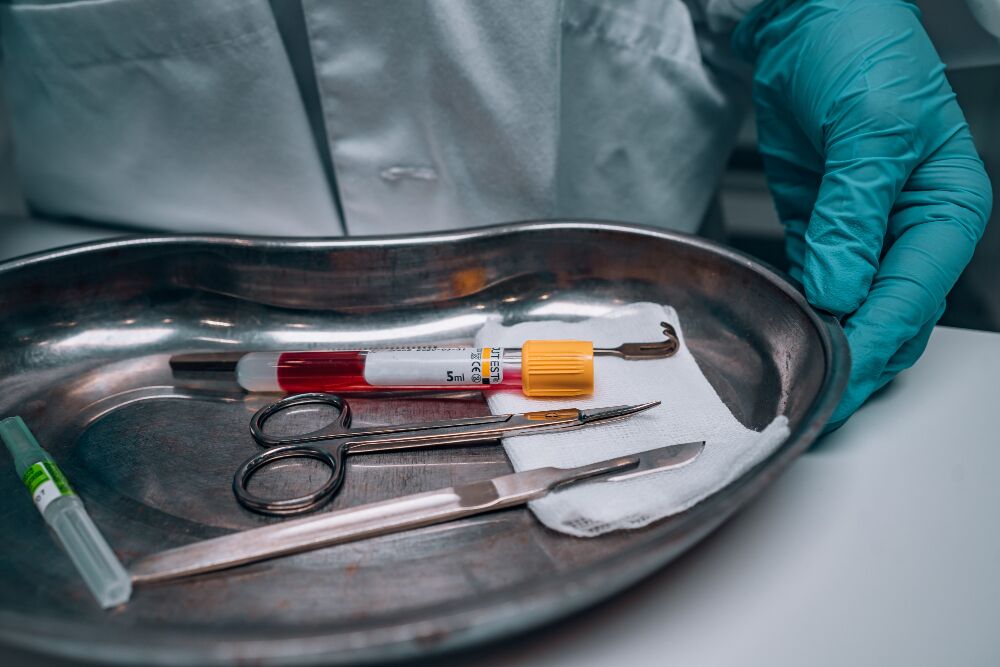
If your blood bank or plasma donation center processes hundreds of donors every week, you already know the waste adds up fast – and the stakes for getting disposal wrong are high. Improper medical waste disposal for blood banks doesn’t just risk regulatory fines; it puts your staff, your donors, and your community at risk.
This guide breaks down everything you need to know about biohazard waste disposal at blood banks and plasma centers: what counts as regulated medical waste, how to handle it correctly, what federal and state regulations require, and the best practices that keep high-volume facilities compliant year-round.
What Is Regulated Medical Waste in Blood Banks?
Not all waste generated at a blood bank is created equal. Understanding exactly what qualifies as regulated medical waste (RMW) is the first step toward a compliant program.
According to the CDC, health-care facility medical wastes that require special handling include blood specimens, blood products, and other body-fluid specimens – all of which are generated in high volumes at blood banks and plasma donation centers every single day.
In practical terms, regulated medical waste in blood banks typically includes:
- Liquid blood and blood components – expired units, discarded draws, processing waste
- Blood-saturated materials – gauze, tubing, collection bags, and apheresis equipment
- Sharps – phlebotomy needles, lancets, IV catheters, and blood collection needles
- Contaminated lab materials – blood specimen tubes, culture dishes, and testing supplies
- Personal protective equipment (PPE) – gloves, gowns, and masks visibly contaminated with blood
Anything that contains free-flowing blood or blood products is considered biohazardous under both OSHA and most state regulations. When in doubt, treat it as regulated waste.
Why Blood Banks and Plasma Centers Face Unique Challenges
Most medical waste guides focus on hospitals or physician offices. Blood banks and plasma donation centers are a different animal entirely.
Consider the volume: a mid-sized plasma donation center may process 150 to 300 donors per day. Each donation generates needles, tubing, collection containers, and blood-saturated materials. Multiply that across a full week and you’re managing a significant, continuous stream of infectious waste that must be handled, stored, and disposed of correctly every single day.
There are also some factors that make plasma donation center waste management especially complex:
- High needle volume – plasmapheresis procedures use large-bore needles that require proper sharps containment
- Bulk liquid waste – the apheresis process generates significant volumes of liquid blood components that can’t simply go down the drain without following state-specific sewer discharge rules
- Frequent staff turnover – plasma centers often employ newer phlebotomists, making ongoing training critical
- Regulatory oversight from multiple agencies – OSHA, the FDA (which regulates plasma collection), state health departments, and the DOT (for waste transport) all have jurisdiction
Getting this right requires a systematic approach – not just good intentions.
Blood Bank Waste Disposal Guidelines: Federal and State Requirements
OSHA Bloodborne Pathogens Standard (29 CFR 1910.1030)
This is the foundation of any blood bank waste disposal program. OSHA’s Bloodborne Pathogens Standard requires employers to:
- Maintain an Exposure Control Plan that identifies all tasks involving potential exposure to blood
- Provide proper containers for sharps and regulated waste at the point of use
- Ensure all biohazardous waste is labeled with the universal biohazard symbol
- Train employees annually on proper handling and disposal procedures
- Offer hepatitis B vaccination to all at-risk employees
Failure to comply can result in citations and fines ranging from thousands to tens of thousands of dollars per violation.
DOT Hazardous Materials Regulations
When regulated medical waste leaves your facility for off-site treatment, it falls under the U.S. Department of Transportation’s Hazardous Materials Regulations (HMR). This means your waste transporter must be properly permitted, and waste must be packaged and labeled according to federal shipping standards.
Importantly, waste that has been effectively treated and rendered non-infectious is no longer subject to these transport requirements – which is one reason on-site autoclaving can be a cost-effective strategy for large facilities.
State-Level Regulations
Here’s where it gets more complex. Every state has its own medical waste regulations that layer on top of federal requirements. For example:
- California requires large quantity generators (over 200 lbs/month) to register with the state and maintain a formal Medical Waste Management Plan
- Some states set specific limits on how much bulk blood can be discharged to the sanitary sewer
- Most states require waste transporters to maintain disposal records for a minimum of three years
The bottom line: always verify your state’s specific requirements with your state health department or an experienced medical waste compliance partner.
FDA Oversight for Plasma Centers
Plasma donation centers are also regulated by the FDA under 21 CFR Part 606, which governs blood banks and source plasma collection. While the FDA’s primary focus is on product safety rather than waste disposal, their inspection process can surface waste management deficiencies that create regulatory exposure.
How to Properly Segregate and Contain Biohazard Waste
The Importance of Waste Segregation
Proper segregation is the single most important step in an effective blood bank waste disposal program. Mixing regulated medical waste with general trash creates liability, increases disposal costs, and can expose workers to unnecessary risk.
Here’s a practical segregation framework for blood banks and plasma centers:
Sharps Waste:
- Use only FDA-cleared, puncture-resistant, leak-proof sharps containers
- Place containers at the point of use – never carry unsheathed needles across a room
- Seal containers when they reach the fill line (typically three-quarters full)
- Never recap needles by hand; use a one-handed scoop technique or a mechanical recapping device
Liquid Blood and Blood Products:
- Contain in leak-proof, rigid containers that can withstand thermal or chemical treatment
- Do not use plastic biohazard bags for liquid waste – they are not designed for fluids
- Small quantities may be discharged to the sanitary sewer per state guidelines; large volumes require treatment first
Solid Biohazardous Waste:
- Use red biohazard bags certified to ASTM D1709 standards
- Double-bag if the outer surface of the bag becomes contaminated
- Never use trash chutes for biohazardous materials
- Store in a locked, clearly labeled area accessible only to authorized personnel
Contaminated PPE and Supplies:
- Visibly blood-soaked gloves, gowns, and gauze go into red biohazard bags
- Lightly contaminated items (e.g., gloves with no visible blood) may qualify as general waste under some state rules – confirm with your state regulations
Labeling Requirements
Every container holding regulated medical waste must be clearly labeled with:
- The universal biohazard symbol
- The word “BIOHAZARD” in a contrasting color
- The generator’s name and address (for off-site transport)
Infectious Waste Disposal Methods for Plasma Centers
Treatment Options
Once waste is properly contained, it needs to be treated to render it non-infectious before final disposal. The two most common methods are:
1. Autoclaving (Steam Sterilization)
Autoclaving uses high-pressure steam to kill pathogens. It’s the most widely used treatment method and is accepted in all 50 states. Large plasma centers may invest in on-site autoclaves to reduce off-site disposal costs. Autoclaved waste can typically be disposed of as regular solid waste, significantly lowering disposal fees.
2. Incineration
Incineration destroys waste through high-temperature combustion and is especially effective for pathological waste and certain liquid wastes. Most facilities use a licensed third-party medical waste disposal company for incineration rather than maintaining on-site equipment.
3. Chemical Treatment
For liquid blood waste, chemical disinfection with sodium hypochlorite (bleach) followed by sewer discharge is permitted in many states with local sewer authority approval. This is a practical option for plasma centers managing large volumes of liquid waste.
Choosing a Licensed Medical Waste Disposal Partner
For most blood banks and plasma centers, partnering with a licensed medical waste disposal company is the most practical and cost-effective approach. When evaluating providers, look for:
- Proper state permits and DOT registration
- Documented chain of custody and disposal certificates
- Experience specifically with blood banks and plasma centers
- Scheduled pickup frequency that matches your volume
- Clear pricing with no hidden fees for overages
Best Practices for High-Volume Biohazard Management
Running a compliant, efficient waste program at a high-volume facility requires more than just following the rules. Here are the best practices that separate well-run facilities from those that struggle at audit time:
- Conduct a waste stream audit annually. Know exactly what you’re generating, how much, and where it goes. This helps right-size your container inventory and pickup schedule.
- Post visual waste segregation guides at every workstation. Don’t rely on memory – make the right choice the obvious choice.
- Train new staff before they touch a patient. Waste handling should be part of orientation, not an afterthought.
- Maintain a written Exposure Control Plan and update it at least annually. OSHA requires it, and inspectors will ask for it.
- Document everything. Keep manifests, disposal certificates, and training records for a minimum of three years. Some states require longer retention.
- Perform regular internal audits. Walk your facility with a compliance checklist once a quarter. Catching issues internally is always better than finding them during a regulatory inspection.
- Establish a spill response protocol. Blood spills happen. Your staff should know exactly what to do – and have the supplies to do it – without hesitation.
Common Mistakes to Avoid
Even experienced facilities make these errors. Watch out for:
- Overfilling sharps containers. This is one of the most common OSHA citations. Seal at three-quarters full, every time.
- Using regular trash bags for biohazardous waste. Red biohazard bags exist for a reason – they’re engineered to contain pathogens safely.
- Neglecting liquid waste protocols. Many facilities focus on sharps and solid waste but underestimate the regulatory complexity of liquid blood disposal.
- Failing to train temporary or agency staff. If they work in your facility, they need the same training as permanent employees.
- Letting storage areas become disorganized. Biohazardous waste storage must be locked, clearly labeled, and accessible only to authorized personnel. Cluttered storage areas are a red flag for inspectors.
- Not verifying your waste hauler’s credentials. You share liability if your waste is mishandled by an unlicensed transporter.
Pro Tips from Compliance Experts
Tip 1: Right-size your sharps container program.
Containers that are too large for a workstation get overfilled. Containers that are too small get changed too frequently, increasing labor costs. Match container size to the procedure volume at each specific workstation.
Tip 2: Request a waste disposal certificate after every pickup.
A certificate of disposal (sometimes called a “certificate of destruction”) is your proof that waste was properly treated. Keep these on file – they’re your protection if questions arise later.
Tip 3: Build your compliance calendar.
Mark your annual OSHA training date, your state registration renewal date, and your internal audit schedule on a shared calendar. Compliance deadlines are easy to miss when you’re focused on donor operations.
Tip 4: Treat your waste disposal partner as a compliance resource.
A good medical waste disposal company doesn’t just pick up containers – they help you stay current on regulatory changes, right-size your program, and prepare for inspections. If your current provider isn’t doing that, it may be time to look for a better partner.
Frequently Asked Questions
What types of waste generated at a blood bank are considered regulated medical waste?
Regulated medical waste at blood banks includes liquid blood and blood products, blood-saturated materials (gauze, tubing, collection bags), sharps (needles, lancets, catheters), contaminated laboratory supplies, and PPE visibly soiled with blood. Any material containing free-flowing blood is generally classified as biohazardous under OSHA and state regulations.
Do plasma donation centers have to follow the same medical waste disposal rules as hospitals?
Yes, plasma donation centers are subject to the same federal regulations as other healthcare facilities, including OSHA’s Bloodborne Pathogens Standard (29 CFR 1910.1030) and DOT hazardous materials transport rules. Additionally, plasma centers face FDA oversight under 21 CFR Part 606, which can surface waste management deficiencies during inspections.
How should bulk liquid blood waste be disposed of at a high-volume plasma center?
Small quantities of liquid blood may be discharged to an approved sanitary sewer system in most states, provided the volume doesn’t exceed state-set limits. Larger volumes must be treated first – typically through chemical disinfection or incineration – before disposal. Always confirm your state’s specific volume thresholds with your state health department or a licensed medical waste compliance partner.
How often should sharps containers be changed at a blood bank or plasma donation center?
Sharps containers should be sealed and replaced when they reach three-quarters full – never wait until they are completely full. At a high-volume plasma center, this may mean changing containers multiple times per day at active phlebotomy stations. The key rule: seal at the fill line, every time, without exception.
What records does a blood bank need to keep for medical waste disposal compliance?
At minimum, facilities should retain waste manifests and disposal certificates, employee training records, and their written Exposure Control Plan. Most states require these records to be kept for at least three years. Some states have longer retention requirements. Keeping organized records is one of the most important things you can do to protect your facility during a regulatory inspection.
Conclusion
Managing medical waste disposal for blood banks and plasma donation centers is more complex than it is for most healthcare settings – and the consequences of getting it wrong are serious. Between OSHA’s Bloodborne Pathogens Standard, DOT transport requirements, FDA oversight, and state-specific regulations, compliance requires a deliberate, well-documented program that your entire team understands and follows every day.
The good news is that with the right systems in place – proper segregation, correctly sized containers, trained staff, documented procedures, and a reliable licensed disposal partner – high-volume biohazard management becomes a manageable, routine part of operations rather than a constant source of risk.
At MedPro Disposal, we work with blood banks and plasma donation centers across the United States to build compliant, cost-effective medical waste programs tailored to high-volume biohazard needs. Whether you’re setting up a new facility, preparing for an inspection, or looking to improve an existing program, our team is ready to help.
Contact MedPro Disposal today to schedule a free compliance consultation and find out how we can simplify your biohazard waste disposal program – so you can stay focused on what matters most: your donors and your mission.


