
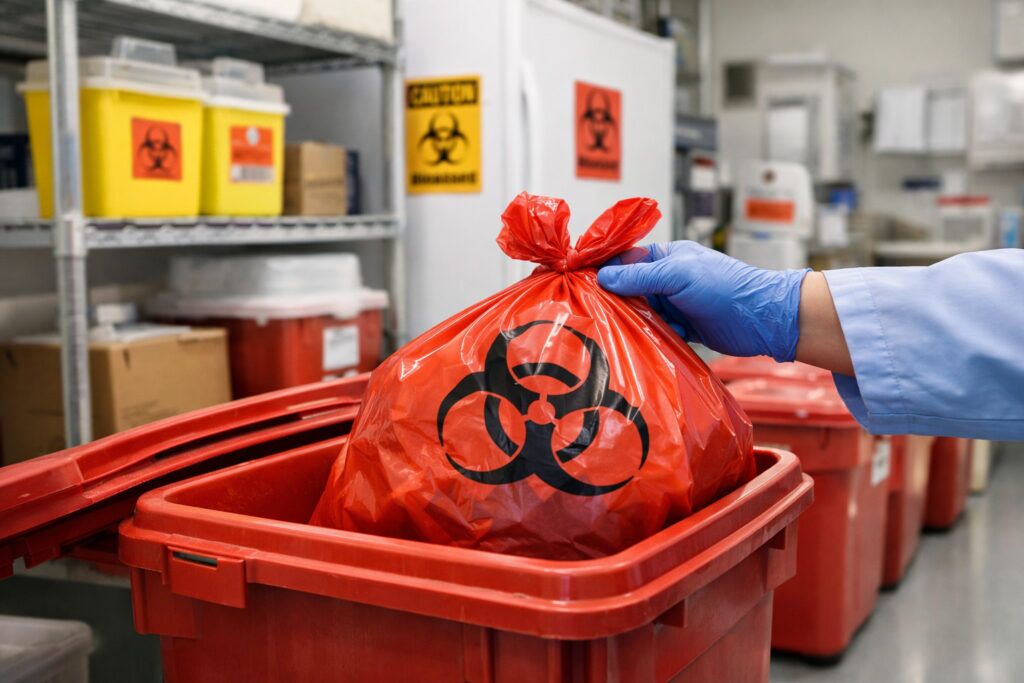
Medical waste storage rules are critical for maintaining safety and compliance in healthcare facilities, yet many faculty members overlook key requirements. Proper medical waste storage guidelines mandate segregation by waste type, secure container placement, temperature control, and regular disposal schedules. Common oversights include inadequate labeling, exceeding storage time limits, and improper container sealing—violations that can result in regulatory fines, infection risks, and environmental hazards. Understanding these medical waste storage compliance requirements protects staff, patients, and your facility’s reputation.
Healthcare facilities generate approximately 5.9 million tons of medical waste annually in the United States alone. Despite rigorous training programs, faculty and staff frequently miss critical storage protocols that could compromise safety and trigger costly violations during inspections.
Understanding Core Medical Waste Storage Requirements
Segregation at the Point of Generation
Medical waste storage rules require immediate separation of waste types at their source. Infectious waste, sharps, pharmaceutical waste, and chemical waste must never be mixed. Each category demands specific container types, colors, and disposal methods.
Faculty often assume general biohazard containers accommodate all medical waste. This misconception leads to cross-contamination and regulatory violations. Sharps require puncture-resistant containers, while chemotherapy waste needs specially labeled yellow containers with cytotoxic markings.
Proper Container Specifications
Medical waste storage guidelines specify exact container requirements. Containers must be rigid, leak-proof, and puncture-resistant when handling sharps. Red bags or containers marked with the biohazard symbol are mandatory for infectious waste.
A frequently overlooked rule: containers should only be filled to three-quarters capacity. Overfilling creates spillage risks and makes proper sealing impossible. Additionally, containers must remain closed when not in active use—a rule many busy facilities neglect during peak hours.
Designated Storage Area Requirements
Compliance demands dedicated, secure storage areas separate from general waste and patient care zones. These areas must have restricted access, proper ventilation, and appropriate signage.
Temperature control is critical yet commonly ignored. Storage areas must maintain temperatures below 50°F if waste remains longer than 7 days. Many facilities lack temperature monitoring systems, creating potential health hazards and compliance gaps.
Time-Sensitive Storage Limitations Faculty Miss
Maximum Storage Duration Standards
Medical waste storage compliance includes strict time limits. Most states require disposal within 30-90 days, depending on waste volume and storage conditions. Refrigerated waste (below 32°F) may be stored up to 90 days, while room temperature storage typically allows only 7-30 days.
Faculty often lose track of waste accumulation dates, especially during academic breaks or reduced staffing periods. Implementing visible date labeling systems prevents this common oversight.
Documentation and Tracking Requirements
Every medical waste container requires detailed documentation: waste type, generation date, quantity, and disposal date. These records must be maintained for at least three years.
Many faculty members underestimate this administrative requirement. Missing or incomplete documentation ranks among the top citations during regulatory inspections. Digital tracking systems can streamline compliance, but manual logs remain acceptable if consistently maintained.
Security and Access Control Oversights
Restricted Access Protocols
Medical waste storage areas must remain locked when unattended. Only trained, authorized personnel should access these spaces. This prevents unauthorized disposal, theft, or accidental exposure.
Faculty sometimes prop doors open for convenience during busy periods or allow untrained students access during educational activities. These practices violate medical waste storage rules and create liability exposure.
Signage and Communication Requirements
Clear, visible signage must mark all storage areas and containers. Required elements include the universal biohazard symbol, waste type identification, and emergency contact information.
Multilingual signage is often necessary but overlooked in diverse facilities. Additionally, emergency response procedures should be posted prominently—a requirement many facilities only address after violations occur.
Container Maintenance and Inspection Protocols
Regular Inspection Schedules
Medical waste storage guidelines require routine container inspections for leaks, damage, or contamination. Weekly inspections are standard, with immediate replacement of compromised containers.
Faculty frequently skip inspections during high-volume periods or assume custodial staff handle this responsibility. Clear assignment of inspection duties prevents this dangerous gap.
Proper Sealing and Labeling Techniques
Containers must be sealed completely before transport to storage areas. Zip ties, tape, or built-in locking mechanisms are acceptable, but simple twisting or folding is insufficient.
Labels must include the waste category, generation date, and department of origin. Pre-printed labels streamline compliance, but handwritten labels are acceptable if legible and waterproof.
Spill Response Preparedness
Storage areas must contain spill cleanup kits with appropriate personal protective equipment, absorbent materials, and disinfectants. Faculty should know kit locations and basic response procedures.
This requirement is frequently overlooked until an incident occurs. Regular spill response drills ensure preparedness and identify equipment gaps before emergencies arise.
Frequently Asked Questions
What are the basic medical waste storage rules all facilities must follow?
All facilities must segregate waste by type, use approved containers, maintain secure storage areas with restricted access, label containers with generation dates, and dispose of waste within regulatory time limits. Storage areas require proper ventilation, temperature control, and posted emergency procedures.
How long can medical waste be stored before disposal?
Storage duration depends on temperature and state regulations. Room temperature storage typically allows 7-30 days, refrigerated storage (32-50°F) permits up to 90 days, and frozen storage (below 32°F) extends to 90 days. Always verify your state’s specific medical waste storage compliance requirements.
What happens if medical waste storage guidelines are violated?
Violations can result in fines ranging from $1,000 to $25,000 per incident, facility closure orders, loss of accreditation, legal liability for injuries or infections, and reputational damage. Repeat violations may trigger criminal charges against responsible parties.
Do small medical facilities have different medical waste storage rules?
While some states offer simplified regulations for small quantity generators (producing less than 220 pounds monthly), core requirements remain consistent: proper segregation, approved containers, secure storage, and timely disposal. Small facilities still face significant penalties for non-compliance.
Who is responsible for ensuring medical waste storage compliance?
Facility administrators hold ultimate responsibility, but daily compliance requires cooperation from all staff. Faculty members generating waste must follow segregation and container protocols. Designated compliance officers should conduct regular audits and training sessions.
How often should staff receive training on medical waste storage guidelines?
OSHA requires initial training for all employees handling medical waste, with annual refresher courses. Additional training is necessary when procedures change, after violations occur, or when new waste types are introduced. Documentation of all training sessions must be maintained for regulatory review.


