+
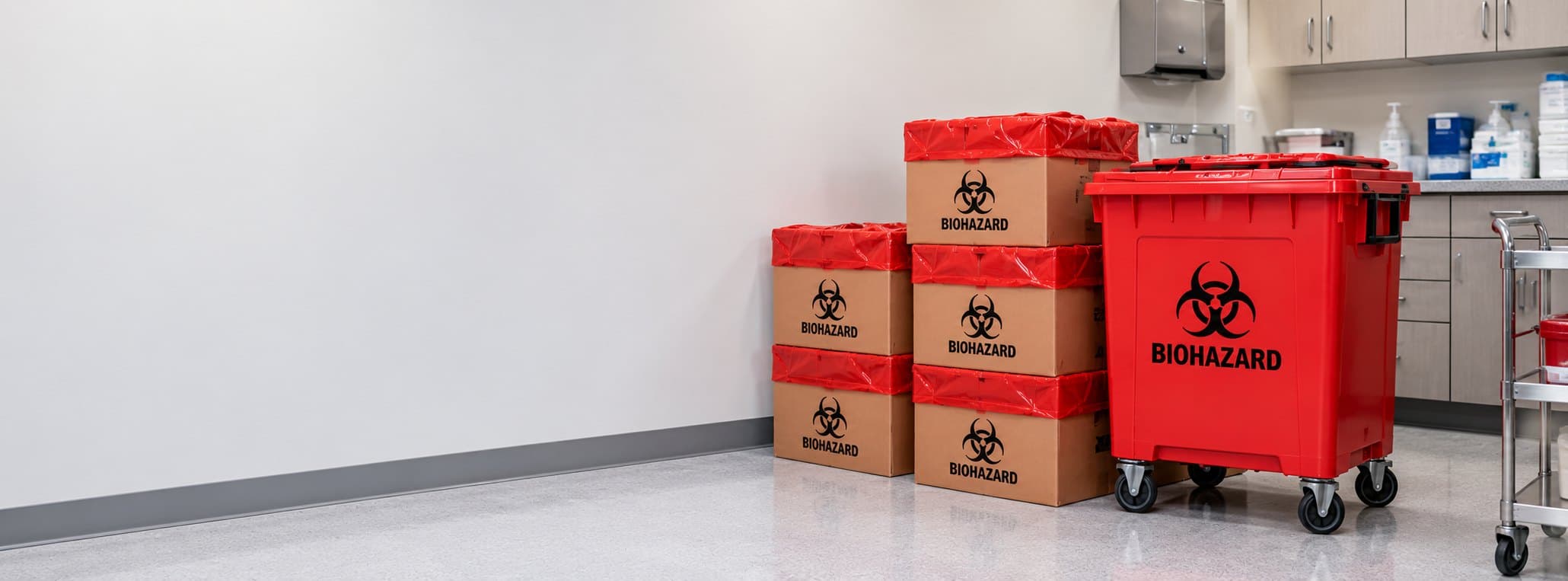
Medical waste is any waste generated during the diagnosis, treatment, or immunization of humans or animals that may be contaminated with blood, body fluids, or other infectious material — including sharps, blood-soaked dressings, cultures, and pathological tissue. Non-contaminated items like standard packaging are not regulated medical waste.
+
Cost depends on waste volume, pickup frequency, container size, waste type, and location. Most practices pay a flat monthly or per-pickup rate rather than being billed per pound. Typical monthly costs range from about $50-$200 for small practices and dental offices up to $1,000+ for long-term care facilities, with hospitals and large health systems running $1,000-$50,000+ per month — see our full pricing breakdown by facility type. MedPro customers also save an average of 30% by switching from their previous provider.
+
Yes. Any facility generating regulated medical waste must comply with OSHA's Bloodborne Pathogens Standard, applicable EPA/DOT rules, and their state's specific medical waste regulations, which vary by state.
+
Biohazard waste is a subset of medical waste. Medical waste is the broad category (including sharps and pharmaceuticals); biohazard waste specifically refers to material containing or potentially containing infectious agents.
+
It depends on generation volume and your state's maximum on-site storage time, commonly 7–90 days. Small practices often use weekly, biweekly, or monthly service; hospitals typically need multiple pickups per week.
+
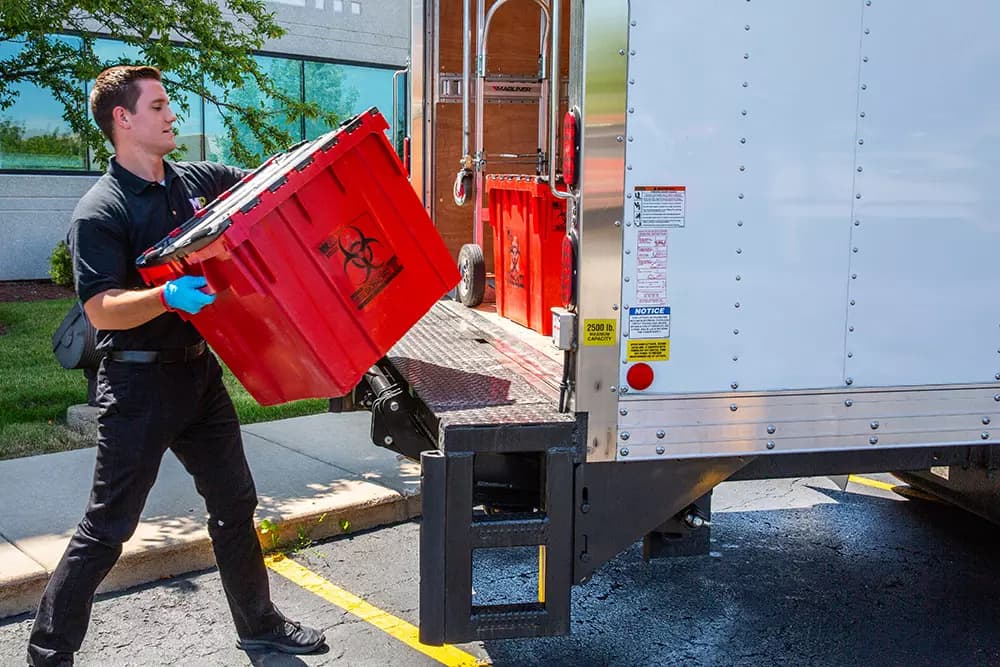
In nearly every state, regulated medical waste can't go in normal trash. It must be treated by a licensed facility (autoclave or incineration) and transported by a permitted hauler. Very low-volume generators may qualify for mail-back containers instead of route pickup.
+
Most regulated medical waste is autoclaved (steam-sterilized) to achieve at least a 6-log reduction in microorganisms. Waste that can't be autoclaved — pathological or chemotherapy waste — is typically incinerated under EPA air-quality controls. You receive documentation confirming compliant treatment.
+
MedPro offers service agreements tailored to your facility's actual volume and schedule. Call 888-641-6131 or request a quote for current terms specific to your location and service type.
+
MedPro Disposal provides medical waste, sharps, and pharmaceutical waste disposal plus compliance training in 48 of the 50 U.S. states through a nationwide network of direct routes and regional hauling partners.
+
Expired or unused pharmaceuticals — including DEA Schedule II-V controlled substances — must go through a permitted reverse distributor or medical waste vendor, not regular trash or a toilet. MedPro offers pharmaceutical waste disposal and mail-back containers built for DEA/EPA-compliant disposal of both controlled and non-controlled medications.
+
Yes. OSHA requires annual bloodborne pathogens training for any employee who handles regulated medical waste, covering identification, segregation, containerization, and emergency procedures under 29 CFR 1910.1030(g)(2). MedPro's compliance training portal covers this requirement online.
+
Container sizing is matched to your facility's waste volume, from small sharps containers for a single-provider dental office up to large route-service containers for hospitals. Your account team sizes containers during setup based on your generation rate.