

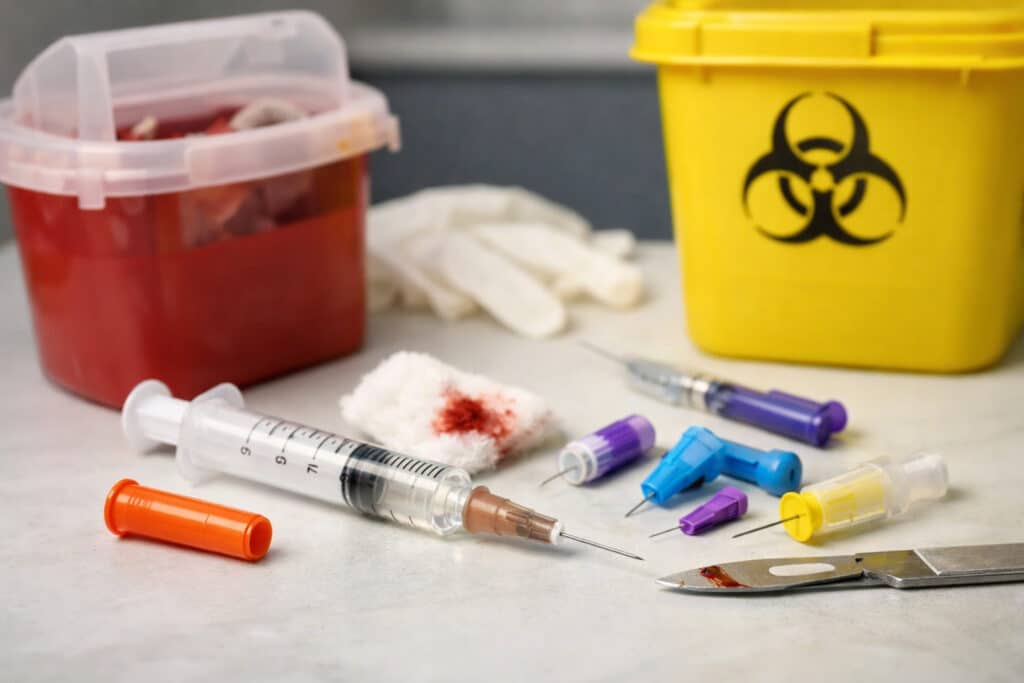
Sharps disposal errors pose serious safety threats in healthcare facilities, laboratories, and home settings. The most critical mistakes include overfilling containers beyond the fill line, using improper containers like plastic bottles or bags, failing to dispose of sharps immediately after use, and recapping needles. These sharps handling errors directly increase the risk of needlestick injuries, which can transmit bloodborne pathogens including HIV, Hepatitis B, and Hepatitis C. Proper sharps disposal requires using FDA-approved puncture-resistant containers, never filling beyond 75% capacity, and following OSHA regulations for handling and storage.
Common Sharps Disposal Mistakes in Healthcare Settings
Healthcare environments face unique challenges with sharps disposal due to high-volume usage and time pressures. Understanding these common errors helps prevent workplace injuries.
Overfilling Sharps Containers
One of the most frequent sharps disposal mistakes involves filling containers beyond the designated fill line. Containers should never exceed 75% capacity, as overfilling increases the risk of sharps protruding from the opening. This creates hazards during handling, transportation, and disposal. Staff often continue using full containers due to convenience or limited access to replacement units, but this practice significantly elevates injury risks.
Using Inappropriate Containers
Many sharps disposal errors stem from using non-approved containers. Coffee cans, plastic bottles, and cardboard boxes lack the puncture-resistant properties required for safe sharps containment. Only FDA-cleared sharps containers made from rigid, leak-proof materials should be used. These containers must be clearly labeled with the biohazard symbol and securely closable to prevent spills during transport.
Improper Placement and Accessibility
Positioning sharps containers in inconvenient locations encourages unsafe disposal practices. Containers must be placed at the point of use, within arm’s reach of where sharps are used. When containers are too far away, healthcare workers may temporarily set used sharps down, increasing contamination risks and the likelihood of accidental needlesticks.
Critical Sharps Handling Errors That Lead to Injuries
Certain handling practices create immediate danger, yet they remain surprisingly common across various settings.
Recapping Used Needles
Recapping needles after use represents one of the most dangerous sharps handling errors. This practice causes approximately 25% of needlestick injuries. The two-handed recapping technique brings fingers dangerously close to contaminated needle tips. OSHA regulations explicitly prohibit recapping unless absolutely necessary, and when required, only one-handed scoop techniques should be used.
Bending or Breaking Needles
Manually bending, breaking, or cutting needles before disposal creates unnecessary exposure opportunities. These actions can cause sharps to snap unpredictably, potentially injuring the handler or nearby personnel. Used needles should be placed directly into sharps containers without any manipulation.
Passing Sharps Hand-to-Hand
Directly handing sharps between individuals increases injury risks for both parties. Instead, sharps should be placed in a designated neutral zone or kidney basin for transfer. This practice eliminates the coordination issues and communication errors that lead to accidental sticks during handoffs.
Disposal and Storage Sharps Disposal Mistakes
Errors don’t end when sharps enter containers. Improper storage and disposal create additional hazards.
Inadequate Container Closure
Failing to properly close and seal sharps containers before disposal allows contents to spill during transport. Containers must be sealed immediately when the fill line is reached. Temporary closures that can be reopened create opportunities for unauthorized access or accidental exposure.
Improper Waste Segregation
Mixing sharps with regular medical waste or recyclables creates sorting hazards for waste handlers. Sharps must be kept in designated containers separate from other waste streams. This segregation protects sanitation workers who may not expect sharps in general waste bags.
Lack of Staff Training
Perhaps the most pervasive sharps disposal error is insufficient training. Many injuries occur because staff members don’t understand proper protocols or haven’t received updated training on new equipment. Regular training sessions, clear signage, and accessible written procedures help maintain compliance and safety awareness.
Preventing Sharps Disposal Errors in Home Healthcare
Home healthcare settings present unique challenges where professional oversight may be limited.
Absence of Proper Disposal Systems
Patients managing conditions like diabetes at home often lack access to appropriate sharps containers. Using household items for disposal violates safety regulations and endangers family members and waste collectors. Mail-back programs and pharmacy drop-off locations provide safe alternatives for home users.
Unclear Disposal Instructions
Patients may receive inadequate guidance on proper sharps handling techniques. Healthcare providers must ensure patients understand how to safely use, store, and dispose of sharps. Written instructions with visual guides help reinforce proper practices.
Delayed Disposal
Accumulating used sharps over extended periods increases household risks. Home users should establish regular disposal routines, using community drop-off programs or mail-back services before containers become full. Never storing sharps in common areas or accessible to children prevents accidental exposures.
Frequently Asked Questions
What is the most common sharps disposal error?
Overfilling sharps containers beyond the 75% fill line is the most frequent mistake. This practice causes sharps to protrude from openings and increases injury risks during handling and transport.
Can I recap a needle after using it?
No, recapping used needles is prohibited by OSHA except in specific circumstances where no alternative exists. If recapping is absolutely necessary, use only the one-handed scoop technique, never two hands.
What type of container should I use for sharps disposal?
Only use FDA-cleared sharps containers that are puncture-resistant, leak-proof, and properly labeled with biohazard symbols. Never use household items like plastic bottles, cans, or glass jars.
How full should a sharps container be before disposal?
harps containers should be disposed of when they reach the designated fill line, typically at 75% capacity. Never fill containers to the brim or allow sharps to protrude from the opening.
Where should sharps containers be placed?
Position sharps containers at the point of use, within immediate reach of where sharps are handled. Containers should be mounted securely at appropriate heights and never placed on floors or in high-traffic areas.
What should I do if I experience a needlestick injury?
Immediately wash the affected area with soap and water, report the incident to your supervisor, and seek medical evaluation. Document the circumstances to help prevent future incidents and determine if post-exposure prophylaxis is needed.


