
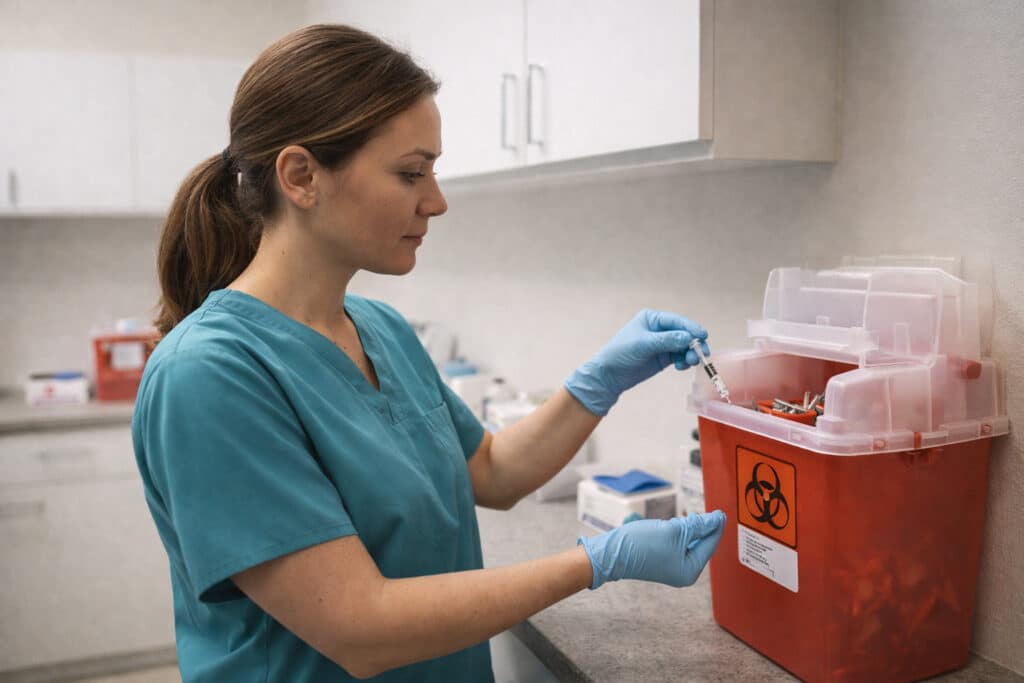
Naperville residents and businesses safely dispose of sharps via local drop-offs, pharmacies, mail-back kits, and MedPro Disposal pickups to prevent injuries, infections, and Illinois fines. Over 12 million Americans manage home sharps yearly; improper disposal risks hepatitis, HIV transmission. Use puncture-resistant containers, fill to three-quarters max. Professional services ensure OSHA/IEPA compliance with tracked destruction for hassle-free safety.
Struggling to find safe sharps disposal near Naperville, IL? Improperly discarded needles risk serious injuries, infections, and fines under Illinois regulations for your family, pets, or sanitation workers. This guide reveals local drop-offs, pharmacies, mail-back programs, and pro services for hassle-free compliance. Over 12 million Americans manage sharps at home yearly, making these Naperville solutions essential.
Understanding Sharps and Proper Disposal
Disposing of medical needles and blades isn’t as simple as throwing them in the trash. Whether you manage a healthcare facility in Naperville or treat a condition at home, safe disposal is critical. Improper handling puts sanitation workers, housekeepers, and the general public at risk of injury and infection.
The rules for disposal often depend on who generates the waste. Businesses face strict federal and state mandates, while households often have different local guidelines. Regardless of your situation, the goal remains the same: containment and safety. By using the right methods, you protect your community and avoid potential fines or legal issues associated with medical waste negligence.
What Are Sharps and Why Do They Require Special Handling?
“Sharps” is a medical term for devices with sharp points or edges that can puncture or cut skin. These items require special handling because they can easily pierce standard trash bags and injure anyone handling the waste.
According to standard definitions, sharps include:
- Needles and hypodermics used for injections
- Scalpel blades from surgical procedures
- Syringes, with or without attached needles
- Broken glass or capillary tubes contaminated with biohazards
- Exposed ends of dental wires
Because these items often come into contact with blood or bodily fluids, they are considered biohazardous. You cannot recycle them, and you cannot flush them. They must go into specific containers designed to prevent punctures and leaks.
The Risks of Improper Sharps Disposal
When someone throws a needle into a regular garbage bin, it creates a dangerous situation known as a “downstream risk.” Waste management workers, recycling sorters, and janitors often suffer accidental needlesticks from loose sharps hidden in ordinary trash.
These injuries are more than just painful cuts. They are potential vectors for serious diseases. Injuries from sharps waste can spread blood-borne pathogens like hepatitis B, hepatitis C, and HIV.
Beyond the health risks, improper disposal carries environmental consequences. Sharps left in public areas or flushed down toilets can pollute local waterways and harm wildlife. For businesses, a single improper disposal incident can lead to severe OSHA fines and reputational damage.
Sharps Disposal Regulations in Illinois and Across the US
Regulations for medical waste are a mix of federal and state laws. At the federal level, OSHA sets strict standards for how employees handle sharps to prevent workplace injuries. This applies to every medical office, dental clinic, and vet practice in the country.
In Illinois, the Illinois Environmental Protection Agency (IEPA) oversees the transport and treatment of potentially infectious medical waste (PIMW). Illinois law generally prohibits businesses from mixing medical waste with general refuse.
How to Find Sharps Disposal Near Me in Naperville
Finding a safe place to get rid of used needles in Naperville requires knowing where to look. Options vary depending on whether you are a resident or a business. Businesses typically need a contracted pickup service, while residents usually rely on community drop-off points.
For residents in the 60540 and 60563 zip codes, relying on general trash is risky and often discouraged. Instead, you should look for designated collection sites that accept residential sharps. These programs ensure that hazardous items are destroyed properly, usually through autoclaving or incineration, keeping them out of local landfills.
Local Drop-Off Sites and Collection Events
Many communities host periodic collection events or maintain permanent drop-off kiosks. In the Naperville area, check with local police stations or fire departments, as they sometimes host drug and sharps take-back days.
Additionally, the Household Hazardous Waste facilities in the region often accept sharps from residents. These sites usually require you to bring the sharps in a rigid, sealed container. It is smart to check their operating hours and specific requirements before you drive over, as some facilities are only open on specific weekends.
Pharmacies, Hospitals, and Retail Locations
Some private businesses offer disposal kiosks as a community service. Large pharmacy chains and local hospitals sometimes have secure drop boxes in their lobbies.
However, policies change frequently. A pharmacy that accepted sharps last year might not do so in 2025. Always call ahead to confirm.
- Ask if there is a fee (some sell return kits).
- Check if they accept loose containers or only specific pre-paid boxes.
- Confirm they accept sharps, not just unused medication.
Municipal and County Programs
Will County and DuPage County both offer resources for medical waste management. County health departments are excellent resources for finding current disposal guidelines.
They often provide lists of approved drop-off locations or distribute free sharps containers to residents with chronic conditions. If you are unsure where to go, the county health department website is usually the most reliable source for up-to-date local information.
Mail-Back Sharps Disposal Programs: Pros and Cons
For those who cannot reach a drop-off site or value privacy, mail-back programs are a popular solution. You purchase a specialized kit that includes a container, a shipping box, and pre-paid postage. Once the container is full, you seal it in the box and mail it to a destruction facility.
Pros:
- Convenience: Disposal happens from your own home.
- Safety: Kits are tested to meet postal shipping standards.
- Compliance: You receive proof of destruction.
Cons:
- Cost: These kits are generally more expensive than drop-off options.
- Capacity: They are best for low-volume generators; high-volume users might find them inefficient.
Professional Sharps Disposal Services for Homes and Businesses
While drop-off sites work for individuals, healthcare businesses need a more robust solution. Doctors’ offices, tattoo parlors, and clinics in Naperville cannot legally transport their own waste to a drop-off center. They require a licensed medical waste hauler.
Professional services provide a chain of custody. This means every step is tracked from the moment the waste leaves your facility until it is destroyed. This tracking is essential for regulatory audits. Services like MedPro Disposal offer these recurring pickups, ensuring that your facility never accumulates dangerous amounts of waste.
How Professional Sharps Disposal Works
Professional disposal is a systematic process designed to minimize risk. It starts with proper containment on-site and ends with environmentally safe destruction.
Most providers offer flexible schedules based on how much waste you generate. A small dental office might need a pickup once a quarter, while a busy urgent care center might need weekly service. The key is consistency. You want a partner who shows up on time so you aren’t left storing full containers that could pose a safety hazard to your staff.
Selecting the Right Containers
Safety starts with the bin. You cannot use milk jugs or coffee cans for professional disposal. You must use FDA-cleared containers that meet specific criteria:
- Rigid, puncture-resistant plastic or metal construction
- Leak-resistant sides and bottom
- Tight-fitting, puncture-resistant lid
- Marked with the universal biohazard symbol (typically red or orange)
Using the correct container ensures that the waste hauler can transport the items safely without risk of spills or punctures.
Scheduling Pickup and Compliance
Once you have the right containers, you set a pickup schedule. Your service provider will arrive, remove the full containers, and replace them with empty ones if that is part of your agreement.
During this exchange, the driver generates a shipping document or manifest. This paper trail is your proof that you handed the waste off to a licensed professional. In Illinois, keeping these records is often required by law to prove you are following environmental regulations.
Secure Destruction and Documentation
After pickup, the waste travels to a treatment facility. The most common method for treating sharps is autoclaving (steam sterilization), which kills all pathogens. Once sterilized, the waste is rendered non-infectious and can be shredded and disposed of safely.
Incineration is another method, often used for pathological waste or specific pharmaceuticals. After destruction, you receive a final certificate. This closes the loop on your liability and confirms the waste no longer poses a threat.
Best Practices for Safe Sharps Disposal
Safety in the workplace or home relies on following strict protocols. Accidents happen when people get careless or try to cut corners.
To ensure safety, follow these core rules:
- Collect all medical waste sharps in red, leakproof, puncture-resistant, and closable containers with a biohazard symbol.
- Do not place sharps in general refuse trash. This is the number one cause of downstream injuries.
- Fill containers to no more than three-quarters full before sealing. This prevents you from forcing items in and risking a puncture wound.
Common Mistakes in Sharps Disposal and How to Avoid Them
Even with good intentions, mistakes happen. Identifying these errors early protects you and your staff.
1. Overfilling the Bin
The most frequent error is overfilling containers. When a bin is stuffed, needles can stick out of the top.
- Fix: Seal the container when it is three-quarters full. Never push trash down with your hands.
2. Mixing Waste Streams
Placing sharps in general refuse trash is dangerous and illegal for businesses. Conversely, putting non-sharps like paper or liquids in the sharps bin wastes money.
- Fix: Use designated containers for each waste type.
3. Improper Container Use
Using containers for non-sharps like pharmaceuticals or liquids can cause chemical reactions or leaks.
- Fix: Follow separate guidance for pharmaceutical waste.
Why Choose MedPro Disposal for Reliable Sharps Solutions Near Me
Managing medical waste shouldn’t be a headache. You need a partner who understands the local regulations in Naperville and across Illinois. MedPro Disposal offers cost-effective, reliable solutions tailored to your specific needs.
We help you handle the complex logistics so you can focus on your patients or business. From providing the correct OSHA-compliant containers to ensuring timely pickups and proper documentation, we cover the entire process. If you are looking for a straightforward, compliant way to manage your sharps waste this year, MedPro Disposal is ready to help.
Frequently Asked Questions
Are there free sharps disposal options for Naperville residents?
Yes, DuPage County Health Department offers free sharps containers and drop-off sites for residents with chronic conditions; visit their website or call 630-682-7400 for approved locations in 60540/60563 zip codes.
Can I drop off sharps at Walgreens or CVS in Naperville?
Some Walgreens and CVS locations in Naperville accept sharps in sealed containers, but policies vary; call ahead to confirm, as many charge $5-10 for disposal kits and require puncture-proof packaging.
How often do Naperville sharps collection events occur?
Will and DuPage Counties host sharps take-back events 4-6 times yearly, often at police stations or fire departments; check county health websites for 2024 schedules, typically Saturdays from 9 AM-1 PM.
What are the fines for improper sharps disposal in Illinois?
Illinois businesses face IEPA fines up to $50,000 per violation for mixing sharps with regular trash; households risk local citations around $500, per Naperville ordinances emphasizing public safety.
How do I get started with MedPro Disposal in Naperville?
Contact MedPro Disposal at 888-641-6131 for a free quote; they provide OSHA-compliant containers, schedule pickups based on your volume, and handle Illinois IEPA manifests for full compliance.


