
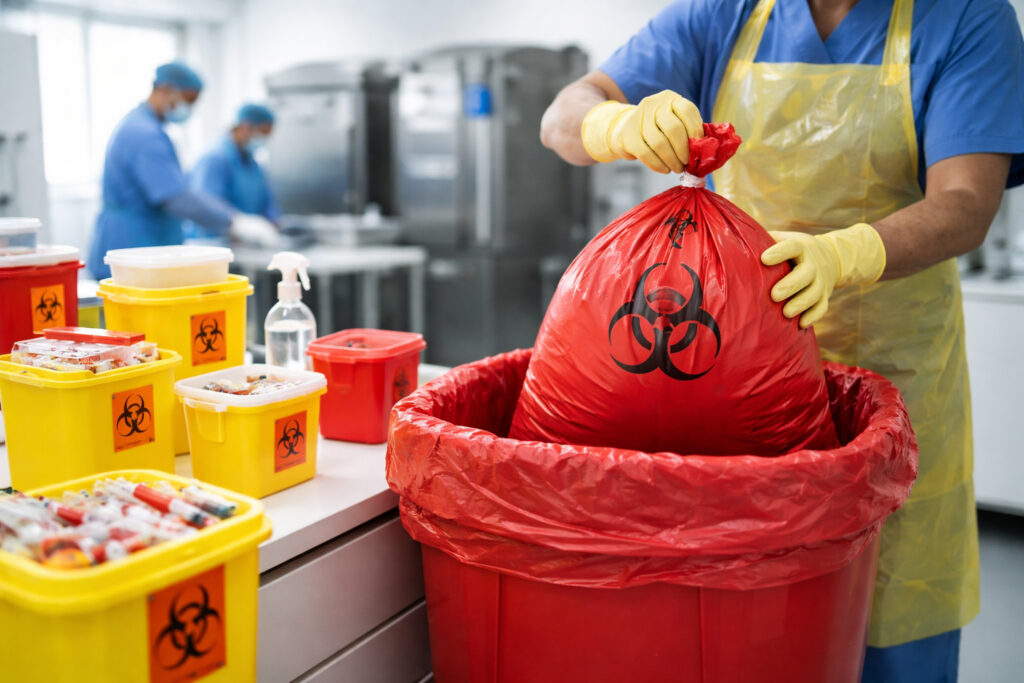
Biohazard waste disposal is the process of safely managing, transporting, and treating potentially infectious materials generated by healthcare facilities, laboratories, and other medical establishments. Facilities must follow strict federal and state regulations to protect staff, patients, and the environment from exposure to pathogens such as Hepatitis B, HIV, and antibiotic-resistant bacteria. Proper healthcare biohazard waste disposal requires trained personnel, appropriate containers, and compliant treatment methods including autoclaving, incineration, or chemical disinfection. Understanding regulated medical waste disposal requirements is essential for maintaining compliance and avoiding costly penalties.
Understanding Biohazard Waste Categories
Healthcare facilities generate multiple types of biohazard waste, each requiring specific handling protocols. Recognizing these categories helps facilities implement proper segregation practices from the point of generation.
Infectious Waste
Infectious waste includes materials contaminated with blood, body fluids, or other potentially infectious substances. This category encompasses used bandages, culture dishes, discarded gloves, and any items saturated with blood or bodily fluids. Facilities must place infectious waste in red biohazard bags immediately after use to prevent cross-contamination.
Sharps Waste
Needles, syringes, scalpels, broken glass, and other puncture-capable items fall under sharps waste. These materials pose both infection and injury risks. Healthcare biohazard waste disposal regulations mandate using puncture-resistant containers that are clearly labeled and leak-proof. Never overfill sharps containers beyond the fill line.
Pathological Waste
Human tissues, organs, body parts, and anatomical specimens constitute pathological waste. This category also includes animal carcasses from research facilities. Pathological waste requires separate containment and often demands incineration as the only acceptable treatment method.
Regulatory Compliance for Healthcare Facilities
Federal and state agencies enforce strict regulations governing regulated medical waste disposal. Facilities must understand and implement these requirements to avoid penalties and protect public health.
OSHA Requirements
The Occupational Safety and Health Administration (OSHA) mandates that employers protect workers from bloodborne pathogens. Facilities must develop exposure control plans, provide personal protective equipment, offer Hepatitis B vaccinations, and train employees on proper biohazard waste disposal procedures. Annual training updates are required for all staff handling medical waste.
EPA and State Regulations
The Environmental Protection Agency (EPA) sets baseline standards, but individual states often impose additional requirements for healthcare biohazard waste disposal. Some states require permits, manifests for waste tracking, or specific treatment methods. Contact your state environmental agency to verify local regulations that may exceed federal standards.
DOT Transportation Rules
When transporting regulated medical waste disposal materials off-site, facilities must follow Department of Transportation (DOT) guidelines. This includes proper packaging, labeling, and using certified transporters. Waste manifests must accompany all shipments, creating a paper trail from generation to final disposal.
Best Practices for Safe Disposal
Implementing consistent protocols minimizes risks and ensures compliance throughout the biohazard waste disposal process.
Proper Segregation at Point of Use
Separate biohazard waste from general trash immediately at the location where it’s generated. Use color-coded containers: red bags for infectious waste, yellow bags for pathological waste, and rigid puncture-resistant containers for sharps. Never mix waste streams, as this increases disposal costs and contamination risks.
Staff Training and Education
All personnel who handle biohazard waste require comprehensive training covering identification, segregation, containment, and emergency procedures. Training should occur during onboarding and annually thereafter. Document all training sessions to demonstrate compliance during inspections.
Storage and Containment
Designate secure storage areas away from public access for accumulated waste. Storage rooms must have proper ventilation, temperature control, and clear signage. Limit storage duration according to state regulations—typically 30 to 90 days depending on location and volume. Keep storage areas clean and inspect containers regularly for leaks or damage.
Choosing Treatment Methods
Healthcare biohazard waste disposal treatment methods include autoclaving (steam sterilization), incineration, chemical disinfection, and microwave treatment. Autoclaving works well for most infectious waste but cannot treat pathological waste or chemotherapy materials. Incineration handles all waste types but faces environmental scrutiny. Select treatment methods based on waste composition, volume, and regulatory requirements.
Frequently Asked Questions
What is considered biohazard waste in healthcare settings?
Biohazard waste includes any material contaminated with blood, body fluids, cultures, pathological specimens, sharps, and items that could transmit infectious diseases. This encompasses used bandages, culture plates, surgical gloves, needles, tissues, and any waste capable of causing infection.
How often should facilities schedule biohazard waste pickup?
Pickup frequency depends on waste volume and state regulations. Small practices generating minimal waste may schedule weekly pickups, while hospitals require daily or multiple daily collections. Never allow waste to accumulate beyond your storage facility’s permitted capacity or time limits.
What are the penalties for improper biohazard waste disposal?
Violations can result in fines ranging from $1,000 to $70,000 per incident, depending on severity and jurisdiction. Repeat violations may lead to facility closure, criminal charges, and liability for environmental contamination or disease transmission. Compliance protects both finances and reputation.
Can facilities treat biohazard waste on-site?
Yes, facilities can install on-site treatment equipment such as autoclaves or microwave systems if they meet regulatory requirements and obtain necessary permits. On-site treatment reduces transportation costs and risks but requires capital investment, staff training, and regular equipment maintenance and validation.
What documentation is required for regulated medical waste disposal?
Facilities must maintain waste manifests, training records, treatment certificates, and disposal receipts for at least three years. Documentation proves compliance during inspections and provides legal protection. Many states require electronic reporting of waste volumes and treatment methods.
How should facilities handle biohazard waste spills?
Immediately isolate the spill area, wear appropriate PPE, use absorbent materials to contain liquids, disinfect the area with EPA-registered disinfectant, and dispose of cleanup materials as biohazard waste. Document all spills and review procedures to prevent recurrence. Large spills may require professional remediation services.

Ben Brenner is a founding partner at MedPro Disposal with over 9 years of hands-on experience in healthcare operations and medical waste management. He works closely with healthcare facilities to ensure OSHA-compliant sharps disposal, regulatory adherence, and safe waste handling practices. Ben contributes industry-backed insights based on real operational experience in the healthcare sector.