
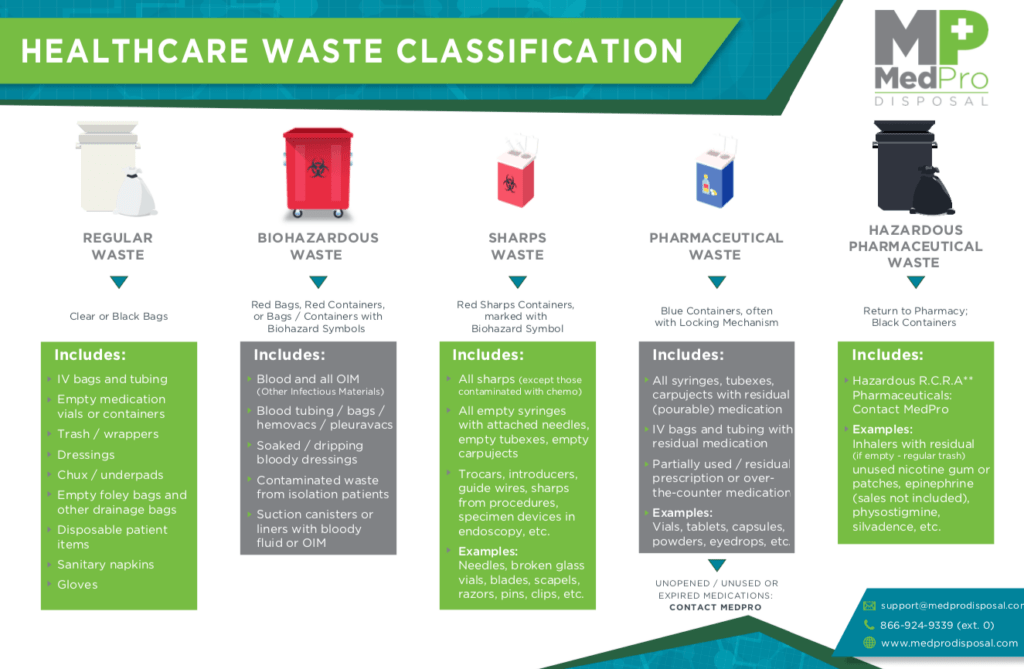
Medical waste (also called biomedical waste or regulated medical waste) is any waste generated during the diagnosis, treatment, immunization, or research involving humans or animals that is contaminated – or potentially contaminated – with infectious material. Common examples include used needles, blood-soaked gauze, surgical tissue, laboratory cultures, and discarded vaccines.
Biomedical Waste Definition: What Qualifies as Medical Waste?
By definition, medical waste is any kind of waste that contains infectious material (or material that’s potentially infectious). That means waste generated by healthcare facilities like physician’s offices, hospitals, dental practices, laboratories, medical research facilities, and veterinary clinics all falls under the category of medical waste. Some actual examples of medical waste items generated by these types of facilities can include:
- Anything that is soaked in blood (gloves, gauze, gowns, etc.)
- Human or animal tissues created during procedures
- Cultures of infectious diseases/agents
- Any waste produced in patient’s rooms with communicable diseases
- Discarded vaccines
Medical waste often contains bodily fluids like blood or other contaminants. The 1988 Medical Waste Tracking Act defined it as “waste generated during medical research, testing, diagnosis, immunization, or treatment of either human beings or animals”. Some examples are culture dishes, glassware, bandages, gloves, discarded sharps like needles or scalpels, swabs, and tissue.
Different Names for Medical Waste
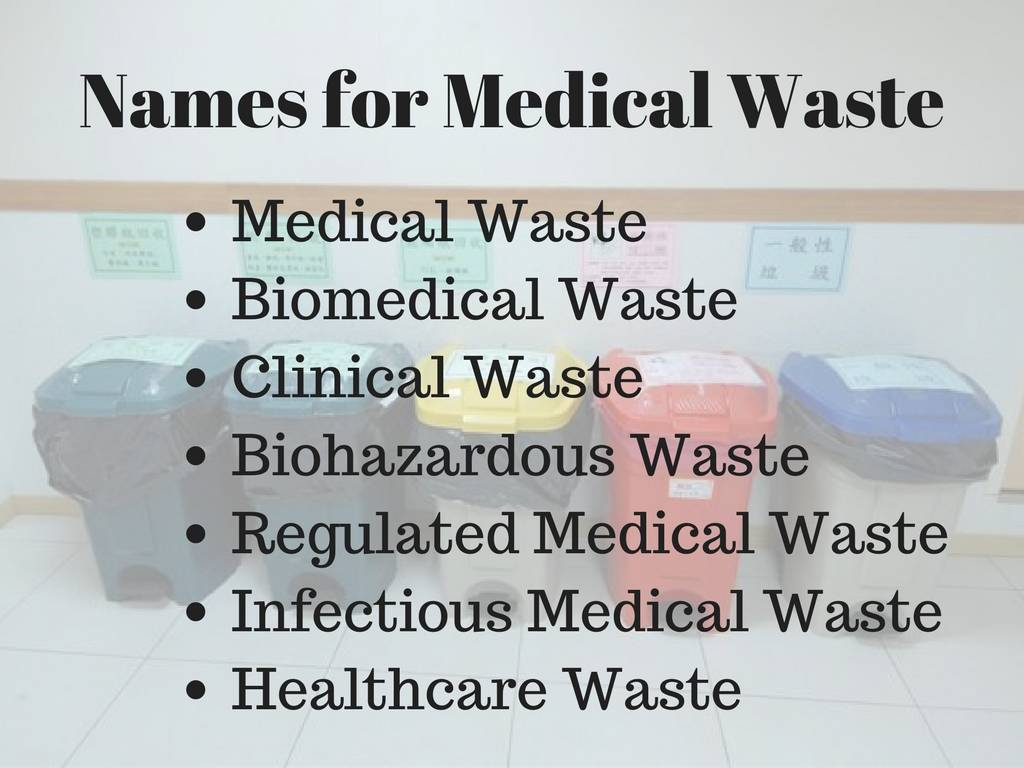
Medical waste goes by several names that all have the same basic definition. All of the terms below refer to waste created during the healthcare process that’s either contaminated or potentially contaminated by infectious material.
- Medical Waste
- Biomedical Waste
- Clinical Waste
- Biohazardous Waste
- Regulated Medical Waste (RMW)
- Infectious Medical Waste
- Healthcare waste
The terms are used interchangeably, but there’s a distinction between general healthcare waste and hazardous medical waste. The WHO categorizes sharps, human tissue, fluids, and contaminated supplies as “biohazardous,” and non-contaminated equipment and animal tissue as “general medical waste.”
In fact, office paper, sweeping waste, and kitchen waste from healthcare facilities are still technically medical waste, though they’re neither regulated as such nor hazardous in nature.
Medical Waste, Biomedical Waste, and Clinical Waste: Key Differences
| Term | Definition | Primarily Regulated By | Common Usage |
|---|---|---|---|
| Medical Waste | Any waste generated during medical diagnosis, treatment, or research that may be infectious | EPA, OSHA, state agencies | U.S. regulatory and legal contexts |
| Biomedical Waste | Waste generated from biological and medical activities; often used interchangeably with medical waste | WHO, state health departments | Healthcare and academic settings |
| Clinical Waste | Waste arising from healthcare, nursing, dental, or pharmaceutical practice | UK and international regulatory bodies | International and UK-based healthcare |
| Regulated Medical Waste (RMW) | The specific subset of medical waste subject to federal and state disposal regulations | DOT, OSHA, state agencies | Compliance and transportation contexts |
| Biohazardous Waste | Waste containing biological agents capable of causing disease in living organisms | CDC, OSHA | Laboratory and biosafety contexts |
8 Types of Medical Waste (WHO Classification System)
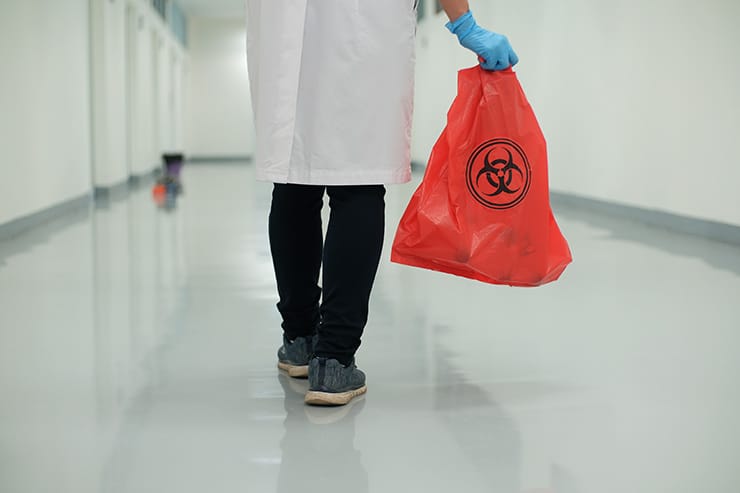
The term “medical waste” can cover a wide variety of different byproducts of the healthcare industry. The broadest definition can include office paper and hospital sweeping waste. The list below displays the most common waste categories as identified by the World Health Organization.
- Sharps. This kind of waste includes anything that can pierce the skin, including needles, scalpels, lancets, broken glass, razors, ampules, staples, wires, and trocars.
- Infectious Waste. Anything infectious or potentially infectious goes in this category, including swabs, tissues, excreta, equipment, and lab cultures.
- Radioactive. This kind of waste generally means unused radiotherapy liquid or lab research liquid. It can also consist of any glassware or other supplies contaminated with this liquid.
- Pathological. Human fluids, tissue, blood, body parts, bodily fluids, and contaminated animal carcasses come under this waste category.
- Pharmaceuticals. This grouping includes all unused, expired, and/or contaminated vaccines and drugs. It also encompasses antibiotics, injectables, and pills.
- Chemical. These are disinfectants, solvents used for laboratory purposes, batteries, and heavy metals from medical equipment such as mercury from broken thermometers.
- Genotoxic Waste. This is a highly hazardous form of medical waste that’s either carcinogenic, teratogenic, or mutagenic. It can include cytotoxic drugs intended for use in cancer treatment.
- General Non-Regulated Medical Waste. Also called non-hazardous waste, this type doesn’t pose any particular chemical, biological, physical, or radioactive danger.
What Are Infectious Waste Examples in Healthcare Settings?
Not all waste looks obviously infectious. Here are the most common infectious waste examples generated across healthcare settings:
- Used bandages and wound dressings from patients with open or active infections
- Laboratory cultures and stocks of infectious agents and microorganisms
- Swabs and specimens collected from patients with communicable diseases
- Blood and blood products including serum, plasma, and all blood-soaked materials
- Bodily fluid-contaminated PPE including gloves, gowns, masks, and face shields
- Dialysis equipment including tubing and filters used during patient treatment
- Excreta from infectious patients housed in isolation wards
- Pathological waste from surgeries performed on patients with known active infections
Types of Hospital Waste: Regulated vs. Non-Regulated
Not all waste generated inside a hospital is regulated medical waste. Understanding the distinction prevents over-spending on disposal costs and ensures your facility stays compliant without treating every trash bag as biohazardous.
| Waste Type | Hospital Source | Regulated? | Disposal Method |
|---|---|---|---|
| Sharps (needles, scalpels, lancets) | Operating room, ICU, patient rooms | Yes | Sharps container + licensed hauler |
| Infectious/biohazardous waste | Labs, isolation wards, emergency rooms | Yes | Red bag + licensed hauler |
| Pathological waste | Surgery suites, morgue, autopsy rooms | Yes | Incineration only |
| Pharmaceutical waste | Pharmacy, patient rooms, chemotherapy suites | Yes | Black/blue/yellow container + licensed hauler |
| Office paper and administrative waste | Admin areas, reception | No | Standard municipal waste |
| Food waste and packaging | Cafeteria, break rooms | No | Standard municipal waste |
| Non-contaminated supply packaging | Supply rooms, storage areas | No | Recycling or standard waste |
Only approximately 15% of total hospital waste is classified as hazardous or regulated. The remaining 85% can be disposed of through standard municipal channels, which is why correct classification directly impacts your disposal costs.
What Is Genotoxic Waste and Why Is It Classified Separately?
Genotoxic waste is classified separately from other medical waste because of its unique ability to damage DNA, cause mutations, or trigger cancer – even in trace amounts. Unlike infectious waste, which poses a contamination risk through biological agents, genotoxic waste poses a direct chemical and genetic hazard to anyone who handles it without proper protection.
It requires specialized handling procedures, dedicated yellow containers, and high-temperature incineration at temperatures exceeding 1,000 degrees Celsius. Common sources of genotoxic waste in healthcare settings include cytotoxic chemotherapy drugs, certain antiviral medications, hormone treatments, and laboratory chemicals used in genetic research.
Biomedical Waste Classification System: How the 4 Categories Work
While the WHO identifies 8 types of medical waste by hazard category, many U.S. state regulatory programs use a 4-category classification system to determine handling requirements, containment standards, and disposal methods. Understanding both systems is essential for full federal and state compliance.
| Category | Definition | Examples | Container Color |
|---|---|---|---|
| Category A – Infectious | Waste capable of causing permanent disability or life-threatening illness upon exposure | Cultures of dangerous pathogens, waste from Ebola or prion-disease patients, high-risk laboratory specimens | Red bag with biohazard label |
| Category B – Biohazardous | Waste potentially infectious but at a lower risk level than Category A | Used bandages, blood-soaked gauze, specimen containers, PPE from standard patient care | Red bag |
| Category C – Sharps | Any item capable of puncturing or cutting skin, regardless of contamination status | Needles, syringes, scalpels, lancets, broken glass from laboratory settings | Red or yellow puncture-resistant sharps container |
| Category D – Chemical/Pharmaceutical | Hazardous chemical or pharmaceutical waste generated from healthcare activities | Expired drugs, chemotherapy agents, disinfectants, heavy metals, solvents | Black (hazardous pharma), Blue (non-hazardous pharma), Yellow (chemo trace waste) |
The classification category assigned to your waste determines everything from the container type and labeling requirements to transport documentation and final treatment method. Misclassifying waste – particularly placing Category A or B waste in standard trash – carries significant regulatory penalties at both the state and federal level.
Key Medical Waste Statistics: Quantity, Breakdown & Risk Levels
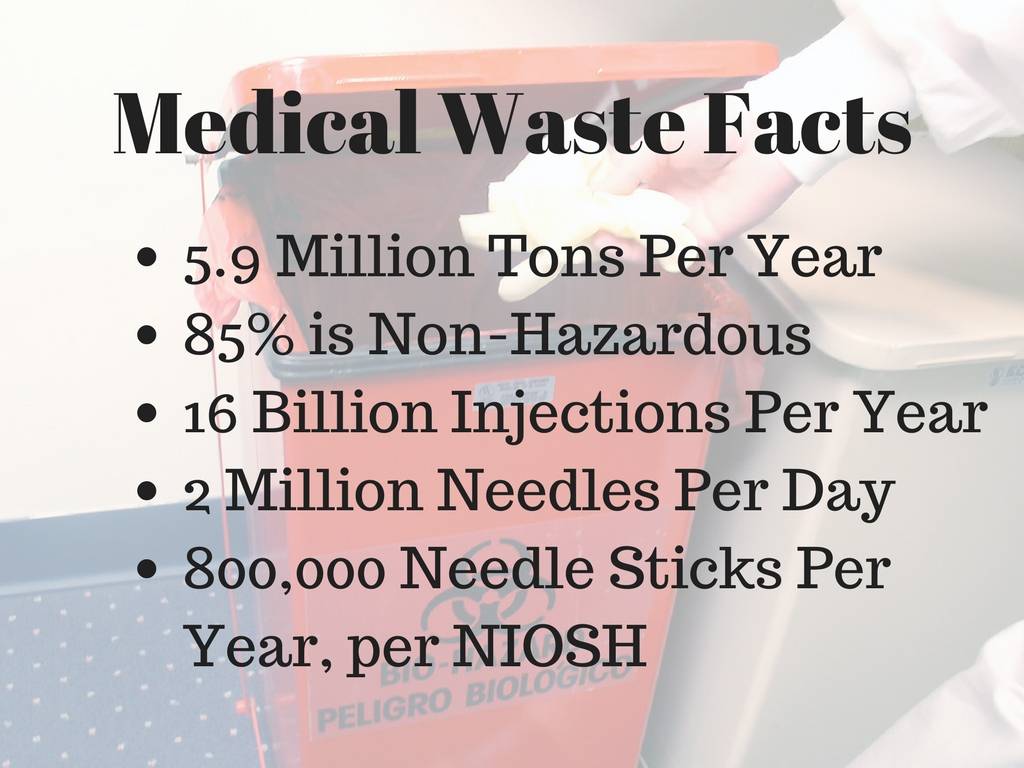
The list below gives a quick overview of the topline facts around medical waste, including quantity, breakdown, dangers, and how the waste gets treated.
Quantity. U.S. hospitals create an estimated 5.9 million tons of biohazardous and other medical waste every year. That’s 33 lbs of waste per staffed bed every single day.
Breakdown. 85% of all medical waste is deemed non-hazardous and general. The other 15% is hazardous and may be either infectious, radioactive, or toxic.
Danger. Biohazardous waste can contain harmful microorganisms that can infect healthcare workers, patients, and the general public.
How it’s treated. Healthcare waste can be treated on-site or off-site, by truck service or by mail. It can be incinerated, autoclaved, microwaved, or treated by chemical or biological means.
Where Does Medical Waste Go? On-Site vs. Off-Site Disposal Explained
Where Does Medical Waste Go After Pickup?
After pickup, medical waste goes to a licensed treatment facility where it is processed by incineration, autoclaving, or chemical treatment before final disposal in a regulated solid waste landfill. The specific treatment method depends on the waste category – pathological waste such as human tissue and body parts must be incinerated and cannot be landfilled directly, while infectious waste and sharps can be autoclaved or microwaved before entering the standard landfill stream.
The journey from your facility to final disposal typically follows this path:
- Step 1 – Collection: A licensed medical waste hauler collects your properly packaged and labeled waste containers from your facility on a scheduled or on-call basis
- Step 2 – Transport: Waste is transported in DOT-compliant vehicles with required manifests and tracking documentation to a licensed treatment facility
- Step 3 – Treatment: Waste is processed using the appropriate method for its category – incineration, autoclaving, microwaving, or chemical treatment
- Step 4 – Final disposal: Treated waste that no longer poses a biological hazard is disposed of in a permitted solid waste landfill
- Step 5 – Documentation: A waste manifest is returned to your facility confirming proper disposal – this document must be retained for regulatory compliance
There are several medical waste disposal methods healthcare providers can choose from. The first question is where the waste gets disposed of: on-site or off-site? The second is how the waste gets transported if it’s disposed of off-site.
MedPro Waste Disposal offers low-cost, secure medical waste disposal with predictable service and predictable cost. Check out our practice savings calculator here to see how much you could save on your medical waste disposal.
Find Out How Much You Can Save on Medical Waste Disposal
Healthcare Practices save an average of $2,500 per year
MedPro Disposal was founded to address a common complaint across all industries dealing with medical and bio-hazard wastes: They loved their service, but hated the cost.
To combat rising costs in the industry, we created MedPro Disposal for business owners like you who need great service to help your business run smoothly, but don’t think something as simple as waste should cost an arm and a leg.
Let us manage your medical waste so you can focus on what matters most, your patients.
On-Site Medical Waste Treatment
The on-site treatment of medical waste is generally limited to large, well-monied hospitals and facilities. On-site treatment is extremely cost-prohibitive. That’s because the required equipment is expensive to buy, expensive to maintain, and expensive to manage and run. The regulatory maze around such equipment (and its use) presents yet another barrier to entry.
Off-Site Medical Waste Treatment
Off-site medical waste treatment is a far more cost-effective option for most small and mid-sized medical practices and facilities. Third-party vendors whose main business is healthcare waste collection and disposal have the equipment and training needed to handle the process. Vendors can collect the waste either by truck or by mail.
- Truck services require a contract with a specially licensed disposal company to haul the waste away for regular destruction. The waste is hauled in special containers to a dedicated disposal facility.
- Mail or box services use the U.S. Postal Service to ship the waste safely to a facility for treatment. This is generally the most cost-effective of all the methods. It requires a vendor fully versed and experienced in all special Postal Service regulations and best practices.
5 Methods for Disposal of Biomedical Waste (With Compliance Notes)
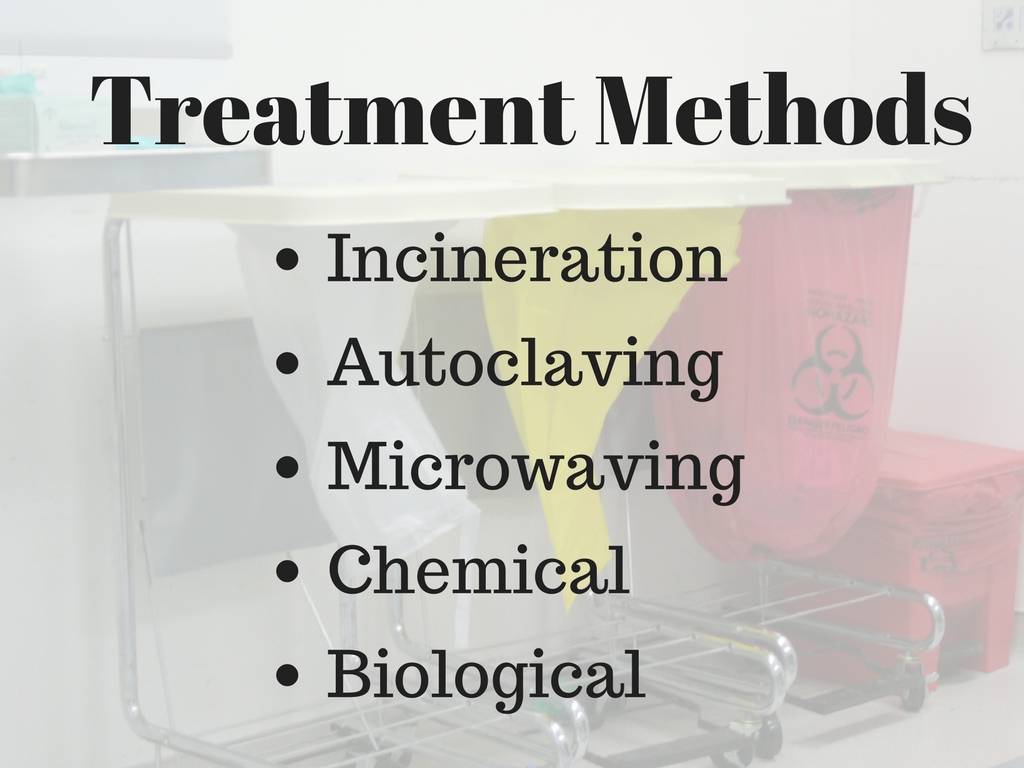
No matter where medical waste is processed, it’s ultimately treated by incineration, autoclaving, microwave, biological, or chemical treatment. Incineration, once by far the most popular method, has decreased in usage since the 1990’s, as regulation has forced other methods to come online.
Incineration. Before 1997, over 90% of all infectious medical waste was disposed of by incineration. Changes to EPA regulations has led providers to seek other disposal means. This is still the only method used on pathological waste such as body parts and recognizable tissues.
Autoclaving. Steam sterilization renders biohazardous waste non-infectious. After it’s been sterilized, the waste can be disposed of normally in solid waste landfills, or it can be incinerated under less-stringent regulation.
Microwaving. Another way to render hazardous healthcare waste non-hazardous is to microwave it with high-powered equipment. As with autoclaving, this method opens up the waste to normal landfill disposal or incineration afterward.
Chemical. Some kinds of chemical waste may be neutralized by applying reactive chemicals that render it inert. This is generally reserved for waste that’s chemical in nature.
Biological. This experimental method of treating biomedical waste uses enzymes to neutralize hazardous, infectious organisms. It’s still under development and rarely used in practice.
Medical Waste Handling: Step-by-Step Compliance Checklist
Healthcare workers can avoid most medical waste problems by adhering to a few key best practices. Employees should know the laws, then classify and separate all waste by type into the correct, color-coded waste containers. Waste should be labeled depending on its category, and the right documentation should accompany all containers during transit. A dependable medical waste disposal company can help a facility put these best practices to work.
- Know the healthcare waste laws. Healthcare waste is regulated by the DOT, EPA, OSHA, and the DEA. It’s vital to be aware of all guidelines from each agency when preparing, transferring, and disposing of hazardous waste.
- Classify medical waste correctly. Identifying the kind of waste you’re dealing with is the first step in properly disposing of it. Avoid putting non-hazardous waste in with the rest to prevent overspending.
- Separate the waste by type. Waste should be separated out into the different categories, including sharps, pharmaceutical, chemical, pathological, and non-hazardous. Regulated medical waste goes in red bags. Sharps that go into these bags must be put into puncture-proof containers first.
- Use the right medical waste containers. Put all waste in approved containers depending on how it’s classified. Some waste can go in certified cardboard boxes, while other waste gets put in special tubs or even locked up for transit.
- Prepare the containers properly. Healthcare waste containers and bags must be taped for shipment, then packaged according to DOT weight restrictions. Containers should be stored in a secure, dry area before pickup or shipping. It’s essential to properly label all waste before transport as well.
- Include the right documentation. Proper documentation of healthcare waste is crucial to protect both the provider and the waste disposal company. The right paperwork should accompany each container and bag throughout the process.
- Use the medical waste disposal color code. The color coding system for waste segregation calls for all sharps to go in puncture-resistant red biohazard containers. Biohazard waste goes in red bags and containers. Yellow containers are for trace chemo waste, while pharmaceutical waste goes into black containers for hazardous materials and blue for all others. Radioactive wastes like Fluorine-18 or Iodine-131 get put in shielded containers marked with the radioactive symbol.
- Hire the right waste disposal company. Multiple regulating bodies, various hazards, and several different kinds of waste present a daunting challenge for healthcare employees. Partnering with a reliable vendor is often vital.
The History of Medical Waste
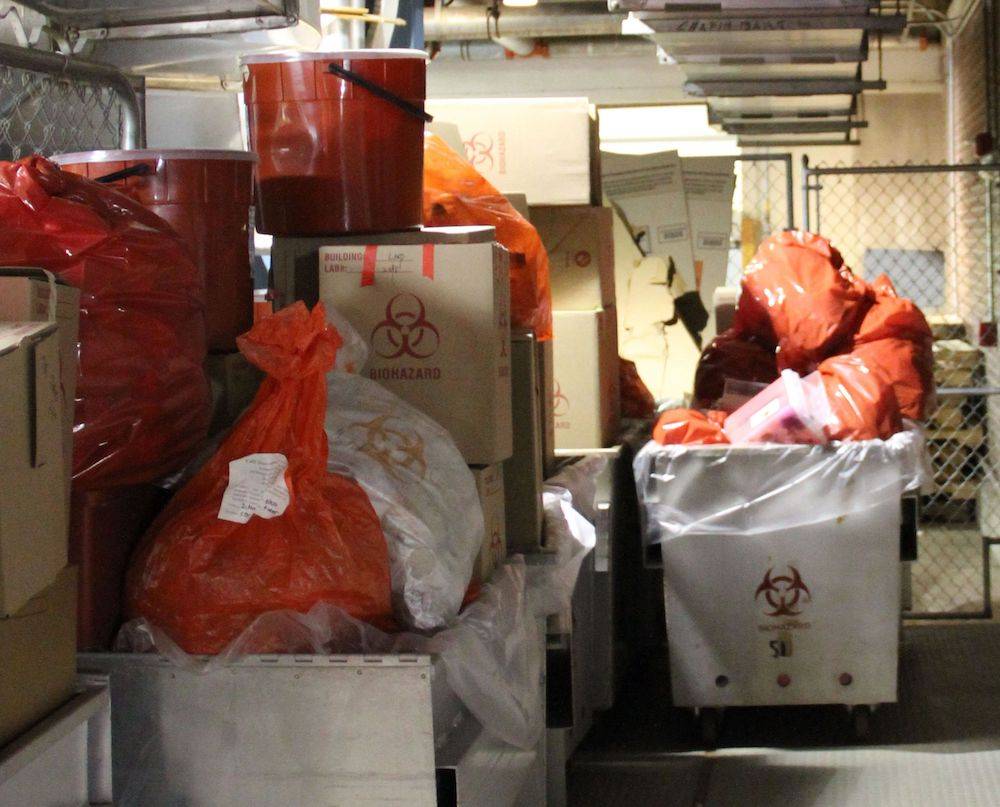
The approach to handling medical waste in the U.S. has evolved markedly since the 1980s. In that decade, a series of incidents of healthcare waste washing up on East Coast beaches gained widespread media attention. The events caused calls for increased regulation, which came in the form of 1988’s Federal Medical Waste Tracking Act.
The Act imposed strict rules on the transportation of waste from hospitals and other facilities. When it expired in 1991, the states largely took on the regulatory burden, basing their individual programs on lessons learned from the Act.
New solutions in the medical waste industry continue to offer advancements in security, convenience, cost savings, and speed of service.
The Dangers of Medical Waste
Unless it’s managed properly, medical waste can present several health hazards to healthcare employees, waste workers, and the general public. Discarded needles can expose us to needle sticks and possible infection if they’re accidentally sent to recycling facilities, or if containers break open in transit. Housekeepers and janitors are also at risk when sharps poke their way out through plastic bags.
Hazardous waste can expose us to microorganisms, radiation burns, poisoning, pollution, and other dangers. Finally, improperly treated waste sent to landfills can contaminate our drinking water and environment.
Who Regulates Medical Waste?
There’s no shortage of medical waste regulation. In the late 1980s, the waste was overseen by the EPA and the Federal Government. Afterward, regulations were passed by various state agencies. State health agencies and environmental programs have information about who governs healthcare waste in each state.
Several federal bodies maintain laws concerning medical waste. These include the Occupational Safety and Health Administration (OSHA), the Centers for Disease Control (CDC), the U.S. Food and Drug Administration (FDA), the Department of Transportation (DOT), and the Drug Enforcement Administration (DEA).
Who Creates Medical Waste?
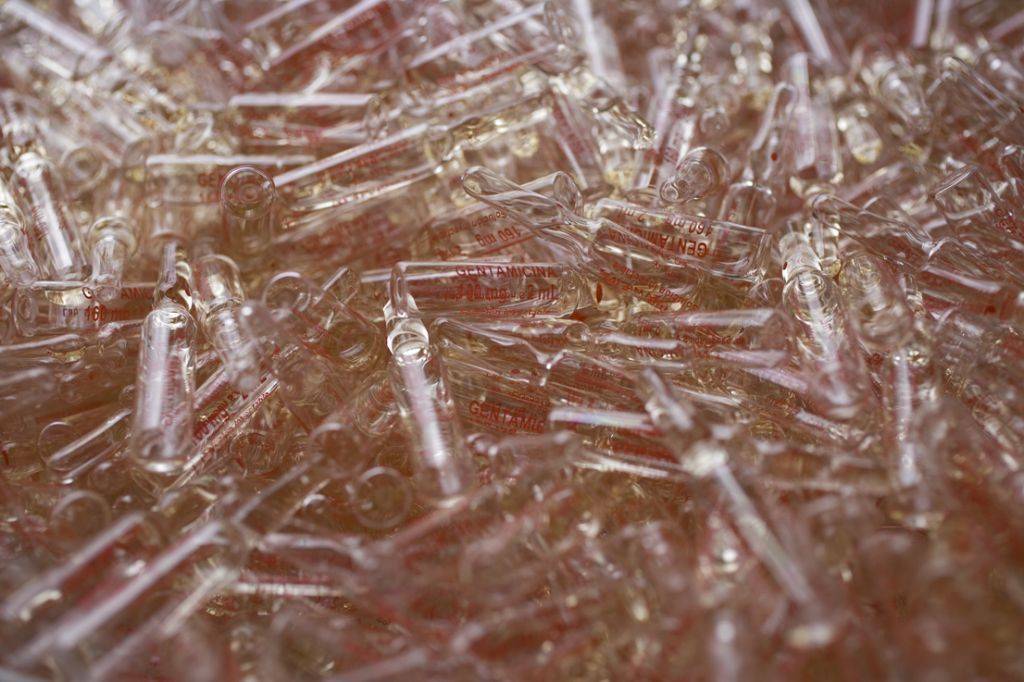
Medical waste can come from any medical or biological activity or source. For example, the prevention, diagnosis, or treatment of different diseases all can create hazardous waste.
The list of waste-generating facilities below includes all caregiver locations like private physician practices and dental offices, but also veterinary practices, research labs, funeral homes, and anyplace else that meets medical needs.
- Physician Practices
- Retail Health Clinics
- Dental Offices
- Urgent Care Clinics
- Veterinary Practices
- Medical Research Laboratories
- Nursing Homes
- Home Healthcare or Infusion Situations
- Funeral Homes
- Hospitals
- Commercial Offices and Buildings
Medical Waste Tools and Resources
We’ve created a small toolbox below of various resources and medical waste solutions, from government websites and documents to laws, vendors, and educational materials.
The EPA maintains a map-based list of links to state environmental agencies and hazardous waste programs around the country.
MedPro Disposal provides a low-cost, fully compliant pickup, transportation, treatment, and disposal solutions for regulated medical waste, pharmaceuticals, and sharps. They also offer a mail-back sharps container service and compliance training for safety needs.
The WHO Provides a Free 308 Page Manual on the safe management of healthcare waste, including general info like definition and classification to minimization, reuse, collection, storage, and more.
Frequently Asked Questions About Medical Waste
What is the definition of medical waste?
Medical waste is any waste generated during medical research, testing, diagnosis, immunization, or treatment of humans or animals that contains or is potentially contaminated with infectious material. Per the 1988 Medical Waste Tracking Act, this includes items like needles, culture dishes, blood-soaked gauze, and discarded vaccines.
What are the main types of medical waste?
The WHO identifies 8 main types of medical waste: sharps, infectious waste, pathological waste, pharmaceutical waste, chemical waste, radioactive waste, genotoxic waste, and general non-regulated medical waste.
What is biomedical waste?
Biomedical waste is another term for medical waste – specifically waste generated during healthcare activities that may be contaminated with infectious agents. The terms biomedical waste, clinical waste, and regulated medical waste are used interchangeably in most regulatory and compliance contexts.
Where does medical waste go after it is collected?
After collection, medical waste is transported to a licensed treatment facility where it is processed by incineration, autoclaving, microwaving, or chemical treatment before final disposal in a regulated solid waste landfill. Pathological waste such as body parts must be incinerated and cannot be landfilled directly.
What are examples of infectious waste?
Infectious waste examples include used bandages and dressings from infected patients, laboratory cultures of infectious agents, swabs from patients with communicable diseases, blood specimens and blood-soaked materials, PPE contaminated with bodily fluids, dialysis equipment, and pathological waste from surgeries performed on patients with known active infections.
How is biomedical waste classified?
Biomedical waste is classified into categories based on hazard type and risk level: infectious/biohazardous waste (Categories A and B), sharps waste (Category C), pharmaceutical and chemical waste (Category D), pathological waste, radioactive waste, genotoxic waste, and general non-hazardous healthcare waste.
What are the types of hospital waste?
Hospital waste includes regulated types such as sharps, infectious waste, pathological waste, pharmaceutical waste, and chemical waste, as well as non-regulated general waste like office paper, food waste, and non-contaminated packaging. Only approximately 15% of total hospital waste is classified as hazardous or regulated medical waste.
What is the classification of biomedical waste?
Biomedical waste is classified into 4 main categories by most U.S. state regulatory programs: Category A (highly infectious, life-threatening), Category B (biohazardous, lower risk), Category C (sharps), and Category D (chemical and pharmaceutical waste). Each category requires specific containers, handling procedures, and disposal methods.
Conclusion
Medical waste is classified as any possibly contaminated byproduct of medical research, treatment, or other healthcare activity. It can come from physician’s offices, dentists, veterinary clinics, research laboratories, or funeral homes.
We hope this guide has helped explain the definition, types, history, and dangers of healthcare waste, including how it gets disposed of, best practices, tools, resources, and regulating bodies.
Got a comment or a question? Give us a shout via the comments form below! Looking to get your medical waste disposal needs handled? Get your quote today!