
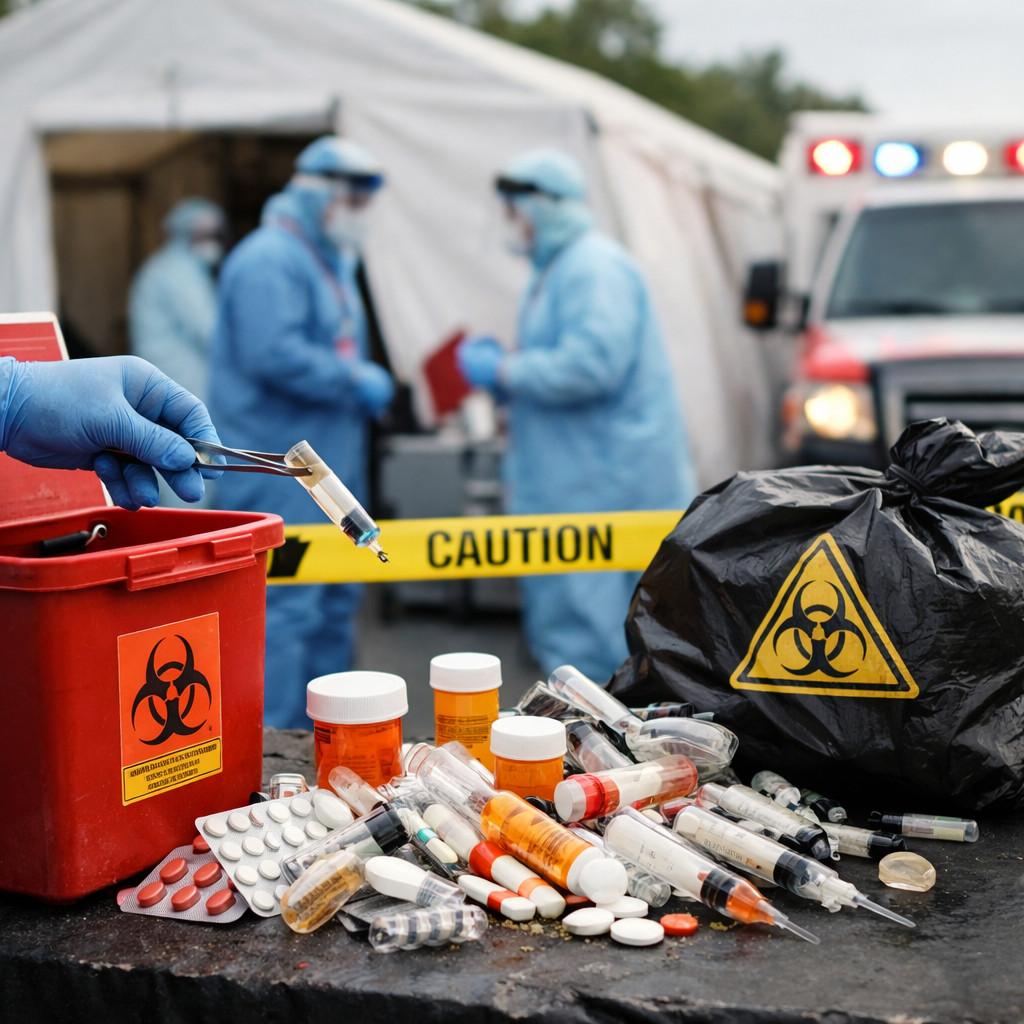
When a public health emergency strikes, healthcare facilities face surging volumes of pharmaceutical waste alongside stricter oversight. Federal regulations under the Resource Conservation and Recovery Act (RCRA) remain in effect during emergencies, requiring hazardous pharmaceutical waste to be managed according to EPA standards. The Drug Enforcement Administration (DEA) continues to regulate controlled substance disposal, while state and local authorities may issue temporary guidance to address capacity challenges. Emergency declarations don’t suspend core disposal requirements—they may temporarily adjust timelines or permit alternative treatment methods. Facilities must maintain proper segregation, labeling, and documentation while coordinating with licensed waste contractors who can handle increased volumes safely and legally.
Understanding Core Pharmaceutical Waste Regulations in Crisis Situations
During public health emergencies, the regulatory framework for pharmaceutical waste disposal remains anchored in existing federal law. The EPA’s RCRA regulations classify certain pharmaceuticals as hazardous waste based on their characteristics—ignitability, corrosivity, reactivity, or toxicity. Healthcare facilities generating these wastes must comply with generator requirements regardless of emergency status.
RCRA Hazardous Waste Standards
Facilities must determine if their pharmaceutical waste meets hazardous waste criteria. Common hazardous pharmaceuticals include chemotherapy agents, mercury-containing drugs, and certain antimicrobials. These require manifesting, proper containerization, and disposal at permitted treatment facilities within regulatory timeframes—typically 90 days for small quantity generators.
DEA Controlled Substance Requirements
Controlled substances require separate handling under DEA regulations. During emergencies, facilities must still use DEA-authorized methods: on-site destruction with two witnesses, or transfer to reverse distributors or DEA-registered collectors. Documentation requirements remain unchanged, including maintaining disposal records for two years.
Emergency Regulatory Flexibilities
EPA and state agencies may issue temporary enforcement discretion or emergency waivers during declared emergencies. These typically address storage time extensions, alternative treatment methods, or expedited permitting for temporary treatment facilities. However, facilities must request and receive written approval before deviating from standard procedures.
State and Local Emergency Waste Management Protocols
State environmental and health departments often activate emergency waste management plans during public health crises. These protocols supplement federal requirements with region-specific guidance addressing local infrastructure and capacity constraints.
State-Specific Emergency Declarations
States may temporarily modify storage limits, extend accumulation timeframes, or authorize alternative disposal pathways. For example, during COVID-19, several states allowed extended on-site storage when commercial disposal capacity became limited. Facilities must monitor state emergency orders and comply with modified requirements.
Coordination with Local Health Departments
Local health departments often serve as the primary regulatory contact during emergencies. They provide guidance on waste segregation for infectious materials, coordinate with waste contractors experiencing service disruptions, and may inspect facilities to ensure compliance with emergency protocols.
Interstate Waste Transport Considerations
Emergencies may require transporting pharmaceutical waste across state lines if local disposal capacity is exhausted. This triggers additional regulatory requirements including advance notification to receiving states and compliance with their emergency waste acceptance criteria.
Operational Best Practices for Emergency Pharmaceutical Waste Management
Maintaining regulatory compliance during emergencies requires advance planning and operational flexibility. Healthcare facilities should implement systems that function under both routine and crisis conditions.
Waste Segregation and Containerization
Proper segregation prevents regulatory violations and reduces disposal costs. Establish clearly marked collection points for hazardous pharmaceuticals, non-hazardous pharmaceuticals, and controlled substances. Use color-coded containers and prominent labeling to prevent cross-contamination, especially when staff members are working under emergency conditions.
Documentation and Record-Keeping Systems
Maintain detailed waste tracking records including generation dates, waste descriptions, quantities, and disposal methods. Digital systems provide redundancy if paper records are damaged or inaccessible. These records demonstrate regulatory compliance and support reimbursement claims for emergency-related disposal costs.
Contractor Relationships and Contingency Planning
Establish relationships with multiple licensed waste disposal contractors before emergencies occur. Verify their permits, emergency response capabilities, and capacity to handle surges. Include alternative contractors in your contingency plans to ensure continuity if primary vendors face operational disruptions.
Compliance Monitoring and Enforcement During Health Emergencies
Regulatory agencies continue compliance monitoring during emergencies, though enforcement approaches may adapt to crisis conditions. Understanding how oversight functions helps facilities maintain compliance while managing emergency operations.
Modified Inspection Protocols
EPA and state inspectors may conduct remote compliance reviews or focus on critical violations during active emergencies. However, facilities remain subject to inspection, and regulators prioritize issues that pose immediate threats to public health or the environment.
Violation Consequences and Penalty Structures
Regulatory violations during emergencies can result in civil penalties, corrective action orders, or criminal charges for egregious cases. Penalties for hazardous waste violations range from $2,500 to $75,000 per day per violation. DEA violations involving controlled substances carry additional penalties including license suspension.
Self-Disclosure and Compliance Assistance
Facilities discovering compliance issues should consider voluntary self-disclosure to regulatory agencies. EPA’s self-disclosure policy may reduce penalties by up to 75% when facilities promptly report violations, cooperate with investigations, and implement corrective measures. State agencies often offer similar incentives.
Frequently Asked Questions
Do pharmaceutical waste disposal regulations change during a declared public health emergency?
Core federal regulations remain in effect, but EPA and state agencies may issue temporary enforcement discretion or modified requirements. Facilities must obtain written approval before deviating from standard procedures.
How long can healthcare facilities store pharmaceutical waste during an emergency?
Standard accumulation timeframes apply unless regulators grant specific extensions. Small quantity generators typically have 180-270 days, while large quantity generators have 90 days. Emergency waivers may extend these periods.
Are controlled substances subject to different rules during health emergencies?
DEA regulations for controlled substance disposal remain unchanged during emergencies. Facilities must continue using authorized disposal methods and maintaining required documentation.
What happens if my waste disposal contractor cannot provide service during an emergency?
Contact your state environmental agency immediately to report the service disruption. They may authorize temporary on-site storage extensions or connect you with alternative contractors. Document all communications and maintain proper storage conditions.
Can facilities use alternative pharmaceutical waste treatment methods during emergencies?
Alternative methods require prior regulatory approval. Facilities must submit requests demonstrating that standard disposal pathways are unavailable and that alternative methods protect public health and the environment.
Where can healthcare facilities find current emergency waste disposal guidance?
Monitor your state environmental agency website, EPA Region office, and local health department for emergency orders and guidance documents. Many agencies operate emergency hotlines during active public health crises.

Ben Brenner is a founding partner at MedPro Disposal with over 9 years of hands-on experience in healthcare operations and medical waste management. He works closely with healthcare facilities to ensure OSHA-compliant sharps disposal, regulatory adherence, and safe waste handling practices. Ben contributes industry-backed insights based on real operational experience in the healthcare sector.