
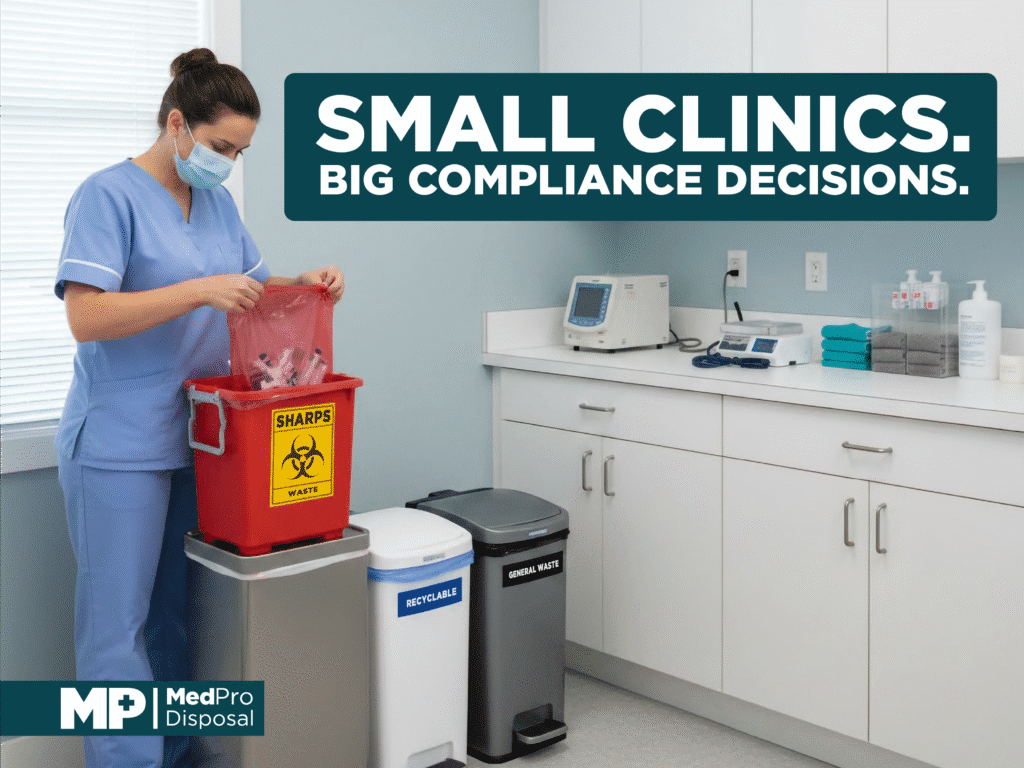
Why Small Clinics Need the Right Medical Waste Disposal Services
Small clinics face a constant balancing act. They need medical waste disposal services that ensure compliance, safety, and cost savings.
Choosing the right provider that provides cost-effective medical waste pickup for lower waste volumes ensures effective medical waste management for limited budgets. This guide highlights what small clinics and healthcare facilities should look for in a service provider.
What Small Clinics Should Look for When Choosing Medical Waste Disposal Services
When small clinics evaluate medical waste disposal services, compliance and flexibility are priorities. Waste management solutions providers must hold proper licenses. They should have DOT-compliant transportation and align with OSHA and EPA standards. Reliable providers offer flexible plans with right-sized containers and flexible pickup schedules.
These requirements can help clinics optimize their efficiency and budgets. They help smaller clinics manage regulated medical waste efficiently without overpaying for services designed for larger facilities.
How Smaller Healthcare Facilities Can Find Cost-Effective Medical Waste Pickup Options
Choosing cost-effective medical waste pickup means avoiding unnecessary services. Cost-effective solutions are not about cutting corners, nor choosing the lowest-priced provider. They are about paying only for the services that you truly need.
Small clinics generate low, predictable volumes. Clinics that generate minimal sharps or red bag waste including pharmaceutical waste, may not need weekly service. Flexible service plans offer better value and control for those actual needs.
Matching container sizes and pickup frequency to your waste streams and output helps control costs. Over-servicing leads to unnecessary fixed fees and higher annual costs.
The most cost-effective medical waste pickup providers adjust service levels as needs change. This flexibility supports compliance while keeping waste disposal expenses aligned with actual usage.
What Factors Affect the Cost of Medical Waste Disposal Services for Small Clinics?
Some key factors that influence the cost of medical waste for small clinics are waste volume and pickup frequency. There are several variables that small clinics must also consider. Depending on the type of waste generated, there are different handling requirements. The geographic location affects pricing, especially when service routes vary by region. Medical waste disposal services pricing falls into three models. Clinics can choose between flat monthly fees, pay-per-pickup, and volume-based options. They need to review the quotes that they receive closely.
Note that some service agreements may include extra costs. These “hidden fees” may include fuel surcharges and container markups. They may include contract penalties, especially for long-term service agreements. These hidden fees may increase your total expense over time.

How Often Should You Set a Medical Waste Pickup Schedule for Healthcare Facilities?
Picking the right medical waste pickup schedule for healthcare facilities begins with knowing the waste volume. Small clinics have low medical waste volumes. They often benefit from bi-weekly or monthly pickups rather than fixed weekly service.
Pickup schedules should consider storage limits, infection control requirements, and state regulations. Temporary schedule adjustments may be necessary to maintain compliance. This can occur during peak periods such as flu season or vaccination campaigns.
Inquire from vendors if they allow clinics to modify pickup frequency temporarily. Many often do without needing to renegotiate service contracts, but some might not. This adaptability helps small clinics stay compliant without locking into higher long-term expenses.
What Types of Waste Require Hazardous Medical Waste Disposal Services?
Small clinics generate several types of regulated waste that require professional handling. These include sharps, certain pharmaceuticals, and materials contaminated with blood or bodily fluids.
Hazardous medical waste requires specialized disposal services. In the United States, hazardous and biohazardous waste disposal must follow OSHA, EPA, and state-specific regulations. Improper handling or disposal can increase exposure risks and lead to regulatory violations.
Proper waste segregation at the point of generation reduces both risk and cost. Segregation can increase efficiency and safety, while clinics can avoid unnecessary hazardous disposal fees and improve overall compliance.
How Medical Waste Management Services Help Small Clinics Stay Compliant with RCRA and OSHA Standards
Medical waste management services are crucial for complying with RCRA and OSHA standards. Professional vendors provide guidance on waste classification, packaging, labeling, and documentation.
Clinics protect staff from exposure risks through proper container use, training, and handling. This complies with OSHA’s Bloodborne Pathogens Standard. Medical waste management services help implement these requirements consistently.
The EPA’s RCRA federal law applies to pharmaceutical and hazardous waste. Providers assist clinics with proper segregation. They help with proper documentation and transport manifests, reducing compliance burdens.
What Is the Safest Way to Manage Hazardous Medical Waste in a Small Clinic?
The safest way to manage hazardous medical waste starts with proper on-site handling. All waste should go directly into approved containers. Get your containers from reliable medical supply companies to prevent leaks, punctures, and misuse. Secure storage areas and regular staff training help reduce exposure and contamination risks.
Unfortunately, most small clinics lack the equipment for on-site treatment or extended storage. Outsourcing to licensed hazardous medical waste disposal services providers is the safest option.
Professional services ensure compliant transport, documentation, and final disposal. Working with hazardous medical waste disposal services allows you to stay focused on patient care without worry.
How Small Clinics Can Compare Medical Waste Removal Companies Near Me Without Overspending?
Searching for medical waste disposal near you identifies providers with local service routes. Efficient local service routes help clinics control their cost. Proximity can significantly impact your budget and overall service costs. That makes nearby medical waste disposal services an attractive option to budget-conscious facilities.
Localized medical waste disposal services lower transportation costs. Local services mean quicker response times, better customer service, and more flexible pickup options. For small clinics, this responsiveness can prevent storage issues and reduce operational disruptions.
Waste regulations vary by location. Local providers are more familiar with regional requirements. They are familiar with state-specific regulations and help ensure full compliance.
When comparing medical waste disposal services providers, clinics should look beyond base pricing. Key criteria include licensing, documentation practices, service flexibility, customer support, and proximity. Transparent pricing and adjustable plans are especially important for low-volume generators.
Requesting multiple quotes and asking detailed service questions helps clinics avoid overpaying. Comparing total cost—not just monthly fees—leads to better long-term value.
Choosing MedPro: A Reliable, Cost-Effective Medical Waste Disposal Services Provider for Small Clinics
For small clinics, the right medical waste disposal services go beyond choosing the lowest price. Cost-effective medical waste pickup depends on reliable service, flexible plans, predictable pricing, and right-sized options.
MedPro Disposal offers reliable services aligned with your actual waste volume. Our service plans include right-sized containers, adjustable pickup schedules, and clear documentation. Once your waste leaves your facility, we take full ownership and complete responsibility. This level of service is unmatched in the industry and at our price point.
Your clinic can expect compliant solutions without oversized contracts or unnecessary costs. If you’re currently under contract with another provider, we offer a price lock. Sign up now, and we’ll hold your price until service begins and our agreement starts.
Simply put, MedPro offers transparent pricing, a 99% on-time pickup rate, predictable savings, liability protection, and bundled services tailored to your practice’s needs.
Ready to get started?
📞 Call MedPro now at 888-641-6131 for your free, no-obligation quote.


