
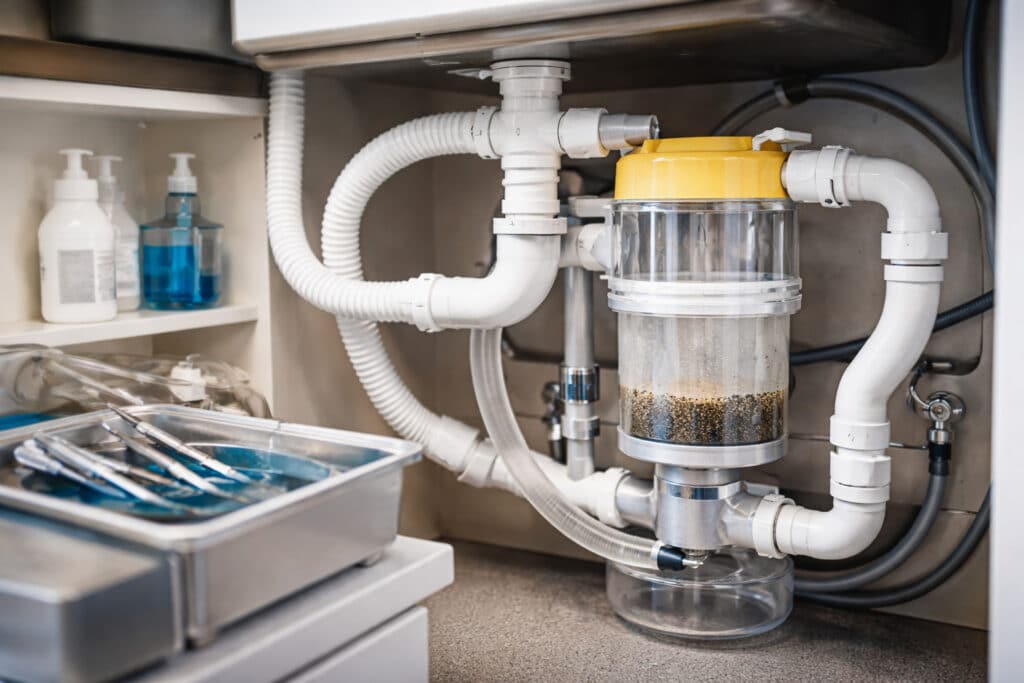
Dental offices that place or remove amalgam fillings are required under EPA regulations to use an amalgam separator and follow specific dental amalgam separator waste disposal procedures. The governing rule – 40 CFR Part 441, known as the Dental Effluent Guidelines – was finalized in 2017 and required full compliance from existing practices by July 14, 2020. New dental offices must comply immediately upon opening. The rule requires separators to achieve at least 95% removal efficiency, prohibits scrap amalgam from entering any drain or sewer, and mandates proper disposal of captured waste through a licensed treatment or disposal facility.
What the EPA Dental Amalgam Separator Rule Requires
The EPA dental amalgam separator requirements under 40 CFR Part 441 apply to any dental office that places or removes amalgam and discharges wastewater to a Publicly Owned Treatment Works (POTW).
Who Must Comply
All dental practices that place amalgam restorations or remove existing ones – and discharge wastewater to a municipal sewer system – must comply. Limited exemptions exist for offices where fewer than 5% of procedures annually involve amalgam, but those offices must still submit a one-time certification to their Control Authority.
Separator Performance Standards
The EPA requires amalgam separators to:
- Meet ANSI/ADA Specification No. 108 (2009) or ISO 11143 (2008) standards
- Achieve a minimum 95% removal efficiency of amalgam solids
- Be sized to handle the maximum discharge rate of amalgam process wastewater
- Be inspected per the manufacturer’s operating manual and repaired or replaced within 10 business days if malfunctioning
Dental Amalgam Waste Disposal Regulations: Best Management Practices (BMPs)
Beyond the separator itself, EPA dental amalgam waste disposal regulations require dental offices to follow two mandatory Best Management Practices (BMPs) at all times.
BMP 1 – No Amalgam Discharge to Sewers
Waste amalgam – including material from chairside traps, screens, vacuum pump filters, dental tools, cuspidors, and collection devices – must not be discharged to a POTW under any circumstances. This applies to:
- Non-contact (scrap) amalgam
- Contact amalgam, such as extracted teeth with amalgam restorations
- Amalgam sludge from chairside traps and vacuum filters
- Spent amalgam capsules
All of this material must be collected in a properly labeled, airtight amalgam waste container and sent to a permitted or licensed disposal facility.
BMP 2 – Approved Vacuum Line Cleaners Only
Dental unit water lines, chairside traps, and vacuum lines must not be cleaned with oxidizing or acidic cleaners. Prohibited products include bleach, chlorine, iodine, and peroxide. Only cleaners with a pH between 6 and 8 are permitted, as cleaners outside this range can cause mercury to leach out of captured amalgam in the separator.
Amalgam Separator Compliance EPA: Recordkeeping and Reporting
Amalgam separator compliance with EPA rules requires both a one-time compliance report and ongoing recordkeeping. These documentation requirements are a core part of the regulation and are subject to inspection.
One-Time Compliance Report
Every dental office subject to 40 CFR Part 441 must submit a one-time compliance report to its Control Authority – which is either a local wastewater utility, a state environmental agency, or an EPA regional office. The report must include:
- Facility name, address, and contact information
- Names of owner(s) and operator(s)
- Total number of dental chairs and chairs where amalgam may be present in wastewater
- Description of the amalgam separator installed (make, model, year)
- Certification that the separator meets 40 CFR Part 441 requirements
- Name of the third-party service provider maintaining the separator
Ongoing Recordkeeping
Dental offices must maintain records for a minimum of three years, including:
- Dates and findings of separator inspections
- Dates of amalgam retaining container replacements
- Dates that collected amalgam was picked up or shipped for disposal, plus the name of the receiving licensed facility
- Any separator repairs or replacements, including date, person responsible, and description of work performed
Dental Amalgam Waste Disposal: What Happens to Captured Waste
Once the amalgam separator captures waste, dental offices must ensure that the collected material is handled according to federal hazardous waste disposal standards.
Proper Disposal Pathway
Captured dental amalgam waste must be sent to a permitted or licensed treatment, storage, or disposal facility in accordance with 40 CFR 262.14(a)(5). Disposal in regular trash, red bag biohazard containers, or any standard municipal waste stream is strictly prohibited.
When to Replace the Retaining Container
The amalgam retaining container must be replaced when the manufacturer’s scheduled interval is reached or when the container reaches its maximum fill level – whichever comes first. The replacement date and details must be documented.
State-Level Additions
Thirteen states – including Connecticut, Massachusetts, Michigan, New Jersey, New York, Oregon, and Washington – have implemented their own mandatory dental mercury reduction programs that may impose requirements beyond the federal baseline. Dental offices in these states should verify both federal and state-specific obligations.
Frequently Asked Questions
What is the EPA rule for dental amalgam separators?
The EPA rule is codified at 40 CFR Part 441, known as the Dental Effluent Guidelines. It requires dental offices that place or remove amalgam to install an approved amalgam separator, follow two Best Management Practices, submit a one-time compliance report, and maintain records for at least three years.
Who is exempt from the EPA dental amalgam separator requirements?
Dental offices that do not place amalgam and remove it in fewer than 5% of procedures annually may qualify for an exemption. They must still submit a one-time certification to their Control Authority confirming their limited amalgam activity.
Where does captured amalgam waste go after collection?
Captured amalgam waste must be sent to a permitted or licensed treatment, storage, or disposal facility. It cannot be disposed of in regular trash, biohazard red bags, or any standard waste container.
What cleaning products are prohibited under EPA dental amalgam waste disposal regulations?
Oxidizing and acidic cleaners – including bleach, chlorine, iodine, and peroxide – are prohibited for use in vacuum lines and chairside traps. Only cleaners with a pH between 6 and 8 are permitted.
How long must dental offices keep amalgam compliance records?
Dental offices must retain all amalgam separator maintenance, inspection, container replacement, and disposal records for a minimum of three years and make them available for inspection upon request.
What happens if a dental office is found out of compliance?
Non-compliant offices may be subject to enforcement action by their Control Authority, which can include fines and mandatory corrective measures. Inspectors verify separator installation, fill levels, container labeling, vacuum cleaner type, and staff training records.

Ben Brenner is a founding partner at MedPro Disposal with over 9 years of hands-on experience in healthcare operations and medical waste management. He works closely with healthcare facilities to ensure OSHA-compliant sharps disposal, regulatory adherence, and safe waste handling practices. Ben contributes industry-backed insights based on real operational experience in the healthcare sector.