
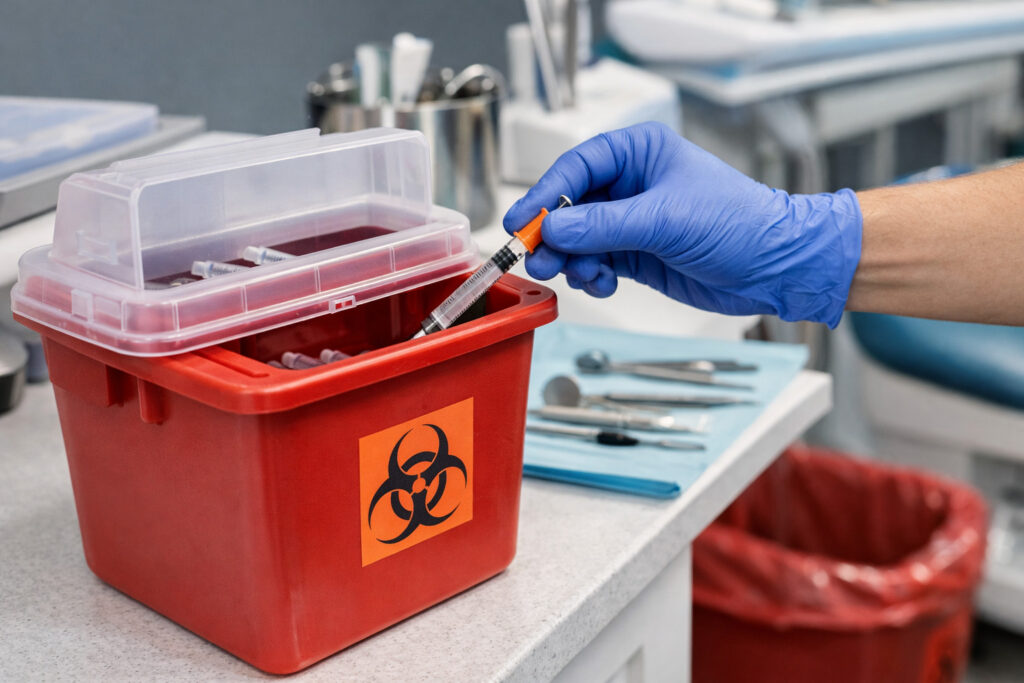
Dental office sharps container disposal requires strict adherence to OSHA and state regulations to protect staff and patients from needlestick injuries and bloodborne pathogen exposure. Dental practices must use FDA-approved puncture-resistant containers, fill them only to the designated line, and contract with licensed medical waste haulers for proper disposal. Sharps waste disposal in dental clinics typically occurs every 30-90 days depending on volume, with containers sealed, labeled with biohazard symbols, and transported according to DOT regulations. Proper dental sharps disposal services ensure compliance with federal and state laws while minimizing infection risk.
Understanding Sharps Waste in Dental Settings
Dental offices generate significant sharps waste daily, including anesthetic needles, scalpel blades, suture needles, orthodontic wires, endodontic files, and broken glass from carpules. These items pose serious health risks due to potential contamination with blood and saliva.
Types of Dental Sharps Requiring Proper Disposal
Common sharps in dental practices include:
- Anesthetic and suture needles
- Scalpel blades and burs
- Orthodontic brackets and wires
- Endodontic files and reamers
- Broken glass vials and carpules
All items capable of puncturing skin must be treated as regulated medical waste, regardless of visible contamination.
Regulatory Requirements for Dental Sharps
OSHA’s Bloodborne Pathogens Standard (29 CFR 1910.1030) mandates that sharps containers be puncture-resistant, leak-proof, and labeled with biohazard symbols. State dental boards and environmental agencies add additional requirements that vary by location. Most states require dental practices to maintain disposal logs and use only licensed medical waste transporters.
Proper Sharps Container Selection and Placement
Choosing appropriate containers and positioning them correctly prevents injuries and ensures compliance with sharps container disposal for dental offices.
Container Specifications
FDA-cleared sharps containers must meet specific criteria:
- Rigid, puncture-resistant construction
- Leak-proof sides and bottom
- One-way disposal openings preventing retrieval
- Clear fill-line markings (typically at 75% capacity)
- Secure, closeable lids
Containers come in various sizes, from small countertop models (1-2 quarts) to larger wall-mounted units (5-8 quarts) based on practice volume.
Strategic Placement Guidelines
Position sharps containers within arm’s reach of procedures where sharps are used. This reduces the risk of needlestick injuries during transport. Wall-mounted containers should be installed at a comfortable height for staff, typically 52-56 inches from the floor. Never place containers near patient seating areas or high-traffic zones.
Dental Sharps Disposal Services and Procedures
Working with professional dental sharps disposal services streamlines compliance and protects your practice from liability.
Selecting a Licensed Medical Waste Hauler
Choose vendors who:
- Hold current state medical waste transporter licenses
- Provide compliant containers and replacement schedules
- Offer tracking documentation and certificates of destruction
- Follow EPA and DOT transportation regulations
- Maintain comprehensive liability insurance
Request references from other dental practices and verify all licensing credentials before signing contracts.
Disposal Frequency and Best Practices
Most dental offices require pickup every 30-90 days depending on patient volume. Schedule pickups before containers reach the fill line. Staff should never compact, shake, or reach into sharps containers. When containers reach 75% capacity, seal them according to manufacturer instructions, label with the closure date, and store in a secure area away from patient access until pickup.
Staff Training Requirements
OSHA requires annual bloodborne pathogen training covering proper sharps handling, container use, and exposure response protocols. Document all training sessions and maintain records for inspection. Train staff to immediately report overfilled containers, damaged containers, or any sharps-related incidents.
Cost Considerations and Compliance Documentation
Understanding the financial and administrative aspects of dental office sharps disposal helps practices budget appropriately and maintain regulatory compliance.
Typical Service Costs
Dental sharps disposal services typically charge $50-200 per pickup depending on container size, frequency, and location. Some vendors offer flat monthly rates ($75-150) including containers and scheduled pickups. Factor in costs for:
- Initial container purchase or rental
- Scheduled pickup fees
- On-demand pickup charges
- Tracking and documentation services
Maintaining Compliance Records
Keep detailed records of all sharps waste disposal activities for at least three years. Essential documentation includes:
- Waste manifests with tracking numbers
- Certificates of destruction or treatment
- Pickup schedules and actual collection dates
- Staff training records
- Exposure incident reports
These records prove compliance during inspections by OSHA, state dental boards, or environmental agencies.
Frequently Asked Questions
How often should dental offices replace sharps containers?
Replace sharps containers when they reach the 75% fill line, typically every 2-4 weeks for busy practices or 4-8 weeks for smaller offices. Never allow containers to overfill, as this creates injury risks and violates OSHA regulations.
Can dental offices dispose of sharps in regular trash?
No. Federal and state regulations classify contaminated sharps as regulated medical waste requiring specialized disposal through licensed haulers. Disposing of sharps in regular trash violates OSHA standards and may result in fines up to $70,000 per violation.
What should staff do if a sharps container is damaged or leaking?
Immediately isolate the damaged container, place it inside a secondary puncture-resistant container, label it clearly, and contact your medical waste hauler for emergency pickup. Document the incident and review handling procedures with staff.
Are there specific color requirements for dental sharps containers?
While red is traditional, OSHA allows any color as long as containers display the biohazard symbol and the word “BIOHAZARD” in contrasting colors. Some facilities use yellow containers to distinguish sharps from other medical waste categories.
Do dental practices need special permits for sharps disposal?
Requirements vary by state. Some states require dental offices to register as medical waste generators and obtain permits, while others only regulate the haulers. Contact your state environmental agency or dental board for specific requirements in your jurisdiction.
How should dental offices handle sharps disposal during emergencies or natural disasters?
Maintain emergency protocols including backup container storage and alternative hauler contacts. During disasters, secure all sharps containers to prevent spills, and contact local health departments for temporary disposal guidance if regular services are unavailable.

Ben Brenner is a founding partner at MedPro Disposal with over 9 years of hands-on experience in healthcare operations and medical waste management. He works closely with healthcare facilities to ensure OSHA-compliant sharps disposal, regulatory adherence, and safe waste handling practices. Ben contributes industry-backed insights based on real operational experience in the healthcare sector.