
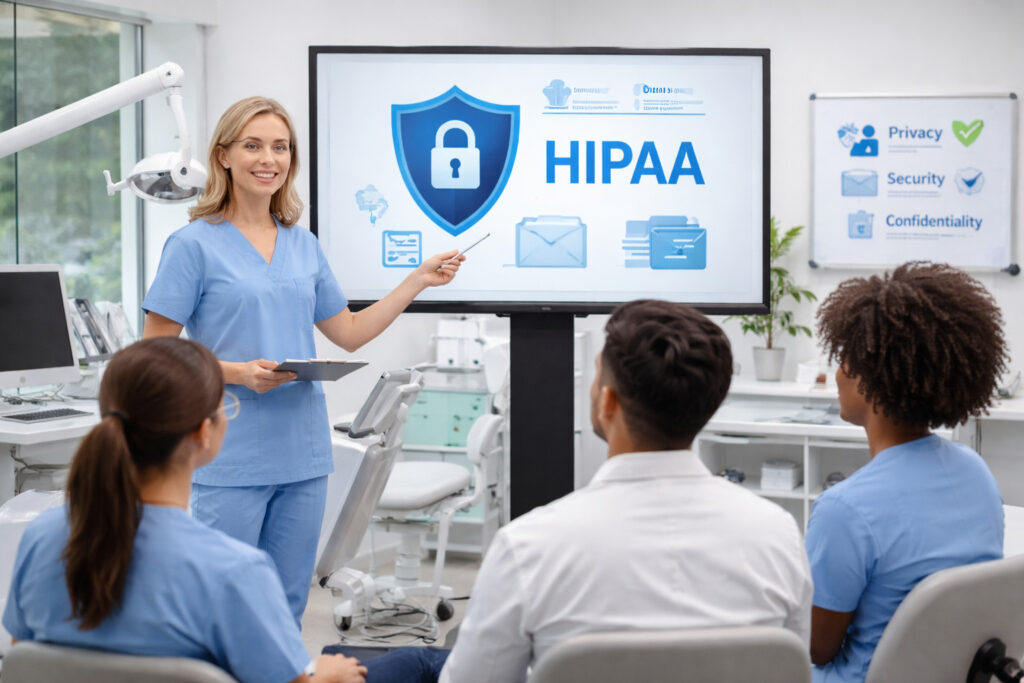
HIPAA compliance training protects dental offices from $50,000 fines per violation and 113 million 2023 record breaches. Implement via 5 steps: conduct risk assessment, select training program, develop schedule with tests, deliver sessions with documentation, monitor annually. MedPro Disposal offers online courses, tracking, and audits. Avoid pitfalls like ignoring Illinois laws; build secure culture for patient trust and operations.
Running a dental office in Illinois means facing steep HIPAA fines, up to $50,000 per violation, for inadequate staff training on patient data protection. Breaches exposed over 113 million healthcare records in 2023 alone, putting practices like yours at high risk. This step-by-step guide delivers the exact implementation plan to train your team effectively and stay compliant.
Introduction
Running a dental practice involves much more than clinical care. You handle sensitive patient information every single day, from insurance details to medical histories. Protecting this data isn’t just about good business ethics; it is a federal requirement. Many dentists assume their general knowledge is enough, but specific regulations dictate exactly how your staff must handle Protected Health Information (PHI).
Without proper education, your practice faces significant risks. A single slip-up by a receptionist or hygienist can lead to severe financial penalties and damage your reputation in the community. This guide breaks down exactly what you need to know to implement effective training. We will look at practical steps to ensure your team understands their responsibilities and keeps your practice compliant.
What Is HIPAA Compliance Training?
HIPAA compliance training is a structured educational program designed to teach your staff how to protect patient privacy and secure health data. For dental offices, this covers the Privacy Rule, which governs who can access information, and the Security Rule, which covers electronic data protection.
It is not enough to simply tell staff to “be careful.” You must provide specific instruction on handling records, discussing patient cases, and using office technology.
Why Dental Offices Need HIPAA Training
The primary reason for training is legal obligation. The Department of Health and Human Services (HHS) requires that all workforce members receive training on policies and procedures. This includes everyone from the front desk staff to the dentists themselves.
The financial stakes are incredibly high. Ignorance of the law is not a valid defense during an audit. In fact, regulators specifically look for proof of training during investigations. A dental practice in 2023 faced an $80,000 fine for PHI disclosure and a lack of HIPAA Privacy Rule training (HIPAA Journal). This demonstrates that regulators are actively enforcing these rules in the dental sector.
Key Benefits of HIPAA Training for Dental Practices
Beyond avoiding fines, effective training creates a smoother, more professional operation. When your team knows the rules, they hesitate less and make fewer errors. It builds a culture of security where patient trust is prioritized.
Here are the core operational benefits:
- Onboarding and Annual Refreshers: It standardizes the process for all new hires and ensures current staff stay sharp with annual updates.
- Interactive Scenarios: Using real-life examples makes learning relatable, helping staff understand how to handle tricky situations at the front desk.
- Clear Documentation: It provides a paper trail. You will have records of all sessions, signatures, and dates ready for any potential audit.
- Open Communication: It fosters a culture where employees feel comfortable asking questions and reporting potential security concerns immediately.
How HIPAA Compliance Training Works
Effective training is not a one-time lecture. It is a layered process that starts with broad concepts and narrows down to your specific office procedures. The goal is to move employees from general awareness to practical application.
The process typically follows this flow:
- Foundational Knowledge: Provide all workforce members with a basic understanding of HIPAA regulations before overloading them with complex policies.
- Standardized Courses: Use off-the-shelf courses suitable for providing employees with a foundational understanding of federal rules.
- Specific Application: Once the basics are set, employees are in a better position to absorb training on the dental office’s specific HIPAA policies and procedures.
Step-by-Step Guide to Implementing HIPAA Training in Your Dental Office
Implementing a compliant training program does not have to be overwhelming. By breaking it down into manageable phases, you can ensure every requirement is met without disrupting your daily patient flow. The following steps outline a logical path to full compliance.
Step 1: Conduct a Thorough Risk Assessment
Before you train your staff, you need to know where your specific vulnerabilities lie. A risk assessment identifies where PHI is stored, how it is transmitted, and who has access to it.
You should evaluate:
- Physical Security: Are patient files visible to the waiting room? Are computers left unlocked?
- Digital Security: Is your practice management software secure? Do you use encrypted email?
- Staff Knowledge: Does your team know what to do if a breach occurs?
Conducting a HIPAA Risk Assessment specifically tailored for dental offices gives you the roadmap for what your training needs to cover.
Step 2: Choose the Right Training Provider and Program
You have options when it comes to how you deliver training. Some practices prefer a “do-it-yourself” approach using templates, while others prefer managed services that track progress automatically.
Here is a comparison of common training package types:
| Package | Description | Type |
| All-In-One OSHA & HIPAA Premium | Comprehensive compliance program covering Federal/State OSHA and HIPAA regulations | Guided |
| OSHA and HIPAA Online Training | Do-it-yourself compliance package with a training portal | Self-Serve |
| DSO OSHA and HIPAA Training | Train-the-Trainer Program for consistency across multiple locations | Specialized |
Step 3: Develop and Schedule Your Training Plan
Once you have selected a program, you need to organize the materials. Randomly asking staff to “read a manual” is not sufficient. You need a structured approach that verifies they actually learned the material.
Your training kit should include:
- Training Outline: A clear roadmap of topics to be covered.
- Tests and Answer Keys: Essential for verifying comprehension.
- Completion Records: Templates to log who took the training and when.
- Comprehensive Compliance Checklist: To ensure no topic is missed.
- Update Instructions: Guidelines on how to modify your training if regulations change.
Step 4: Deliver Training and Obtain Documentation
Now it is time to execute. Schedule time for your staff to complete the training without distractions. This might mean closing the office for a few hours or scheduling sessions during administrative blocks.
Crucially, you must prove this training happened. Every employee must sign a document acknowledging they received and understood the training.
Step 5: Monitor Compliance and Plan for Ongoing Training
Compliance is not a “set it and forget it” task. Regulations evolve, and staff memories fade. You need a system to ensure training remains current and top-of-mind.
To maintain compliance:
- Regular Training: Provide initial training for new hires within their first week and schedule periodic updates for everyone else.
- Documentation: Maintain accessible records of employee training on HIPAA compliance for at least six years.
- Spot Checks: Periodically quiz staff or observe workflows to ensure they are applying what they learned.
Best Practices for HIPAA Training Success in Dental Settings
To make training stick, it needs to feel relevant to your team’s daily work. Generic medical training often fails because it focuses on hospital scenarios that do not apply to a small dental clinic.
- Make it specific: Discuss scenarios like discussing treatment plans at the front desk or handling radiographs.
- Keep it brief: Short, focused modules are better than day-long seminars.
- Appoint a Privacy Officer: Designate one person in the office to be the “go-to” expert for questions.
- Update often: If you get new software or change office layouts, update your training immediately.
Common Mistakes to Avoid in HIPAA Training
Many dental offices try to cut corners with compliance, which often leads to gaps in security. One of the biggest errors is assuming that training once during hiring is sufficient.
Avoid these pitfalls:
- Ignoring State Laws: HIPAA is federal, but states like Illinois may have stricter privacy laws that you must also teach.
- forgetting Part-Time Staff: Every person with access to patient data needs training, including temps and interns.
- Lack of Documentation: If you trained them but didn’t write it down, legally, it didn’t happen.
How MedPro Disposal Can Simplify Your HIPAA Compliance
Managing compliance internally can be a heavy burden for a busy dental practice. MedPro Disposal offers a streamlined solution that takes the guesswork out of the process.
Our Compliance Portal provides:
- Online Training: Interactive courses that staff can complete at their own pace.
- Automated Tracking: The system tracks who has completed training and alerts you when certifications are expiring.
- Digital Documentation: All certificates and records are stored securely in the cloud, ready for any audit.
- Risk Assessments: Built-in tools to help you identify and fix security gaps.
By partnering with MedPro Disposal, you ensure your practice meets all federal and state requirements without spending hours on paperwork.
Conclusion
HIPAA compliance training is a critical component of running a responsible dental practice. It protects your patients’ private information and shields your business from devastating fines. By following a structured approach—assessing risks, choosing the right program, and maintaining rigorous documentation—you can create a culture of compliance.
Don’t wait for an audit to find out your training is insufficient. Take control of your compliance strategy today to ensure your team is prepared, your data is secure, and your practice is protected.
Frequently Asked Questions
How often must dental offices in Naperville, IL conduct HIPAA training?
HIPAA requires initial training for new hires within 30 days and annual refreshers for all staff. Illinois state law mandates additional training if local breaches occur, with records kept for 6 years per HHS guidelines.
What are the HIPAA fines for dental practices lacking training?
Fines range from $100 to $50,000 per violation, up to $1.5 million annually per category. A 2023 Illinois dental office paid $80,000 for inadequate Privacy Rule training, as reported by HHS enforcement data.
Does HIPAA training apply to part-time dental staff in Illinois?
Yes, all workforce members with PHI access, including part-timers and contractors, require training. Illinois Dental Practice Act reinforces this, covering temps at Naperville clinics handling patient records.
How does Illinois state law differ from federal HIPAA for dental training?
Illinois’ Personal Information Protection Act adds breach notification within 45 days and stricter data disposal rules. Dental offices must train on both, exceeding federal minimums for Naperville practices.
Can dental offices use free online HIPAA training resources?
Free HHS resources provide basics, but dental-specific paid programs like MedPro’s ensure audit-proof documentation and scenarios. Naperville practices should verify courses meet OCR standards for full compliance.

Ben Brenner is a founding partner at MedPro Disposal with over 9 years of hands-on experience in healthcare operations and medical waste management. He works closely with healthcare facilities to ensure OSHA-compliant sharps disposal, regulatory adherence, and safe waste handling practices. Ben contributes industry-backed insights based on real operational experience in the healthcare sector.