
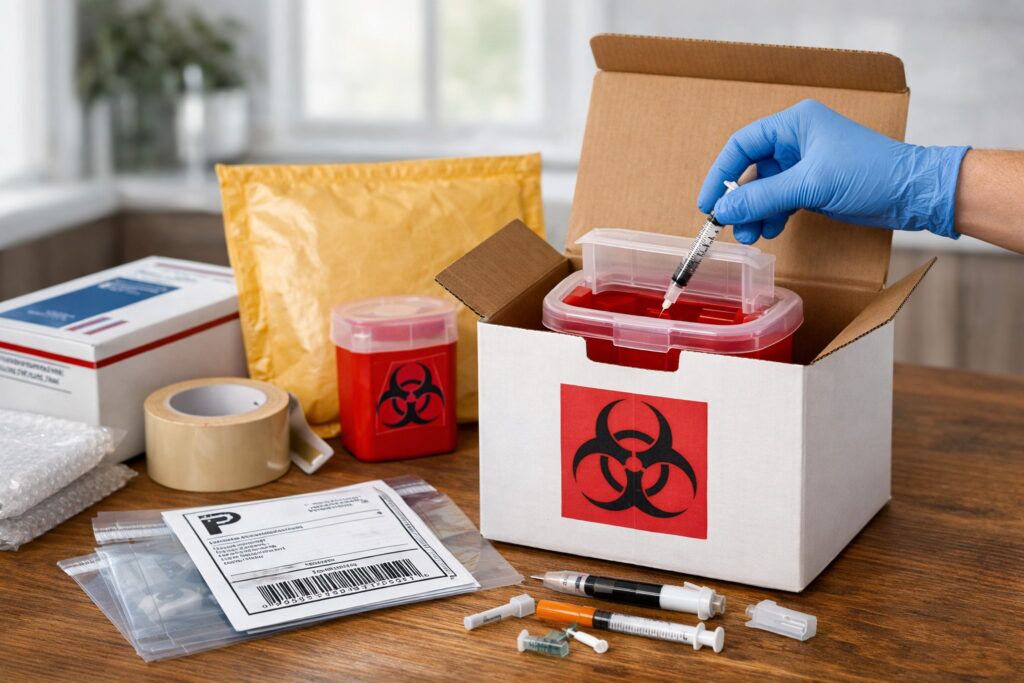
Mail-back sharps disposal programs provide a safe, compliant solution for disposing of needles, syringes, and other sharp medical waste without requiring in-person drop-off. These programs work by shipping pre-approved containers directly to your facility, which you fill and return via prepaid shipping labels. A comprehensive **sharps disposal compliance checklist** should verify proper container labeling, tracking documentation, and adherence to DOT and FDA regulations. **Mail-back sharps disposal cost** typically ranges from $80-$300 annually depending on container size and pickup frequency, often proving more economical than traditional pickup services for low-volume generators. Understanding **mail-back sharps disposal program** requirements ensures your organization maintains regulatory compliance while managing costs effectively.
How Mail-Back Sharps Disposal Programs Work
Mail-back programs simplify sharps waste management through a straightforward process designed for facilities generating smaller volumes of medical waste.
The Basic Process
When you enroll in a mail-back sharps disposal program, you receive an approved sharps container with integrated packaging. Once filled to the designated line (typically 75% capacity), you seal the container, apply the prepaid shipping label, and drop it at any authorized shipping location or schedule a pickup.
Regulatory Approval and Safety
All mail-back containers must meet Department of Transportation (DOT) specifications for shipping medical waste. The containers feature puncture-resistant construction, leak-proof seals, and clearly visible biohazard markings. Approved programs include proper tracking documentation and certificates of destruction upon final disposal.
Who Benefits Most
Medical offices, dental practices, veterinary clinics, home healthcare providers, and small laboratories find mail-back programs particularly advantageous. Facilities generating less than 50 pounds of sharps waste monthly often achieve significant savings compared to scheduled pickup services.
Complete Sharps Disposal Compliance Checklist
Maintaining compliance requires attention to multiple regulatory frameworks at federal, state, and local levels.
Federal Requirements
- OSHA Bloodborne Pathogens Standard**: Implement an exposure control plan and provide appropriate sharps containers at point of use
- DOT Regulations**: Use only approved containers for mail-back shipping and ensure proper labeling
- PA Universal Waste Rules**: Follow applicable state-adopted regulations for medical waste handling
- FDA Medical Waste Tracking**: Maintain documentation of all sharps waste shipments and disposal certificates
Container Standards
Your sharps disposal compliance checklist must verify that containers are:
- Puncture-resistant and leak-proof
- Color-coded or labeled with biohazard symbols
- Closable and sealable when full
- Upright and stable during use
- Easily accessible but away from public areas
Documentation Requirements
Maintain records for a minimum of three years, including:
- Shipment tracking numbers
- Certificates of destruction or treatment
- Training records for staff handling sharps
- Incident reports for any exposures or spills
- Vendor contracts and compliance certifications
State-Specific Regulations
Many states impose additional requirements beyond federal standards. California, New York, and Illinois have particularly stringent regulations regarding sharps waste segregation, storage timelines, and disposal methods. Always verify your state’s medical waste regulations before selecting a program.
Mail-Back Sharps Disposal Cost Analysis
Understanding the cost structure helps you budget accurately and compare providers effectively.
Typical Pricing Models
Mail-back sharps disposal cost varies based on several factors:
- Container size: 1-quart containers ($80-$120/year), 2-gallon containers ($150-$200/year), 5-gallon containers ($250-$300/year)
- Volume frequency: Single shipments ($35-$75 per container) versus annual contracts with multiple shipments
- Shipping method: Standard mail versus expedited pickup options
- Additional services: Training materials, compliance documentation, or on-site consultation may increase costs
Cost Comparison: Mail-Back vs. Traditional Pickup
| Service Type | Annual Cost (Low Volume) | Best For |
| Mail-back program | $200-$600 approx | <50 lbs/month |
| Scheduled pickup | $800-$2,400 approx | >50 lbs/month |
| On-demand pickup | $150-$300 approx per pickup | Irregular generation |
For facilities generating minimal sharps waste, mail-back programs typically cost 60-75% less than traditional scheduled pickups.
Hidden Costs to Consider
Factor these potential expenses into your budget:
- Replacement containers if damaged during filling
- Storage space for filled containers awaiting shipment
- Staff time for packaging and shipping
- Potential rush fees for expedited processing
- State-specific permits or registration fees
Cost-Saving Strategies
Maximize your mail-back sharps disposal program value by:
- Ordering containers in bulk for volume discounts
- Consolidating shipments when possible
- Training staff on proper filling techniques to maximize container capacity
- Comparing multiple vendors annually
- Joining group purchasing organizations for healthcare facilities
Choosing the Right Mail-Back Sharps Disposal Program
Selecting an appropriate vendor requires evaluating multiple criteria beyond price alone.
Vendor Qualifications
Verify that providers offer:
- Proper DOT and EPA certifications
- Treatment facility permits and accreditations
- Liability insurance coverage
- Responsive customer service
- Transparent pricing without hidden fees
Container Options and Flexibility
Quality programs provide various container sizes to match your waste generation patterns. Look for vendors offering:
- Multiple container size options
- Quick replacement shipments
- Flexible ordering (as-needed versus subscription)
- Wall-mounted and countertop container varieties
Compliance Support Services
The best mail-back sharps disposal programs include:
- Pre-printed compliance labels
- Detailed instruction sheets
- Staff training resources
- Certificates of destruction for your records
- Regulatory updates affecting your industry
Program Comparison Factors
When evaluating options, create a comparison matrix including:
- Total annual cost for your expected volume
- Container quality and ease of use
- Shipping convenience and restrictions
- Customer reviews and reputation
- Contract terms and cancellation policies
- Additional compliance resources provided
Frequently Asked Questions
What items can be disposed of through mail-back sharps programs?
Mail-back programs accept needles, syringes, lancets, auto-injectors, insulin pens, and similar sharps. They typically do not accept pharmaceutical waste, chemotherapy materials, or pathological waste, which require separate disposal methods.
How long can I store filled sharps containers before shipping?
Most state regulations require disposal within 30-90 days of container closure. Check your specific state requirements, as storage timelines vary. Containers should be stored in a secure area away from public access during this period.
Are mail-back sharps programs legal in all states?
Mail-back programs are legal nationwide, but some states have additional requirements or restrictions. New York, for example, requires specific vendor registration. Always verify your state’s medical waste regulations and approved vendor lists.
What happens if a mail-back container is damaged during shipping?
Reputable vendors carry insurance for shipping incidents. If damage occurs, contact the shipping carrier and vendor immediately. Document the incident with photos and file appropriate reports. Most programs will provide replacement containers at no charge.
Can home healthcare patients use mail-back sharps disposal?
Yes, mail-back programs are ideal for home healthcare patients, including those managing diabetes, arthritis, or other conditions requiring regular injections. Many programs offer patient-friendly smaller containers specifically designed for home use.
How do mail-back programs ensure environmental safety?
Approved programs use autoclaving, incineration, or other EPA-approved treatment methods to render sharps non-infectious before final disposal. Vendors must provide certificates of destruction documenting proper treatment and disposal in accordance with environmental regulations.


