
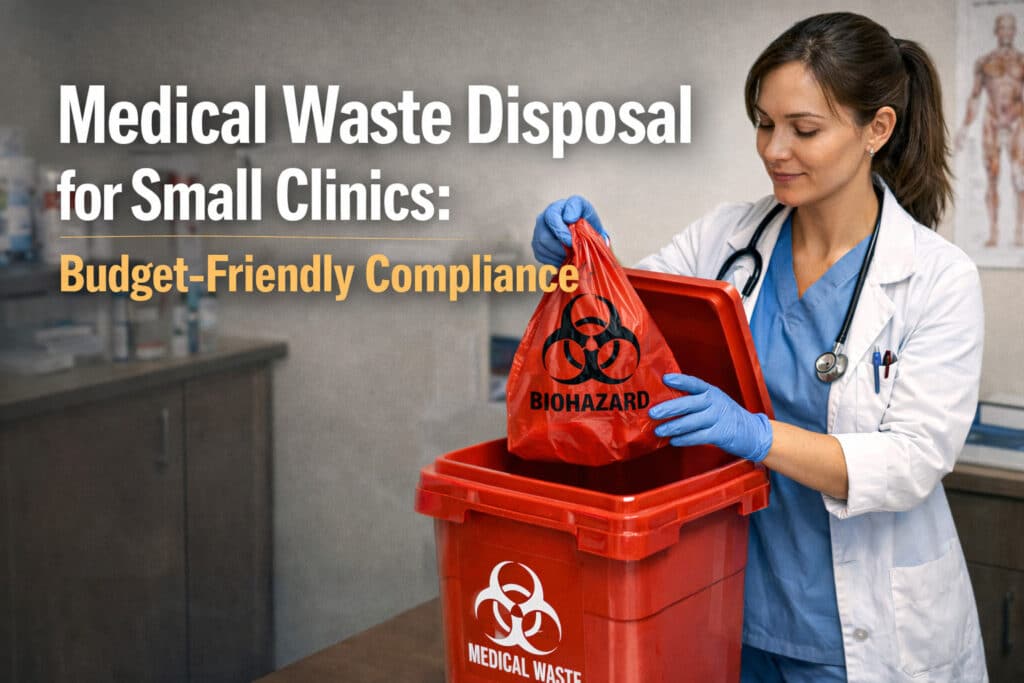
Small clinics cut medical waste costs up to 40% via mailback services and bundled pickups while meeting EPA, DOT, OSHA rules. Fines hit $25,000 per violation for improper segregation or transport. Segregate sharps, red bags, pharma waste; use flexible schedules and staff training. MedPro Disposal offers transparent nationwide compliance, slashing expenses and risks.
Struggling to handle medical waste compliance without draining your small clinic’s budget? Fines for improper disposal can hit $25,000 per violation under EPA and DOT rules, hitting independents hardest. This article reveals budget-friendly strategies, like mailback services and bundled pickups, to slash costs by up to 40% while staying fully compliant nationwide.
Introduction to Medical Waste Disposal for Small Clinics
Running a small healthcare practice means wearing many hats. You aren’t just a provider; you are a manager, an accountant, and a compliance officer all at once. Medical waste disposal often feels like a headache you can’t afford, but ignoring it isn’t an option. Whether you run doctor offices, dental offices, clinical laboratories, or veterinary clinics, the rules apply to everyone. The goal is simple: keep your staff safe and your costs down.
Here’s the thing: many small clinics overpay because they treat waste disposal like a utility rather than a manageable service. They sign rigid contracts designed for hospitals. This guide breaks down how to handle waste without breaking the bank, ensuring you stay compliant while protecting your bottom line.
What Is Medical Waste and Why Compliance Matters
Medical waste isn’t just trash. It is any waste generated during the diagnosis, treatment, or immunization of humans or animals. Generally, the waste is either biohazardous or sharps waste. If it is contaminated with blood, body fluids, or other potentially infectious materials, it needs special handling.
Compliance matters because improper disposal puts your staff, patients, and the public at risk of infection. Beyond safety, the financial risks are real. Fines for non-compliance can devastate a small practice’s budget. It is about safety first, but financial protection is a close second. Proper management ensures you aren’t liable for environmental damage or public health scares.
Key US Regulations for Small Clinic Waste Disposal
Navigating federal and state rules is tricky because several agencies oversee this process. You need to know who calls the shots to avoid penalties. The main regulatory bodies include:
- Environmental Protection Agency (EPA): Oversees environmental impact.
- Department of Transportation (DOT): Regulates waste transport on public roads.
- Occupational Safety and Health Administration (OSHA): Protects worker safety.
- State agencies: State environmental protection agencies and pharmacy boards often have stricter local rules.
Legislation like the Resource Conservation and Recovery Act (RCRA) and the Hazardous and Solid Waste Amendments (HSWA) sets the baseline. Ignorance of these rules is never a valid defense during an inspection.
How Medical Waste Disposal Works
The disposal process follows a strict chain of custody. It isn’t as simple as tossing a bag in a dumpster. The standard workflow ensures safety from the moment waste is created until it is destroyed:
- Segregate waste by category at the point of generation.
- Package and label for transport per DOT requirements.
- Transport to an authorized treatment facility.
- Treat via approved methods like incineration or autoclaving.
Every step must be documented. This ensures that “cradle-to-grave” liability is covered, protecting your clinic from legal issues down the road.
Waste Identification and Segregation
You cannot mix regular trash with regulated waste. Waste segregation is the first step in regulatory compliance; all medical waste must be properly categorized. Red bags are for soft biohazards like bloody gauze. Sharps containers are for needles and scalpels. Pharmaceutical waste goes in its own bin. Proper sorting saves money because medical waste disposal costs more by weight than regular trash. If you throw a pizza box in a red bag, you are literally throwing money away.
Storage, Collection, and Transportation
Once sorted, waste needs a safe holding spot. You need labeled, leak-proof, puncture-resistant containers stored in a well-ventilated area inaccessible to pests or unauthorized people.
For very small generators, some regulations allow a “Limited Quantity Hauling Exemption,” permitting you to transport up to 20 pounds of waste personally. However, most clinics prefer professional hauling to ensure safety. Professional services guarantee that all DOT packaging and labeling standards are met, reducing the risk of accidents during transport. Regular disposal is crucial to avoid dangerous accumulation in your facility.
Treatment and Final Disposal Methods
After collection, the waste must be rendered harmless. The treatment method depends entirely on the type of waste being processed. Common methods include:
- Autoclaving: Uses high-pressure steam to sterilize red bag waste.
- Incineration: Burns pathological or trace chemo waste to ash.
- Chemical treatments: Used for specific liquid wastes.
- EPA-approved incineration: Required for certain pharmaceutical wastes.
Once treated, the residue is safe for final disposal, usually in a landfill. The treatment facility provides proof of destruction, which closes your liability loop.
Budget-Friendly Strategies for Small Clinics
Small clinics often overpay for disposal because they sign bad contracts or choose the wrong service frequency. You don’t need the same service level as a major hospital. The key is matching your service to your actual volume. By adjusting how often trucks visit and what services you use, you can significantly cut monthly expenses. Here are practical ways to keep your compliance budget under control while maintaining safety standards.
Mailback Services for Low-Volume Generators
If you generate very little waste, a truck pickup might be overkill. Mail-back services are available for smaller amounts of waste and are often much cheaper than scheduled hauling.
Here is how it works:
- You buy a pre-paid, compliant box or kit.
- Fill the container at your own pace.
- Mail it back via USPS or UPS when full.
This is perfect for remote offices or low-volume practices. You only pay for disposal when the box is full, rather than paying a monthly fee for an empty truck to stop by.
Scheduled Pickups and Flexible Contracts
If you generate enough waste for a truck, flexibility is key. Many haulers lock you into weekly pickups you don’t need. Look for flexible contracts that allow you to adjust frequency to bi-weekly, monthly, or even quarterly.
If your bins aren’t full, you shouldn’t be paying for a pickup. Review your generation rates seasonally. If winter is busy due to flu season, increase frequency then, but scale back during slower summer months. Don’t let a vendor dictate a schedule that doesn’t match your reality.
Bundling Sharps, Pharma, and Red Bag Waste
Dealing with multiple vendors costs time and money. Consolidate your services with one provider. Most clinics produce several waste streams:
- Sharps Disposal (needles, syringes)
- Pharmaceutical Waste Disposal (expired medications)
- Regulated Waste Disposal (blood-contaminated items like gloves)
By bundling these services, you often get a volume discount. It also simplifies billing and customer service. One invoice is easier to manage than three, freeing up your staff to focus on patient care rather than vendor management.
Best Practices for Cost-Effective Compliance
Saving money isn’t just about the contract; it’s about daily habits. Operational efficiency prevents waste—both physical and financial. When staff members know exactly what to do, mistakes decrease. This reduces the risk of fines and ensures you aren’t paying for heavy red bags filled with regular trash. Implementing a few standard operating procedures can make a huge difference in your bottom line.
Staff Training and Waste Audits
Training is mandatory, not optional. OSHA regulates employee training on medical waste handling and container labeling. Staff need to know what goes in the red bag versus the trash can.
Conduct brief waste audits periodically. Open a red bag (safely) and check for soda cans or paper towels. If you find them, it’s time for a refresher course. Educated staff are your best defense against inflated costs.
Optimizing Container Use and Pickup Schedules
The size and placement of your containers impact your bill. If you use a massive 96-gallon bin but only fill it halfway, you are paying for air. Switch to smaller containers that you can fill completely before pickup.
Place red bag bins only where biohazards are generated. If a red bin is under a desk where only paper waste is created, people will toss paper in it out of habit. Move bins to optimize workflow and reduce contamination.
Documenting Processes for Inspections
Paperwork saves you during inspections. A tracking document must be in the driver’s possession during transport, and the original is provided to the receiving facility. You must keep these records on file.
- Organize manifests by date.
- Digitize copies for backup.
- Review them to track volume trends.
Good documentation proves you are compliant and helps you audit your own waste generation patterns. If an inspector walks in, having these files ready shows you are a professional operation.
Common Mistakes Small Clinics Make
Even well-meaning clinics slip up. Avoiding these common errors keeps inspectors happy and your budget healthy:
- Improper Segregation: Putting regular trash in red bags or vice versa.
- Open Containers: Leaving lids off red bins or sharps containers is a major OSHA violation.
- Lack of Training: Assuming new hires know the rules without formal instruction.
- Missing Manifests: Losing the proof of destruction documents.
These mistakes are preventable. A little attention to detail goes a long way in preventing hefty fines.
Why MedPro Disposal Delivers Affordable Nationwide Compliance
MedPro Disposal understands the unique challenges of small practices. We provide a low-cost alternative to the big national haulers who often overlook small clinics. We don’t believe in hidden fuel surcharges or surprise fees.
Our approach is simple:
- Transparent Pricing: You know exactly what you pay.
- Flexible Terms: We match pickup schedules to your actual volume.
- Full Compliance: We handle OSHA training, mail-back programs, and document destruction.
We help you stay compliant without draining your resources, ensuring you get the exact service level you need nationwide.
Conclusion
Medical waste disposal doesn’t have to be a financial burden. By understanding the regulations, segregating waste properly, and choosing a flexible partner, small clinics can achieve full compliance on a budget. Whether you choose mail-back services or scheduled pickups, the goal remains the same: safety and efficiency. Take control of your waste streams today. It protects your patients, your staff, and your bottom line.
Frequently Asked Questions
What are the medical waste disposal fines for small clinics in Naperville, IL?
Illinois EPA fines start at $1,000 per violation for improper disposal, escalating to $50,000 for repeat offenses. Naperville clinics face additional local health department penalties up to $25,000, plus potential OSHA citations of $15,625 per serious violation.
How often should small clinics in Naperville schedule medical waste pickups?
Low-volume Naperville clinics generating under 50 pounds monthly can use quarterly pickups or mail-back kits. Adjust to bi-weekly during flu season peaks, per Illinois EPA guidelines, to minimize costs while avoiding storage violations.
Are mail-back services DOT compliant for Illinois veterinary clinics?
Yes, USPS and UPS-approved mail-back kits meet DOT packaging standards for sharps and red bag waste. Illinois veterinary clinics like those in Naperville save 30-50% versus hauling, with pre-paid labels ensuring chain-of-custody compliance.
What training is required for medical waste handling under OSHA?
OSHA mandates annual training on segregation, labeling, and spill response for all staff. Naperville clinics must document 1-hour sessions, with records retained 3 years, to avoid $15,625 fines per untrained employee violation.
How does bundling waste services reduce costs for Naperville dental offices?
Bundling sharps, pharma, and red bag disposal with one provider offers 20-40% volume discounts. Naperville dental offices pay one invoice monthly, simplifying compliance and cutting administrative time by 50%, per local service data.