
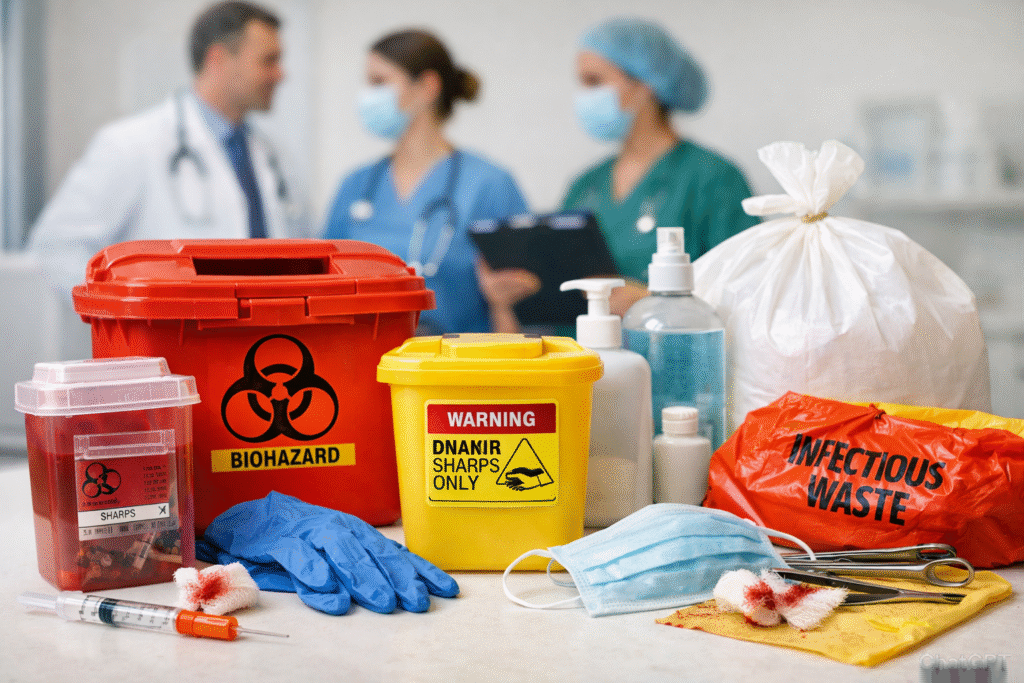
New healthcare faculty members need to follow established medical waste safety guidelines from their very first day on the job. Medical waste includes sharps, contaminated materials, pharmaceutical waste, and biohazardous items that can cause serious harm if mishandled. Under OSHA’s Bloodborne Pathogens Standard (29 CFR 1910.1030), all employees with occupational exposure must receive training before performing tasks involving regulated waste. Understanding proper handling, segregation, labeling, and disposal procedures is not optional – it is a federal compliance requirement. The nine tips below provide a practical starting point for any new healthcare worker entering a clinical environment.
Understanding Medical Waste Categories and Segregation
Before handling any waste, new faculty must understand what qualifies as regulated medical waste and how to separate it correctly.
Tip 1: Learn the Four Core Waste Categories
Healthcare facilities typically generate four categories of waste:
- Regulated Medical Waste (RMW) – blood-saturated materials, contaminated sharps, pathological waste
- Pharmaceutical Waste – expired or unused medications
- Hazardous Chemical Waste – laboratory chemicals and solvents
- General Solid Waste – non-contaminated paper, packaging, and similar items
Placing the wrong item in the wrong container is one of the most common compliance violations and can result in OSHA citations.
Tip 2: Use Color-Coded Containers Consistently
Each waste type has a designated container color and label:
- Red bags or containers – regulated biohazardous waste
- Yellow containers – pharmaceutical or chemotherapy waste
- Sharps containers – puncture-resistant, clearly labeled, never overfilled beyond the fill line
Always confirm your facility’s specific color-coding policy, as some states add requirements beyond federal minimums.
Tip 3: Never Mix Waste Streams
Mixing general waste with regulated medical waste dramatically increases disposal costs and creates unnecessary compliance risk. If there is any doubt about whether an item is regulated, treat it as regulated waste and dispose of it accordingly.
Safe Handling Practices for New Healthcare Staff
Proper physical handling of medical waste reduces the risk of needlestick injuries, exposure to bloodborne pathogens, and contamination of clean areas.
Tip 4: Always Wear Appropriate PPE
Personal protective equipment (PPE) is required when handling regulated waste. At minimum, new faculty should wear:
- Nitrile or latex gloves
- A gown or lab coat when splash risk exists
- Eye protection when handling open containers or during spill cleanup
OSHA requires employers to provide PPE at no cost to the employee. New staff should confirm where PPE is stored and how to properly don and doff it before beginning any clinical duties.
Tip 5: Handle Sharps With a One-Hand Technique
Needlestick injuries are among the most preventable occupational hazards in healthcare. Follow these practices at all times:
- Never recap needles using two hands
- Use the one-hand scoop technique if recapping is clinically necessary
- Dispose of sharps immediately at the point of use
- Never overfill a sharps container – seal it when it reaches the indicated fill line
Tip 6: Report Exposure Incidents Immediately
If a needlestick, splash, or other exposure incident occurs, new faculty must report it to a supervisor right away. Facilities are required to have a written post-exposure protocol that outlines immediate steps, medical evaluation access, and documentation requirements. Delayed reporting can affect both treatment outcomes and workers’ compensation eligibility.
Medical Waste Training Requirements for Healthcare Staff
Understanding what training is required – and how often – is a core part of onboarding for any new healthcare employee.
Tip 7: Complete Initial Training Before Handling Waste
Under 29 CFR 1910.1030(g), OSHA requires that initial bloodborne pathogen training be completed before an employee performs tasks with potential exposure. This training must cover:
- The facility’s Exposure Control Plan
- How to recognize tasks that involve exposure risk
- Proper use of PPE and engineering controls
- Waste segregation and disposal procedures
- Post-exposure reporting steps
Training must be conducted during working hours at no cost to the employee.
Tip 8: Know Your Annual and Recurrent Training Schedule
Medical waste training requirements for healthcare staff do not end after onboarding. Federal regulations set the following recurring timelines:
| Training Type | Frequency | Governing Body |
|---|---|---|
| Bloodborne Pathogen Training | Annually | OSHA (29 CFR 1910.1030) |
| DOT Hazmat Training | Every 3 years | Department of Transportation |
| HIPAA Training | At hire + as needed | HHS / HIPAA |
| OSHA Compliance Training | Annually | OSHA |
Part-time and temporary employees are covered by the same training requirements as full-time staff.
Tip 9: Document All Training and Keep Records
Facilities must maintain written records of all training sessions. Documentation should include the training date, the trainer’s name and qualifications, the topics covered, and the employee’s printed name, job title, and signature. OSHA may request these records during an inspection, and missing documentation is treated the same as missing training.
Biohazard Labeling and Storage Compliance
Proper labeling and storage are often overlooked by new staff but are directly tied to regulatory compliance and workplace safety.
Required Labeling Standards
All containers holding regulated waste must display the universal biohazard symbol followed by the word “BIOHAZARD” in a fluorescent orange or orange-red color. This requirement applies to:
- Waste bags and containers
- Refrigerators and freezers storing blood or other potentially infectious materials (OPIM)
- Containers used during transport
Red bags and red containers are an acceptable substitute for the biohazard label under OSHA standards.
Storage Time Limits
Most states regulate how long regulated medical waste can be stored on-site before it must be picked up by a licensed transporter. New faculty should confirm their state’s specific storage time limits with their compliance officer. Exceeding these limits – even temporarily – can trigger regulatory penalties.
Frequently Asked Questions
What are the basic medical waste safety guidelines new healthcare employees must follow?
New healthcare employees must learn to segregate waste by type, use appropriate containers and labels, wear proper PPE, handle sharps safely, and complete OSHA-required bloodborne pathogen training before performing any tasks involving potential exposure.
How often do healthcare staff need medical waste training?
OSHA requires bloodborne pathogen training annually for all employees with occupational exposure. DOT hazmat training is required every three years for employees who package or transport regulated waste. HIPAA training is required at hire and whenever policies change.
Who is required to receive medical waste safety training?
All employees with occupational exposure are required to receive training under OSHA’s Bloodborne Pathogens Standard. This includes full-time, part-time, and temporary employees. The employer is responsible for ensuring training is provided on company time at no cost to the worker.
What should a new employee do after a needlestick injury?
The employee should report the incident to a supervisor immediately, follow the facility’s written post-exposure protocol, and seek medical evaluation as directed. Timely reporting is critical for accessing appropriate follow-up care and for proper incident documentation.
What is the difference between regulated medical waste and general waste?
Regulated medical waste includes items saturated with blood or OPIM, contaminated sharps, and pathological materials that have the potential to cause infection or harm. General waste is non-contaminated material such as paper or packaging that does not meet those criteria.
Are temporary healthcare workers subject to the same medical waste training requirements?
Yes. OSHA’s Bloodborne Pathogens Standard covers temporary and part-time employees equally. The staffing agency is responsible for general training, while the client facility is responsible for site-specific training.

Ben Brenner is a founding partner at MedPro Disposal with over 9 years of hands-on experience in healthcare operations and medical waste management. He works closely with healthcare facilities to ensure OSHA-compliant sharps disposal, regulatory adherence, and safe waste handling practices. Ben contributes industry-backed insights based on real operational experience in the healthcare sector.