
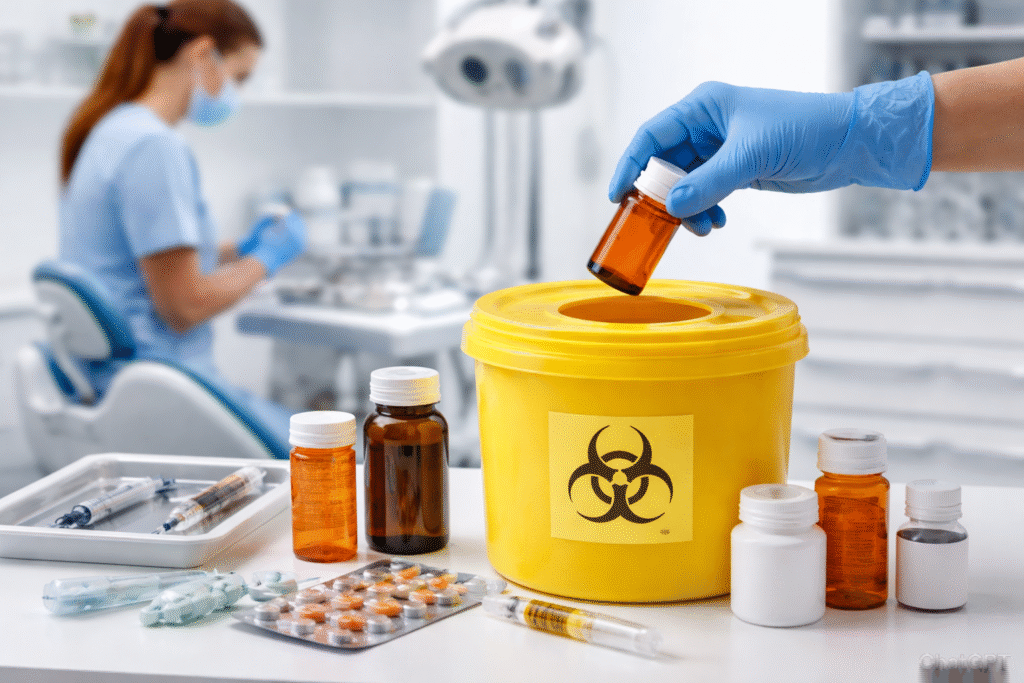
Pharmaceutical waste disposal for dental offices involves identifying medications that are expired, unused, or contaminated, segregating them by hazard classification, storing them in compliant containers, and arranging for pickup or mail-back through a licensed disposal provider. Dental clinics use anesthetics, sedatives, and topical agents daily – all of which become regulated waste once they are no longer usable. Failing to follow the correct pharmaceutical waste disposal process at a dental clinic can result in EPA, DEA, and state-level violations. This guide walks through each step of the process so your practice stays fully compliant.
What Counts as Pharmaceutical Waste in a Dental Office
Before the disposal process can begin, your team needs to recognize what qualifies as pharmaceutical waste in a dental setting. Not all medications are treated the same under federal and state regulations.
Common Types of Dental Pharmaceutical Waste
Dental offices generate pharmaceutical waste from several routine sources:
- Local anesthetics – Lidocaine, articaine, and similar agents that are expired or partially used
- Topical anesthetics – Benzocaine gels and sprays that have passed their expiration date
- Sedatives and anti-anxiety medications – Including nitrous oxide-related products and oral sedation agents
- Antibiotics and analgesics – Prescribed medications that are returned, recalled, or unused
- Antiseptics and disinfectants – Chemical agents that meet the threshold for hazardous pharmaceutical waste
Hazardous vs. Non-Hazardous Classification
The EPA classifies some dental pharmaceutical waste as hazardous under the Resource Conservation and Recovery Act (RCRA). Hazardous pharmaceutical waste includes certain chemotherapy agents, some P-listed drugs, and medications containing heavy metals. Most dental anesthetics and antibiotics fall under non-hazardous pharmaceutical waste, but this does not mean they can be disposed of in regular trash or flushed down the drain.
Understanding this distinction matters because hazardous dental pharmaceutical waste requires a separate disposal pathway with stricter documentation requirements.
The Step-by-Step Pharmaceutical Waste Disposal Process for Dental Clinics
Once your team understands what qualifies as pharmaceutical waste, the actual disposal process for your dental clinic follows a structured sequence. Each step is required for regulatory compliance.
Step 1 – Conduct a Regular Medication Audit
Review all medications stored in your dental office on a scheduled basis – monthly or quarterly is standard practice. During the audit, identify:
- Medications past their expiration date
- Partially used vials or cartridges that cannot be reused
- Recalled or contaminated products
- Medications that are no longer part of your treatment protocols
Document everything you identify. This record supports your compliance posture in the event of an inspection.
Step 2 – Segregate Waste by Classification
Do not mix pharmaceutical waste with regular trash, sharps, or biohazardous waste. Separate it at the point of generation using clearly labeled containers:
- Non-hazardous pharmaceutical waste goes into designated pharmaceutical waste containers
- Hazardous pharmaceutical waste goes into separate RCRA-compliant containers
- DEA-controlled substances (if applicable) require additional documentation and secure handling under the Controlled Substances Act
Proper segregation at this stage prevents regulatory violations and simplifies the downstream disposal process.
Step 3 – Use Approved Containers for Storage
Store all pharmaceutical waste in leak-proof, tamper-resistant containers that are clearly labeled with the waste type. Containers must meet EPA and DOT specifications for the category of waste inside.
Keep containers in a secure, designated area of your dental office. Do not overfill them – most providers recommend filling to no more than three-quarters capacity before sealing.
Step 4 – Choose a Compliant Disposal Method
Dental offices have two primary options for pharmaceutical waste disposal:
- Scheduled pickup – A licensed waste disposal provider collects containers from your facility on a regular schedule. This is practical for higher-volume practices.
- Mail-back programs – Your practice ships sealed containers to a disposal facility using a prepaid, pre-labeled kit. This works well for smaller dental offices with lower waste volumes.
Both methods must use a licensed provider that complies with DEA, EPA, DOT, and applicable state regulations. Flushing medications or placing them in regular trash is not a compliant disposal method and carries significant penalties.
Step 5 – Obtain and Retain Disposal Documentation
After disposal, your provider should supply a Certificate of Disposal or manifest confirming that your waste was handled and destroyed properly. Retain these records for a minimum of three years – longer in some states.
This documentation is your evidence of compliance during audits or inspections by the EPA, state environmental agencies, or DEA.
Regulatory Requirements Dental Offices Must Follow
Dental pharmaceutical waste disposal is governed by multiple overlapping federal agencies. Understanding which regulations apply to your practice helps you avoid gaps in compliance.
Key Federal Agencies and Their Role
| Agency | Regulation | What It Covers |
|---|---|---|
| EPA | RCRA | Hazardous waste classification and disposal standards |
| DEA | Controlled Substances Act | Handling and destruction of scheduled drugs |
| DOT | Hazmat Transport Rules | Safe transport of pharmaceutical waste |
| OSHA | Hazard Communication Standard | Staff safety when handling hazardous materials |
| FDA | Drug Recall Guidelines | Removal and disposal of recalled medications |
State-Level Requirements
In addition to federal rules, most states impose their own pharmaceutical waste disposal regulations for dental clinics. Some states classify certain non-hazardous drugs as regulated waste under state law, which means stricter handling requirements apply even when federal rules do not. Always verify the specific requirements for your state before establishing your disposal process.
Staff Training Requirements
OSHA requires that dental office staff who handle hazardous materials – including pharmaceutical waste – receive appropriate hazard communication training. This training should cover waste identification, proper container use, and emergency procedures. Documented training records must be maintained for each employee.
How to Maintain Ongoing Compliance at Your Dental Office
Setting up the disposal process is the first step. Maintaining it over time requires consistent internal practices and a reliable external partner.
Establish a Written Waste Management Plan
A written pharmaceutical waste management plan outlines your office’s procedures for identifying, segregating, storing, and disposing of waste. This document serves as both an operational guide for your team and evidence of a compliance program during regulatory inspections.
Schedule Regular Staff Training
Staff turnover is common in dental practices. Build pharmaceutical waste training into your onboarding process and schedule annual refreshers for existing employees. Ensure your training program is OSHA-compliant and covers both hazardous and non-hazardous dental pharmaceutical waste disposal.
Audit Your Process Periodically
Review your disposal records, container conditions, and staff practices at least twice per year. Look for gaps such as containers being stored in non-designated areas, missing documentation from your disposal provider, or medications being discarded without following the correct process.
Work with a Licensed Disposal Provider
Partnering with a licensed pharmaceutical waste disposal provider simplifies compliance significantly. A qualified provider handles container supply, scheduled pickups or mail-back logistics, transportation in accordance with DOT regulations, and end-to-end documentation. This reduces the administrative burden on your dental team and ensures your waste is handled correctly at every stage.
Frequently Asked Questions
Can dental offices flush expired medications down the drain?
No. Flushing pharmaceutical waste is not an approved disposal method for dental offices. It contributes to water contamination and violates EPA guidelines. All pharmaceutical waste must be disposed of through a licensed provider using compliant containers and documented destruction methods.
What is the difference between hazardous and non-hazardous pharmaceutical waste in a dental clinic?
Hazardous pharmaceutical waste includes medications classified as P-listed drugs under RCRA or those containing heavy metals and certain toxic compounds. Most dental anesthetics and antibiotics are non-hazardous, but both categories require proper disposal – they cannot be placed in regular trash.
Do dental offices need a DEA registration to dispose of controlled substances?
Dental offices that administer or prescribe DEA-scheduled medications must follow DEA regulations for their disposal. This typically involves using a DEA-authorized reverse distributor or a compliant mail-back program. Your disposal provider can clarify the specific requirements based on the substances used in your practice.
How long do dental offices need to keep pharmaceutical waste disposal records?
Federal guidelines generally require a minimum of three years, but some states mandate longer retention periods. It is advisable to retain all Certificates of Disposal and manifests for at least five years to be safe.
What happens if a dental office does not comply with pharmaceutical waste disposal regulations?
Non-compliance can result in significant fines from the EPA, DEA, or state environmental agencies, suspension of licenses, and reputational damage. Penalties can reach tens of thousands of dollars per violation per day in serious cases.
Can small dental offices use a mail-back program instead of scheduled pickups?
Yes. Mail-back programs are a practical and compliant option for smaller dental offices that generate lower volumes of pharmaceutical waste. A licensed provider supplies a sealed container and prepaid shipping label. Once full, the container is shipped directly to a disposal facility for destruction and documentation.

Ben Brenner is a founding partner at MedPro Disposal with over 9 years of hands-on experience in healthcare operations and medical waste management. He works closely with healthcare facilities to ensure OSHA-compliant sharps disposal, regulatory adherence, and safe waste handling practices. Ben contributes industry-backed insights based on real operational experience in the healthcare sector.