
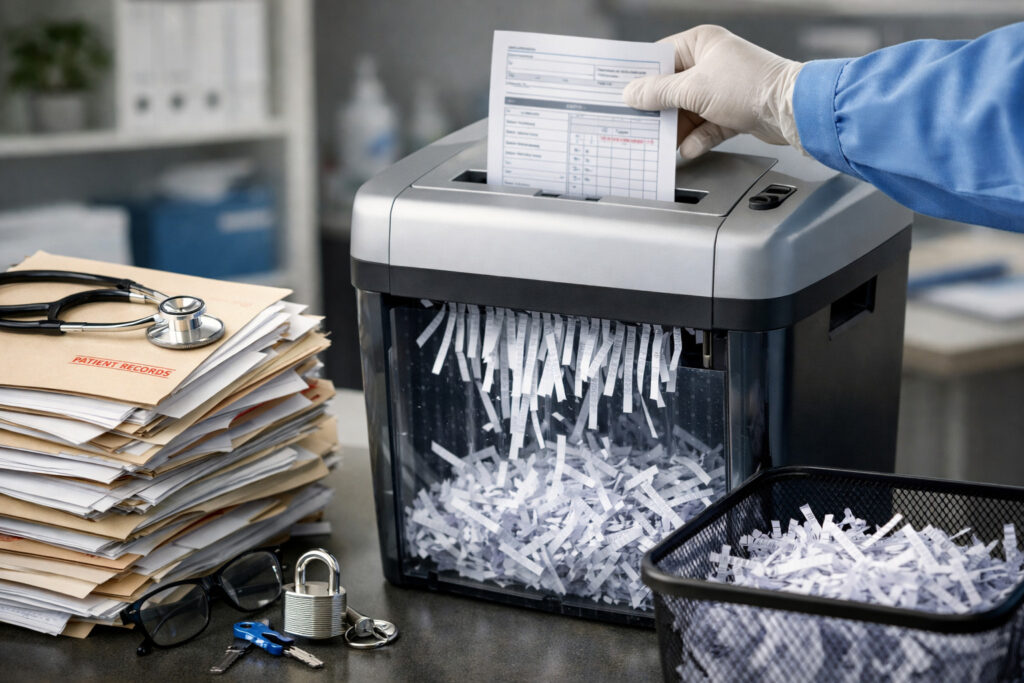
Medical clinics handle sensitive patient information daily, making secure document disposal essential for compliance and privacy protection. Secure document shredding for clinics involves systematically identifying, collecting, and destroying confidential materials according to HIPAA regulations. This process protects patient privacy, prevents data breaches, and ensures legal compliance. Implementing proper document shredding for clinics requires establishing clear protocols, training staff, selecting appropriate clinic document shredding services, and maintaining consistent procedures. This guide provides healthcare facilities with a practical framework for developing and maintaining a compliant shredding program.
Step 1: Identify and Classify Documents for Shredding
Determine Which Documents Require Destruction
Medical clinics generate various document types containing protected health information (PHI). Patient medical records, billing statements, insurance forms, prescription records, and appointment schedules all require secure destruction. Employee files containing personal information and financial documents with sensitive data also need proper disposal.
Understand Retention Requirements
Before implementing document shredding for clinics, verify retention periods for different document types. Medical records typically require retention for 6-10 years depending on state regulations. Financial documents generally need preservation for 7 years. Maintain a retention schedule to ensure documents are only destroyed after meeting legal requirements.
Conduct a Facility-Wide Document Audit
Examine all areas where sensitive documents exist within your clinic. Check exam rooms, administrative offices, billing departments, reception areas, and storage facilities. Document current disposal practices and identify gaps in your security protocols.
Step 2: Establish Collection and Storage Systems
Install Secure Collection Bins
Place lockable collection containers in convenient locations throughout your facility. Position bins in areas where staff regularly handle sensitive documents, such as reception desks, billing offices, and medical records rooms. Ensure containers are clearly labeled and appropriately sized for your document volume.
Implement Access Controls
Restrict access to collection bins to authorized personnel only. Use locked containers with limited key distribution. Establish sign-out procedures for keys and maintain logs of who accesses shredding bins. These controls prevent unauthorized document retrieval and maintain chain of custody.
Create a Collection Schedule
Develop a regular schedule for transferring documents from collection points to secure storage or directly to clinic document shredding services. Frequent collection prevents overflow and reduces the time sensitive documents remain accessible. High-volume areas may require daily collection, while lower-volume locations might need weekly transfers.
Step 3: Select and Partner with Shredding Services
Evaluate Service Options
Secure document shredding for clinics comes in two primary forms. On-site shredding involves mobile trucks that destroy documents at your location, providing visual verification. Off-site shredding transports documents in locked containers to secure facilities for destruction. Consider your clinic’s volume, budget, and security preferences when choosing.
Verify Vendor Credentials
Select clinic document shredding services with proper certifications and compliance measures. Look for NAID AAA Certification, which indicates adherence to strict security standards. Verify the vendor maintains HIPAA-compliant procedures and provides business associate agreements. Confirm they carry adequate insurance coverage and employ background-checked staff.
Establish Service Agreements
Formalize your relationship with shredding vendors through detailed contracts. Specify service frequency, pickup schedules, pricing structures, and security requirements. Ensure agreements include certificate of destruction issuance, liability provisions, and compliance guarantees. Review contracts annually to ensure they meet your clinic’s evolving needs.
Step 4: Train Staff and Maintain Compliance
Develop Clear Protocols
Create written procedures outlining which documents require shredding and how staff should handle them. Include visual guides showing document examples and proper collection bin usage. Distribute protocols to all employees and make them easily accessible for reference.
Conduct Regular Training Sessions
Train all clinic personnel on document shredding for clinics procedures during onboarding and through annual refresher courses. Cover document identification, proper disposal methods, security protocols, and consequences of non-compliance. Use real-world scenarios to reinforce proper practices.
Assign Compliance Responsibilities
Designate specific staff members to oversee your shredding program. Responsibilities include monitoring collection bins, coordinating with vendors, maintaining destruction records, and conducting periodic audits. Clear accountability ensures consistent program execution.
Maintain Documentation
Keep detailed records of all shredding activities, including dates, document types, volumes destroyed, and certificates of destruction. File these records according to your retention policies. Proper documentation provides proof of compliance during audits and demonstrates due diligence in protecting patient information.
Frequently Asked Questions
What types of documents require secure shredding in medical clinics?
Medical clinics must shred any documents containing protected health information, including patient medical records, billing statements, insurance forms, prescription records, lab results, appointment schedules with patient names, and employee files with personal information. Even documents with partial patient identifiers require secure destruction.
How often should clinics schedule document shredding services?
Most clinics benefit from monthly clinic document shredding services. High-volume practices generating large amounts of paperwork may require weekly pickups, while smaller facilities with adequate secure storage can schedule quarterly service. The schedule should prevent collection bin overflow and minimize security risks.
What is the difference between on-site and off-site shredding for clinics?
On-site shredding brings mobile trucks to your clinic location where documents are destroyed immediately, allowing staff to witness the process. Off-site shredding collects documents in locked containers and transports them to secure facilities for destruction. Both methods can be HIPAA-compliant when proper vendors and procedures are used.
What certifications should clinic document shredding services have?
Look for vendors with NAID AAA Certification, which demonstrates compliance with the highest security standards. Providers should also maintain HIPAA-compliant procedures, offer business associate agreements, carry liability insurance, employ background-checked personnel, and provide certificates of destruction after each service.
Can clinics use office shredders instead of professional services?
Office shredders are generally insufficient for secure document shredding for clinics due to limited capacity, lack of destruction verification, and security risks during bag disposal. Professional services provide necessary chain-of-custody documentation, appropriate shred sizes for compliance, and secure destruction processes required under HIPAA.
How long should clinics keep certificates of destruction?
Maintain certificates of destruction for at least the same period as the retention requirement for the documents destroyed, typically 6-10 years. These certificates serve as compliance proof during audits and demonstrate your clinic followed proper disposal procedures for protected health information.

Ben Brenner is a founding partner at MedPro Disposal with over 9 years of hands-on experience in healthcare operations and medical waste management. He works closely with healthcare facilities to ensure OSHA-compliant sharps disposal, regulatory adherence, and safe waste handling practices. Ben contributes industry-backed insights based on real operational experience in the healthcare sector.