
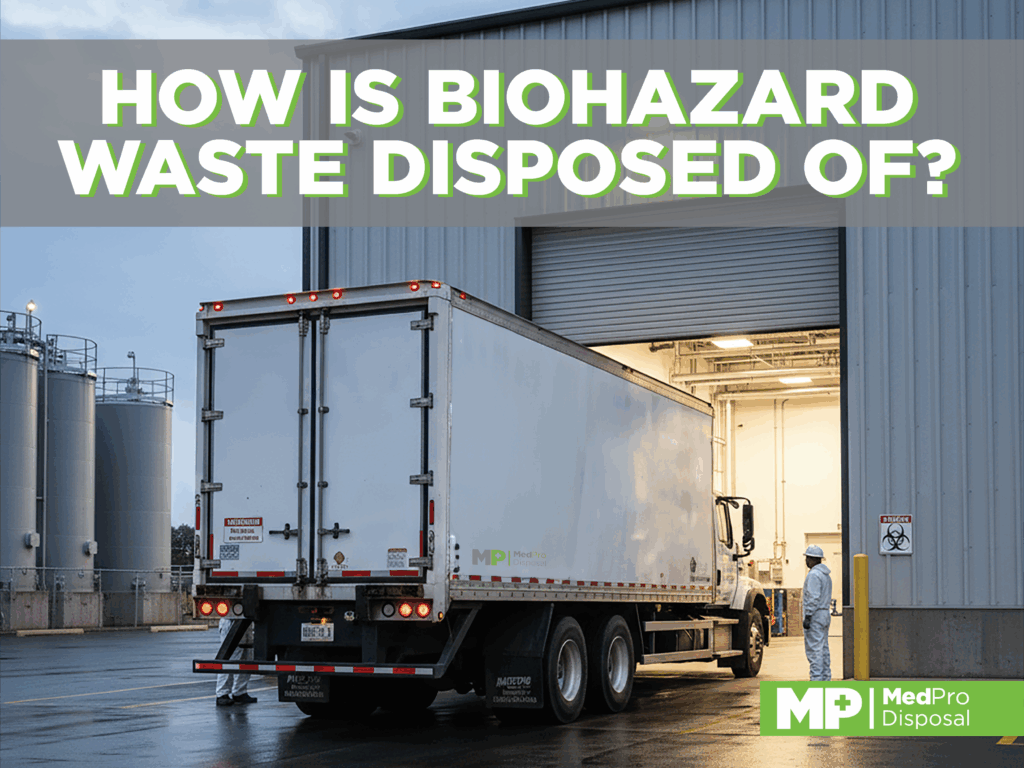
When people ask, “Where does biohazard waste go?” The answer is more complex than just “It gets picked up.” Medical facilities, clinics, labs, and even small practices generate biohazard waste daily. Safe biohazard waste management and disposal protect healthcare workers, patients, and the environment.
Biohazard waste disposal follows a strict process. It is tightly regulated from start to finish. Each waste type must be properly collected, treated, and disinfected before final disposal. These steps for disposing of biohazard waste ensure compliance with all federal and state regulations that protect public health.
Where Does Biohazard Waste Go? Defining and Categorizing Waste
What Is Biohazard Waste?
Biohazard waste includes any material contaminated, primarily, with blood. It also refers to waste that comes into contact with bodily fluids and other potentially infectious substances. These pose a dangerous risk to human health. Biohazard waste includes:
- Used sharps (needles, syringes, scalpels, and other tools that can cut or puncture)
- Blood-soaked bandages and gauze, and lab plastics
- Laboratory cultures and samples, and microbial stocks
- Personal protective equipment (PPE) contaminated with fluids
- Pathological waste, including human or animal tissues removed during surgery or testing
- Liquid waste (human blood, bodily fluids, lab liquids, and more)
- Pharmaceutical waste, including expired or contaminated drugs. It also refers to opened but unused medications that must be destroyed.
How is biohazard waste disposed of? Because biohazard waste poses infection risks, it cannot be included with regular trash or recycling bins. Instead, it requires regulated handling and disposal.
How Hospitals Handle Biohazard Waste
Hospitals and healthcare facilities are the largest generators of biohazard waste. To remain compliant, they need to follow a strict waste management process. This process protects their staff and patients. It oversees how hospitals handle biohazard waste and their disposal practices. It includes:
- Sharps disposal: Used needles and surgical instruments go into sealed sharps containers.
- Solid waste management: Contaminated PPE, dressings, and disposable instruments are bagged and labeled.
- Liquid waste handling: Blood and other fluids are stored in secure containers. These are designed to be leak- and puncture-proof. Proper handling is crucial to ensure safety en route to treatment.
- On-site storage: How hospitals handle biohazard waste includes storage. Facilities are required to keep biohazard waste in designated storage areas. Ideally, they should be situated in areas with limited public access until pickup.
The Biohazard Waste Disposal Process for Clinics and Smaller Facilities
Smaller healthcare facilities, dental offices, and veterinary practices generate lower biohazard waste volumes. This allows them to take advantage of more flexible solutions that are available, like:
- Mail-back sharps programs provide prepaid, puncture-resistant containers. Once full, the container is sealed and shipped to a licensed treatment facility.
- Flexible pickup schedules fit the specific volume and frequency of waste generation.
Search for “biohazardous waste disposal near me”? You have these two programs to utilize. They can offer a compliant, convenient, and cost-effective alternative to pick up schedules. You can rely on either program for your biohazard waste disposal needs.
Where Does Biohazard Waste Go After Generation?
The biohazard waste disposal process begins at the point of generation. That’s why waste management begins at your facility. Facilities must follow these strict steps for disposing of biohazard waste:
Segregation and Collection
It’s essential to segregate your waste into separate types at your facility. Sharps go into puncture-resistant containers. Biohazard waste goes into the appropriate bins or bags. The steps for disposing of biohazard waste are the same for hazardous and pharmaceutical wastes. Make sure each container is clearly labeled for safe handling and proper storage.
Storage and Containment
Full containers are stored securely until scheduled pickup. Then, licensed disposal providers transport your waste in DOT-compliant vehicles. These regulations ensure compliance and safety during the transfer to the treatment facility.
Transportation
Once your biohazard waste leaves your healthcare facility, it doesn’t go straight to the landfill. Instead, licensed biohazard waste disposal companies like MedPro Disposal transport it to certified treatment facilities.
Furthermore, federal and state regulations oversee where to take biohazard waste and how it is packaged. DOT, for example, oversees proper packaging and labeling. It also oversees manifest documentation for safe transport.
Biohazard Waste Treatment at Specialized Facilities
After transportation, your biohazard waste goes to a licensed treatment facility. There, your biohazard waste receives specialized treatment. The process neutralizes infectious agents. This ensures that the remaining waste material is safe to handle and dispose of.
It may undergo one of several approved methods:
- Autoclaving (Steam Sterilization) – High-pressure steam kills the infectious agents and pathogens. Once your waste is rendered non-infectious, it can be disposed of in sanitary landfills.
- Incineration – High-heat incineration destroys biohazard waste completely. Incineration treats pathological waste and pharmaceuticals. It’s also used for materials that can’t be sterilized through autoclaving. Afterward, the waste may be disposed of in landfills.
- Chemical Treatment – For liquid wastes, chemical disinfectants are used. After treatment, the liquid biohazard waste (blood, body fluids, cultures) is checked to ensure it poses no risk. Then, it is released into sanitary sewer systems.
Federal, state, and local regulations guide the steps for disposing of biohazard waste. A professional partner like MedPro Disposal makes the process efficient, safe, and compliant.
Where Does Biohazard Waste Go Under Regulatory Oversight?
Multiple agencies regulate the steps for disposing of biohazard waste. These agencies oversee biohazard waste management. Their goal is to protect your staff, patients, and the environment.
- OSHA (Occupational Safety and Health Administration): OSHA sets the workplace safety standards. OSHA also oversees container requirements. It provides guidelines for labeling and worker training under the Bloodborne Pathogens Standard.
- DOT (Department of Transportation): Oversees biohazard waste transport. DOT sets the regulations for biohazard waste packaging and transport across state lines. DOT regulations are crucial when considering where to take biohazard waste.
- EPA (Environmental Protection Agency): Sets the guidelines for environmental and community protection. The EPA oversees waste treatment and landfill disposal. It oversees these under the Resource Conservation and Recovery Act (RCRA).
- FDA (Food and Drug Administration): The FDA does not have direct oversight. Instead, it recommends guidelines for sharps disposal and treatment in line with the CDC.
- State health departments: They oversee local biohazard waste regulations. State agencies and local health departments enforce additional rules. These rules include how long waste can be stored, typically 7 to 14 days. They define specialized waste classifications. They also set licensing requirements for healthcare and non-healthcare facilities.
These agencies and regulations work to keep the biohazard waste disposal process safe. They oversee every stage, from the point of generation to its final destination.
Why Work with a Professional Biohazard Waste Disposal Company?
Compliance with these agencies’ regulations is mandatory. Working with a professional biohazard waste disposal company ensures you meet every requirement.
They can guide you through the biohazard waste disposal process. From the steps of disposing of biohazard waste, to where to take biohazard waste for treatment. They can help healthcare and non-healthcare facilities with:
- Training staff in proper biohazard waste handling and management.
- Implementing segregation and using approved containers and labels for storage.
- Follow the biohazard waste disposal process, from generation to disposal.
- Maintain documentation of waste volumes, disposal methods, and transport.
How MedPro Disposal Helps with Biohazard Waste Disposal
MedPro Disposal helps with your biohazard waste disposal by offering key advantages, like:
- Safety and Compliance: Trained professionals handle the steps for disposing of biohazard waste. These steps are under the purview of OSHA, EPA, and DOT.
- Liability Protection: MedPro Disposal assumes full title and liability. It is able to do so because it is backed by $33 million in insurance coverage.
- Cost Savings: Predictable, affordable pricing; no surprise costs and surcharges.
- Flexibility: Service agreement plans are tailored to fit your facility’s needs and budget.
- Nationwide Reach: MedPro serves over 30,000+ clients in 48 states. It doesn’t matter if you run a hospital, dental clinic, pharmacy, or small practice. MedPro makes sure your biohazard waste is handled and disposed of in full compliance. It has both the scale and personalized customer support to serve both small clinics and multi-state hospital networks.
And if you’re asking yourself, ‘Is there reliable biohazardous waste disposal near me?’ don’t worry. You can rely on MedPro to help with its network of local partners and treatment facility operators.
So, where does biohazard waste go? MedPro manages your biohazard waste from start to finish. From generation to treatment, we make sure it’s handled the right way. With safety and in full compliance.
Ready to implement the right biohazard waste disposal process for your facility?
Call us now for your Quick Quote 888-641-6131.