
7 Daily Medical Waste Habits That Keep Faculty Compliant
Learn 7 daily medical waste habits that help faculty stay compliant, reduce risks, and maintain safe handling practices in healthcare facilities.
7-medical-waste-habits-faculty-compliance
7 Daily Medical Waste Habits That Keep Faculty Compliant
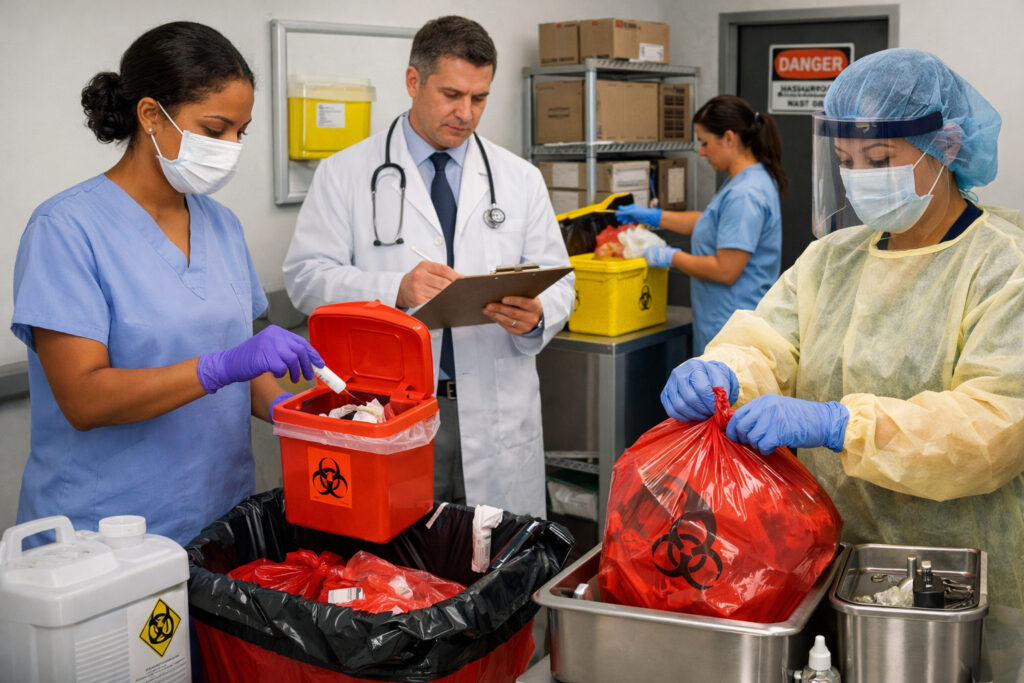
Medical waste compliance isn’t about perfect execution once—it’s about consistent daily habits that protect your faculty, students, and institution. Healthcare education facilities generate regulated medical waste daily, and compliance violations can result in fines up to $70,000 per day. The good news? Most compliance issues stem from simple oversights in routine procedures. By establishing seven fundamental daily habits, faculty members can maintain continuous compliance while creating a safer learning environment. These practices address segregation, labeling, storage, and documentation—the core pillars of medical waste management that regulators scrutinize during inspections.
Essential Daily Segregation Practices
Proper waste segregation begins the moment waste is generated. Faculty should implement point-of-generation separation, ensuring sharps, infectious waste, pharmaceutical waste, and general trash never mix.
Color-Coded Container Systems
Red bags for infectious waste, rigid sharps containers for needles and scalpels, and black or yellow containers for pharmaceutical waste create visual clarity. Faculty must verify that containers are properly labeled with biohazard symbols and facility information before any waste enters them.
The 3-Second Rule
Train faculty to pause three seconds before disposing of any item. This brief moment prevents cross-contamination and ensures proper stream assignment. Items like blood-soaked gauze belong in red bags, while empty medication vials require pharmaceutical waste containers.
Student Supervision Protocols
Faculty should conduct visual spot-checks during lab sessions, correcting segregation errors immediately. This real-time education prevents habit formation around incorrect disposal methods and reinforces medical waste compliance tips for faculty across all departments.
Documentation and Tracking Habits
Compliance depends on verifiable records. Faculty must maintain daily logs that demonstrate proper waste handling from generation through disposal.
Morning Container Audits
Begin each day by inspecting all waste containers in your teaching areas. Check fill levels (containers should never exceed three-quarters full), verify closure mechanisms work properly, and confirm labels remain legible. Document any issues immediately.
Waste Generation Logs
Record the type and approximate volume of waste generated during each lab session or clinical activity. This documentation proves essential during regulatory audits and helps identify trends that might indicate training gaps or process improvements.
Chain of Custody Awareness
Faculty should know exactly when waste is scheduled for pickup and verify that only authorized personnel handle medical waste removal. Maintain a sign-off sheet confirming each transfer, creating an unbroken chain of custody from your classroom to final disposal.
Storage and Containment Standards
Temporary storage areas require daily attention to maintain medical waste compliance. Improper storage represents one of the most common citation categories during inspections.
Designated Storage Area Checks
Inspect your department’s medical waste storage location daily. The area must remain locked when unattended, display proper signage, and maintain separation between waste types. Verify that no containers sit directly on the floor—use pallets or shelving.
Temperature and Ventilation Monitoring
Medical waste storage areas should remain cool and well-ventilated. Faculty should report any HVAC issues immediately, as temperature fluctuations can accelerate decomposition and create odor or pest problems that trigger compliance violations.
72-Hour Awareness
Most regulations require medical waste removal within 72 hours of generation. Faculty should understand pickup schedules and alert waste management coordinators if containers approach capacity before scheduled collection.
Personal Protective Equipment Protocols
PPE compliance protects faculty while demonstrating proper medical waste management habits to students who will carry these practices into their careers.
Pre-Handling PPE Verification
Before touching any medical waste container—even to close a lid—faculty must don appropriate PPE. Minimum requirements include nitrile gloves and eye protection, with additional protection based on waste type and handling activities.
Post-Handling Hygiene Rituals
Immediately after any medical waste interaction, faculty should remove PPE using proper doffing techniques, dispose of it appropriately, and perform hand hygiene. This consistent routine prevents cross-contamination and models professional behavior.
PPE Station Maintenance
Check that PPE supplies remain stocked in all areas where medical waste is generated or stored. Report shortages immediately—lack of available PPE cannot excuse compliance violations.
Frequently Asked Questions
What qualifies as medical waste in educational settings?
Any waste contaminated with blood or body fluids, sharps regardless of contamination, cultures and stocks of infectious agents, pathological waste, and certain chemotherapy agents qualify as regulated medical waste requiring special handling.
How often should faculty receive medical waste compliance training?
Initial comprehensive training upon hire, annual refresher courses, and immediate retraining following any regulatory changes or compliance incidents. Many institutions conduct quarterly brief reviews of medical waste compliance tips for faculty.
Who is responsible if a student improperly disposes of medical waste?
The supervising faculty member bears primary responsibility for waste generated during educational activities. This underscores the importance of direct supervision and immediate correction of disposal errors.
What should faculty do if they discover improperly segregated waste?
Do not attempt to sort contaminated waste. Secure the container, label it as “mixed medical waste,” and contact your environmental health and safety department immediately for proper remediation.
Can faculty store medical waste in their offices or labs overnight?
Only in designated, properly secured areas that meet regulatory requirements for signage, containment, and access control. Personal offices typically do not qualify as compliant storage locations.
What documentation should faculty keep regarding medical waste?
Training records, daily inspection logs, waste generation records, incident reports, and pickup verification sheets. Maintain these records for at least three years as most regulations require documentation availability during this period.