
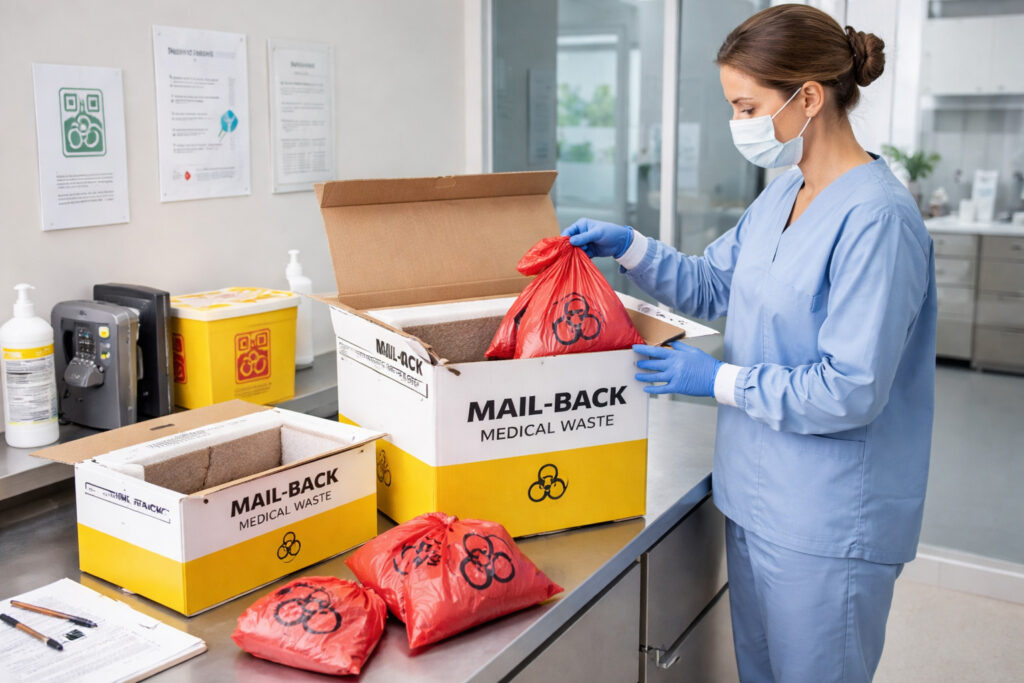
Mail-back disposal cuts small practice waste costs up to 40% versus pickups and ensures OSHA-EPA compliance, avoiding $50,000 fines. Ideal for under 50lbs/month, use USPS kits: assess waste streams, select single/multi-pack systems, train staff on sorting, packaging, manifesting, shipping. Fill to capacity, avoid overfilling or mixing waste. MedPro Disposal provides compliant kits for control without contracts, making this guide a practical reference on how to set up mail-back disposal in a small clinic.
Overwhelmed by sharps, pharmaceuticals, and regulated waste piling up in your small practice? Compliance fines can hit $50,000 per violation, and traditional pickups drain budgets without reliable service. This guide delivers a simple step-by-step plan to set up mail-back disposal, cutting costs by up to 40% while ensuring full OSHA and EPA compliance through mail-back disposal for small practices.
What Is Mail-Back Disposal?
Mail-back disposal is a flexible waste management solution designed specifically for lower-volume generators. Instead of relying on a scheduled truck to pick up your medical waste, you use prepaid, compliant kits to mail the waste to a destruction facility. This puts the timeline in your hands and forms the foundation of a reliable medical waste disposal mail back strategy.
There are typically three main types of systems available:
- Single mail-back systems: These include one OSHA-approved sharps container, a return shipping box, a prepaid label, protective liners, and sealing materials like zip ties and tape, commonly used for mail back sharps disposal.
- Multi-pack systems: Ideal for slightly higher volumes, these ship multiple (2, 4, or 6) containers in a single box.
- Collection bin systems: A large collection bin designed to hold your existing sharps containers, complete with sealing and shipping components.
Benefits of Mail-Back Disposal for Small Practices
For small clinics, tattoo parlors, or home health providers, standard waste contracts often mean paying for pickups you don’t actually need. If your container isn’t full when the truck arrives, you still pay the full service fee. Mail-back programs eliminate this inefficiency.
The primary benefit is cost control. Facilities generating less than 50lbs of waste per month typically save money with mail-back services compared to scheduled pickups.
Other key advantages include:
- No Contracts: You generally pay per kit, not per month.
- Compliance: Authorized kits meet federal shipping regulations.
- Convenience: You ship the waste only when your container is actually full.
How Mail-Back Disposal Works
The process is designed to be straightforward so staff can manage it without disrupting patient care. It replaces the “bin swap” model with a “fill and ship” model outlined in this mail-back disposal setup guide.
Here is the standard workflow:
- Sort and Collect: Use the provided materials to collect waste. Ensure you are using the correct receptacle for the specific waste type (sharps vs. soft waste).
- Package: Once full, package the container according to instructions. This usually involves sealing liner bags and securing the box.
- Manifest: Complete the destruction manifest form. Sign it and keep the customer copy for your compliance records.
- Ship: Apply the prepaid label to the box and hand it off to the carrier. There is no need to schedule a pickup.
Step-by-Step Guide to Setting Up Mail-Back Disposal
Setting up a mail-back program is faster than negotiating a hauler contract, but you must ensure your facility is a good candidate. The provider typically assesses if mail-back is suitable for your volume and waste type first.
Once you move forward, you receive a complete packaging kit. This includes disposal containers, bag liners, barcode tracking labels, and a USPS-approved return box. The goal is to collect waste over time until full, then prepare for shipment per the provided instructions.
Step 1: Assess Your Waste Streams and Compliance Needs
Before ordering kits, identify exactly what you are throwing away. You must distinguish between regulated medical waste and standard trash.
- Regulated items: Liquid or semi-liquid blood, contaminated sharps, and pathological wastes (OSHA 29 CFR 1910.1030).
- Pharmaceuticals: Expired medications often require different treatment than standard biohazards.
- State rules: Note state-specific definitions for soft waste like gauze or gloves.
Knowing your waste stream ensures you don’t buy a sharps kit for pharmaceutical waste.
Step 2: Choose Kits and a Reliable Provider
Select a provider that offers USPS-authorized systems. Compliance relies on the packaging meeting strict shipping standards. Your kit should always include:
- Primary collection container (e.g., sharps bin)
- Prepaid postage and pre-addressed return box
- Waste manifest paperwork
Choose your system based on volume: single kits for very low volume, or multi-pack/collection bin systems if you generate waste slightly faster.
Step 3: Train Staff and Establish Protocols
Even the best system fails if staff doesn’t know how to use it. You need a clear protocol for packing and shipping.
- Assign responsibility: Designate one person to handle the final sealing and mailing.
- Review safety: Ensure staff knows how to seal the liner bags and use the provided zip ties.
- Tracking: Establish where the manifest copies will be filed once the box is shipped.
Best Practices for Mail-Back Disposal in Small Practices
To get the most value out of a mail-back program, you need to manage how you fill the containers. The biggest advantage of this system is that it is not time-dependent, so patience is key.
- Fill to Capacity: Keep filling containers until they are completely full (but not overfilled). This maximizes your cost savings for small practices.
- Strict Adherence: Follow the provider’s guidelines on waste types strictly. Putting the wrong waste in a box can lead to shipping violations and fines.
- Proper Transport: Use mail-back for your primary streams, but ensure you have a solution for any waste types the kit cannot accept.
Common Mistakes to Avoid with Mail-Back Programs
While simple, mail-back systems have specific rules that must be followed to ensure safety during transit.
- Overfilling: Never force items past the “fill line” on a sharps container. This creates puncture risks for postal workers.
- Improper Sealing: Failing to use the provided zip ties or tape correctly can cause the package to be rejected or leak.
- Mixing Waste: Do not place loose liquids or hazardous chemicals in standard medical waste mail-back kits.
- Ignoring Manifests: Failing to keep your copy of the shipping papers creates a gap in your compliance trail.
Why Partner with MedPro Disposal for Mail-Back Services
MedPro Disposal understands that one size does not fit all. For small practices, paying for a truck to pick up a half-empty box is a waste of resources. Our mail-back programs are designed to give you control back over your budget and your schedule.
We provide fully compliant, USPS-authorized kits that include everything you need—from the container to the destruction manifest—ensuring you stay compliant without the stress of a contract.
Conclusion
Mail-back disposal is a practical, cost-effective solution for small practices that need compliance without the complexity of a large-scale hauler contract. By assessing your waste streams, choosing the right kits, and following simple packing protocols, you can manage medical waste on your own terms. It saves money, ensures safety, and keeps your practice compliant with federal and state regulations.
Frequently Asked Questions
Is mail-back disposal legal in Illinois for small medical practices?
Yes, mail-back disposal is legal in Illinois under IDPH regulations for low-volume generators using USPS-authorized kits. In Naperville, IL, small practices like dental offices comply by following DOT and USPS shipping standards, avoiding state pickup mandates for minimal waste.
How much does a mail-back kit cost for small practices?
Single sharps mail-back kits cost $30–$50 each, multi-packs $80–$150, per MedPro Disposal pricing. Small Naperville, IL practices generating under 50lbs monthly save 20–40% versus scheduled pickups, paying only per use without contracts.
Can I use mail-back for pharmaceutical waste in Naperville?
Standard medical waste kits exclude pharmaceuticals; use DEA-compliant reverse distribution or specialized pharma mail-back kits. Naperville practices must separate expired drugs per Illinois EPA rules to avoid fines up to $50,000.
How long does mail-back disposal take from start to destruction?
From drop-off at USPS, transit takes 2–5 business days, with destruction certificates emailed within 7–10 days total. Naperville, IL users track via barcode labels provided in MedPro kits for full compliance records.
What are Naperville-specific rules for mail-back medical waste?
Naperville follows Illinois IDPH and DuPage County guidelines, requiring USPS-approved packaging for RMW under 50lbs/month. Local clinics must retain manifests for 3 years and cannot mail liquid waste exceeding 100ml per package.

Ben Brenner is a founding partner at MedPro Disposal with over 9 years of hands-on experience in healthcare operations and medical waste management. He works closely with healthcare facilities to ensure OSHA-compliant sharps disposal, regulatory adherence, and safe waste handling practices. Ben contributes industry-backed insights based on real operational experience in the healthcare sector.