

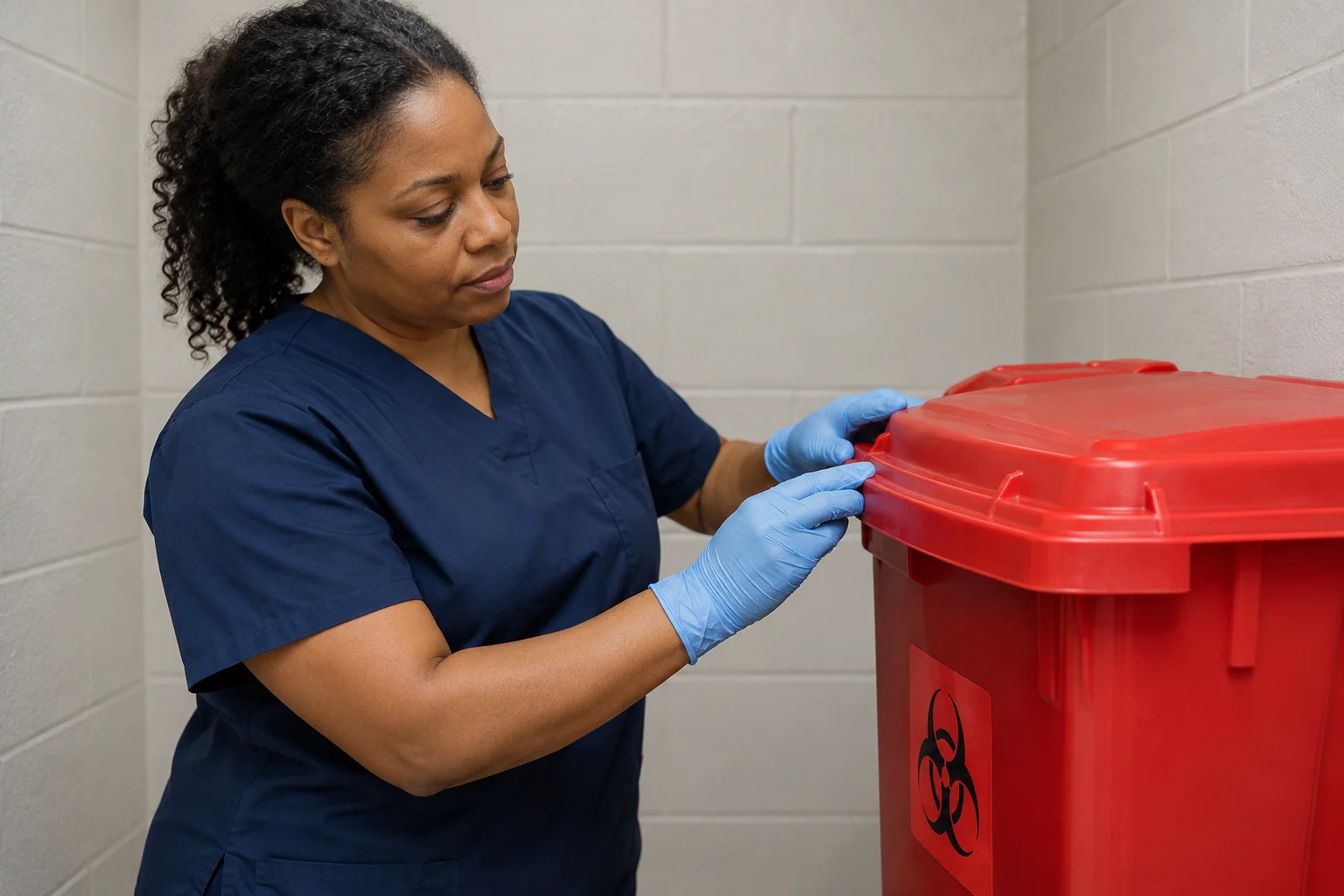
Pollution affects everybody’s health. However, medical waste or biohazardous wastes are even more dangerous to the general public. This is because medical waste items include materials such as bodily fluids, tissues and sharps that can cause disease. In addition,contamination or medical waste leaks have the potential to create life-threatening disorders.
In This Article
Even with these evident health risks, though, there are no consistent rules for medical waste disposal on the federal and state level. Because each state has its own set of laws, it is difficult to monitor whether or not medical waste is properly eliminated from the environment.
Find Out How Much You Can Save Instantly. Try our on-line savings calculator.
Savings calculator
At this time, most institutions that generate medical waste have some sort of access to facilities that process these kinds of items. But there is now a growing resistance to the use of unregulated incinerators that can get rid of medical waste. For this reason,
more than 1,500 treatment locations now rely on
autoclaving
. The autoclaving process utilizes microwave technology, which is better for the environment’s health.
A Brief History of Pollution
Prior to the late 1980s, medical waste was not a huge concern. But in 1987, medical waste was thrust into the spotlight when
the beaches of New York and New Jersey were littered with a massive amount of used syringes
. Since fears about A.I.D.S. were simultaneously at an all-time high, the federal government created a new law to discourage improper disposal of medical waste.
The Medical Waste Tracking Act became law in 1988. After it expired, the law was designed to pass the majority of accountability for medical waste disposal onto individual state governments. But the Environmental Protection Agency (EPA) had shaped this new act more as a guide than a strict rule. Over time, however, more and morewaste items became classified as infectious while transportation and treatment options were eliminated or considered too expensive.
Because of these limitations, more local governments began shipping waste out of state and even to other countries. This chaos inspired new record-keeping procedures so that medical waste could be tracked more closely.
In Conclusion
Although it is difficult to oversee medical waste disposal from a nation-wide level,
each state has its own system for correctly discharging these dangerous items.
By establishing detailed laws, residents are better protected from the hazards of medical waste.
But keeping up with this type of rubbish is a challenge in itself. As medical technology becomes more sophisticated and the population ages, the amount of medical waste increases as well. In 2010, an estimate 5.9 million tons of waste was generated by hospitals.
Luckily, there are many things you can do as a medical facility to minimize the effect on the environment while saving money on medical waste disposal costs. Selecting an experienced company to handle the medical waste needs of your office is the first step towards proper disposal at a reasonable price.
Common Questions
- What counts as medical waste?
- Medical waste is any waste generated during the diagnosis, treatment, or immunization of humans or animals that may be contaminated with blood, body fluids, or other infectious material — including sharps, blood-soaked dressings, cultures, and pathological tissue. Non-contaminated items like standard packaging are not regulated medical waste.
- How much does medical waste disposal cost?
- Cost depends on waste volume, pickup frequency, container size, waste type, and location. Most practices pay a flat monthly or per-pickup rate rather than being billed per pound. Typical monthly costs range from about $50-$200 for small practices and dental offices up to $1,000+ for long-term care facilities, with hospitals and large health systems running $1,000-$50,000+ per month — see our full pricing breakdown by facility type. MedPro customers also save an average of 30% by switching from their previous provider.
- Is medical waste disposal legally required?
- Yes. Any facility generating regulated medical waste must comply with OSHA's Bloodborne Pathogens Standard, applicable EPA/DOT rules, and their state's specific medical waste regulations, which vary by state.
- What's the difference between medical waste and biohazard waste?
- Biohazard waste is a subset of medical waste. Medical waste is the broad category (including sharps and pharmaceuticals); biohazard waste specifically refers to material containing or potentially containing infectious agents.
Want more like this in your Google results?
Add MedPro as a preferred source on Google