

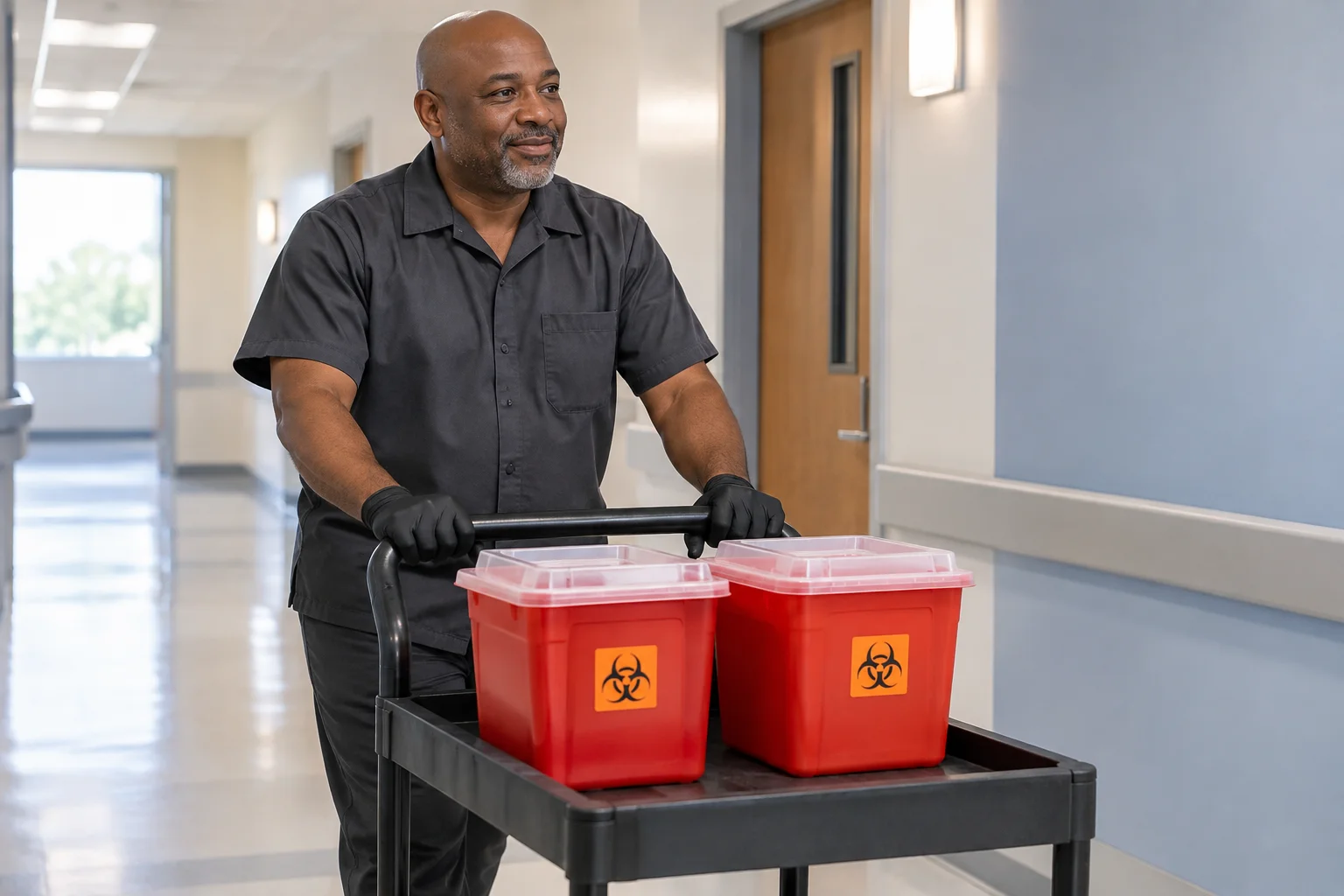
To ensure that your harmful needles don’t make their way into the streets and water systems of your community, disposal of sharps containers must be compliant and thorough. Sharps are defined as any bio-hazardous material that could puncture skin and is contaminated with bodily fluids.
In This Article
Sharps Disposal from Home
Used needles should immediately be placed in a sharps disposal container. These containers are FDA-cleared and are made of puncture-resistant plastic with leak-resistant sides and bottom. The only options to ensure that your sharps is disposed safety and securely is through take-back and mail-back programs.
Most cities have containers that theses sharps can be placed in for disposal at a local and accessible location. These take-back sites might night be an option for a lot of people, especially in rural communities. In this case, one should look into a waste mail-back program. We offer a mail-back program to provide a convenient, cost-effective, and eco-friendly solution tailored to individual waste generation. This program will ensure safe and compliant sharps or pharmaceutical disposal from your facility.
What Happens to Sharps After Mail Back?
Disposing any sharps improperly can severally effect the environment as well as residents of your community. Without proper disposal, one risks the spread of blood borne diseases to healthcare workers and the general public. To combat this pollution medical waste companies sterilize sharps in an autoclave by using high pressure for 15-20 minutes to “deactivate” all bacteria and viruses on any material. Another widely used method is incineration. This process is more typically used on chemotherapy sharps waste and uses high heat to burn away any infectious materials.
If you're interested in learning more about what happens to medical waste after it's disposed of, check out this blog!
Image source: Wikipedia
Common Questions
- When should a sharps container be replaced?
- The FDA advises disposing of a sharps container when it is about three-quarters full, and OSHA requires containers to be replaced routinely and never allowed to overfill. Close and lock the container at the fill line, and never push sharps in or shake the container to make room.
- What color are sharps containers?
- Most sharps containers are red. OSHA requires them to be labeled with the biohazard symbol and the word “BIOHAZARD” or be red. Yellow containers are commonly used for sharps contaminated with trace chemotherapy agents.
- What does OSHA require for sharps containers?
- Under 29 CFR 1910.1030, sharps containers must be closable, puncture resistant, leakproof on the sides and bottom, and labeled or color-coded. They must be easily accessible and as close as feasible to where sharps are used, kept upright, replaced routinely without overfilling, closed before removal, and placed in a secondary container if leakage is possible.
- How do you dispose of a full sharps container?
- Close and lock it, then have it collected by a licensed medical waste company or ship it through a mail-back program in approved packaging. Sealed containers are treated along with their contents, usually by autoclave. Never put sharps containers in the regular trash or recycling at a healthcare facility, and never reuse them.
Want more like this in your Google results?
Add MedPro as a preferred source on Google